US envoy warns EU arms preference could strain allied defence cooperation
Usagevpn.com – The European Union’s effort to give greater priority to home-grown defence suppliers could weaken cooperation among allies and divide the wider transatlantic industrial base, US Ambassador to the EU Andrew Puzder has warned.
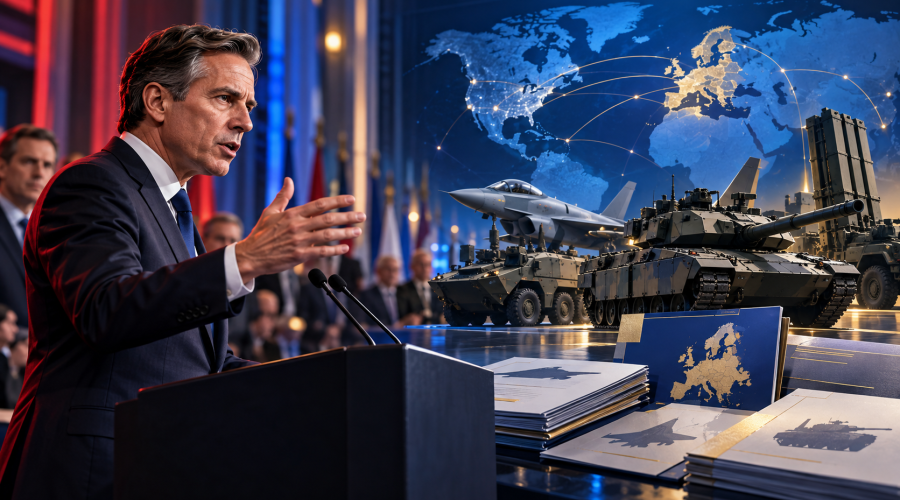
Speaking in Brussels on Wednesday at a defence and space gathering, Puzder argued that decisions on military procurement should centre on whether equipment is effective and available, rather than where it is produced. His intervention comes as EU institutions and national governments consider measures designed to reduce dependence on American-made weapons and strengthen Europe’s own defence manufacturing capacity.
“Only our enemies benefit when we lose focus on making sure we have the most effective weapons, supporting our mutual defence.”
Puzder said the stakes are especially high when allied countries face major security threats. In his view, prioritising regional economic interests over military capability could prove damaging if a powerful adversary attacks an allied state.
“One attack by a powerful adversary on a member state, and we’ll all be glad that we focused on weapon superiority rather than regional economics.”
European push for greater defence autonomy
The Commission and EU member states have put forward plans that would favour European arms manufacturers. The broad objective is to expand Europe’s ability to equip its own forces, develop weapons systems and sustain production without relying so heavily on suppliers outside the bloc.
The debate has intensified amid visible tensions across the transatlantic alliance during Donald Trump’s presidency. European leaders have faced sustained pressure to assume more responsibility for their own security, while Washington’s approach to Ukraine and its threats to take Greenland by force have fuelled concern about the reliability of long-established arrangements.
For supporters of the EU approach, greater domestic capacity is about ensuring that European governments can obtain essential equipment quickly during a crisis. It also reflects concern that supply chains, production lines and political decisions outside Europe could affect the availability of weapons, ammunition and other military material.
Yet the proposals have exposed differences among member states. Some governments favour a strong European preference to build industrial capacity within the bloc. Others fear that excessive protectionism could limit choice, increase costs or reduce access to advanced systems made by the United States, which remains a major global defence manufacturer.
Capability and availability at the centre of the dispute
Puzder maintained that military needs must take precedence over geography when troops and civilians could be at risk.
“Capability and availability should determine the solution, not geography.”
His comments echo warnings made a day earlier by NATO’s top military commander, Alexus Grynkewich, before the European Parliament’s defence committee. Grynkewich cautioned against formally locking in preferences for the location where military hardware is manufactured, arguing that such an approach serves Europe’s adversaries.
The central issue is not simply whether Europe should invest more in its own defence sector. There is broad political recognition that European countries need stronger military readiness and more resilient production. The disagreement concerns how far EU rules should steer contracts toward European suppliers when equipment from allied countries may be more readily available or better suited to a particular requirement.
That question is likely to remain central as European governments seek to replenish stockpiles, support Ukraine and adapt to a less predictable security environment. Procurement choices can shape industrial investment for years, affecting research, jobs, maintenance networks and the ability to produce replacement equipment at scale.
Ukraine funding offers a point of cooperation
Puzder highlighted one area where the United States sees room for practical alignment. He welcomed the Commission’s decision to permit the purchase of American defence equipment for Ukraine through the EU’s recently agreed €90 billion loan to Kyiv.
The ambassador said Washington would seek similar provisions as the EU develops future defence measures. While acknowledging that differences will continue, he expressed confidence that the two sides could often find common ground.
“We’ll keep having candid conversations. Sometimes we’re going to disagree. Generally, I believe we will agree.”
Puzder also said the EU executive had indicated that it had no intention of stopping member states from using their own national budgets to acquire US weapons systems. That distinction matters because EU-level funding rules and nationally financed procurement can follow different political and legal paths.
For European policymakers, the task will be to balance the desire for greater strategic independence with the immediate requirement to field credible forces. For the United States, the priority is preserving a defence relationship in which allied industries remain closely connected and procurement remains driven by operational need.
“An alliance which faces our adversaries with unity and strength rather than division and self-interest.”
As the EU refines its defence industrial agenda, the argument is likely to extend beyond procurement policy. It will also test how Europe and the United States define burden-sharing, industrial resilience and solidarity within an alliance confronting common threats.
Related Reading
Frequently Asked Questions
What is US ambassador slams EU s Buy European?
US ambassador slams EU s Buy European is the main topic of this guide. The article explains the context, practical details, and next steps readers should understand.
Why does US ambassador slams EU s Buy European matter?
US ambassador slams EU s Buy European matters because readers are looking for a useful answer, not just a short summary. Good content should match search intent and help them decide what to do next.