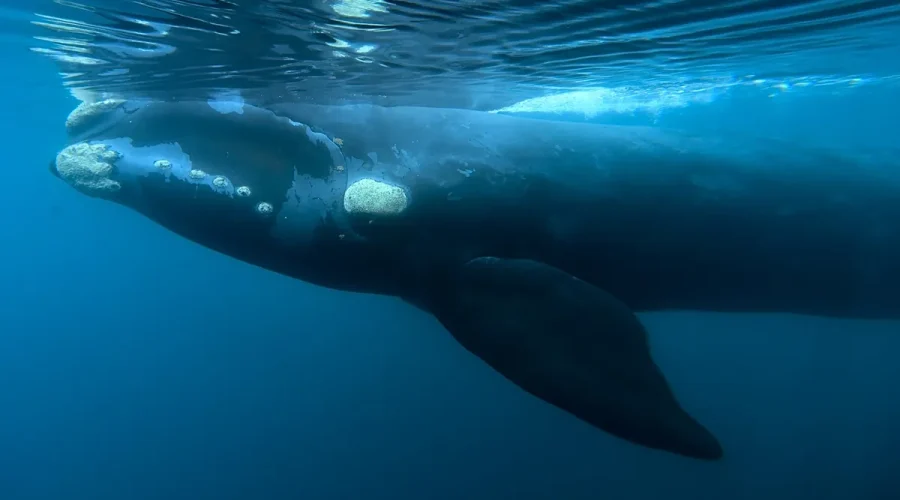
Southern Right Whale Calf Deaths Raise Alarm in Argentine Patagonia
Usagevpn.com – An unusual wave of southern right whale calf deaths is prompting urgent scientific investigation along Argentina’s Patagonian coast, where one of the South Atlantic’s most important whale breeding areas is facing an exceptionally difficult season.
Hundreds of young whales have died in recent months, with new carcasses continuing to appear along beaches in Chubut province. The cases have been documented since June, concentrating attention on the waters around Puerto Madryn and the Valdés Peninsula, a refuge where southern right whales regularly return to mate, give birth and nurse their calves.
Researchers and provincial authorities are examining whether a bacterial illness may be responsible. Early tests have pointed toward a marine bacterium, while veterinarians are considering erysipelas, an infectious disease linked to bacteria commonly found on the skin of these marine mammals. The inquiry remains ongoing, and officials have not yet established a definitive cause.
Scientists investigate possible bacterial infection
The number of dead calves has made this year’s mortality particularly concerning. Dozens were found on Chubut beaches during the latest week alone, adding to losses recorded through the breeding season.
The mortality rate among calves is quite high, especially this season,
said Mariano Coscarella, a researcher at the Marine Mammals Laboratory of Argentina’s National Scientific and Technical Research Council, known as Conicet.
Erysipelas is now among the possibilities being studied. The disease is caused by bacteria that can be present on whale skin, but identifying bacteria in an animal does not automatically prove that it caused death. That distinction is central to the work now under way: researchers must determine whether the suspected organism is the direct source of the fatalities or merely part of the wider marine environment.
Chubut’s provincial government is working alongside the scientific community to clarify what triggered the event. For coastal communities and wildlife specialists, the investigation matters not only because of the number of calves lost, but also because calf survival is a vital part of the long-term health of any whale population.
A crucial nursery for the South Atlantic population
Puerto Madryn and the nearby Valdés Peninsula are internationally significant breeding grounds for southern right whales. Each year, large groups arrive in these protected coastal waters during the period when adults mate and mothers raise their young.
The whales are among the most striking visitors to Patagonia’s shoreline. Adults can grow to roughly 17 metres in length and weigh about 40 tonnes. Their presence is a defining seasonal feature of the region, but the current deaths underline how vulnerable newborn animals can be during their earliest months.
The recent population counts also provide important context. In 2025, observers recorded a record 2,110 whales in the area, including about 800 juveniles. This year’s count has reached 1,375 animals, with nearly 400 calves included in that figure.
Those totals show that the breeding area continues to host a substantial number of southern right whales. At the same time, the loss of a large number of calves in one season has intensified the need to understand whether the episode stems entirely from natural processes or whether other pressures may have played a part.
Natural causes remain the leading explanation for now
Coscarella has said the evidence currently leans toward a natural explanation. However, he has also cautioned that the possible role of human activity cannot yet be ruled out completely.
That uncertainty is significant. A confirmed bacterial outbreak would help researchers focus on how an infection spread and why calves may have been especially affected this season. If environmental or human-related factors contributed, identifying them would be equally important for protecting whales that use Patagonia’s coast as a nursery.
For now, there is no final answer. The scientific task involves piecing together findings from the animals found dead, the bacteria detected in early analyses and conditions in the broader habitat. Authorities have stressed that work is continuing rather than treating the initial bacterial indication as a settled conclusion.
Why the deaths are not yet seen as a medium-term population threat
Despite the scale of this season’s losses, Coscarella does not believe the event currently represents a medium-term threat to the region’s southern right whale population. One reason is the species’ long lifespan. Local authorities estimate that a southern right whale can live for around 60 years.
Longevity gives a population more time to sustain itself across many breeding seasons, even when a single year brings serious losses. That does not lessen the immediate concern over the dead calves, but it helps explain why researchers are separating the severity of the present episode from broader conclusions about the species’ future in Patagonia.
The coming findings will be closely watched in Chubut and across the marine science community. The priority is to establish why so many calves have died, whether the suspected bacteria are responsible and whether any preventable factors can be identified. Until then, Patagonia’s whale breeding season will remain under close scrutiny.
Related Reading
Frequently Asked Questions
What is What is killing whale calves in Patagonia?
What is killing whale calves in Patagonia is the main topic of this guide. The article explains the context, practical details, and next steps readers should understand.
Why does What is killing whale calves in Patagonia matter?
What is killing whale calves in Patagonia matters because readers are looking for a useful answer, not just a short summary. Good content should match search intent and help them decide what to do next.