Argentina’s Andean Valley Puts Solar Energy on the Rails
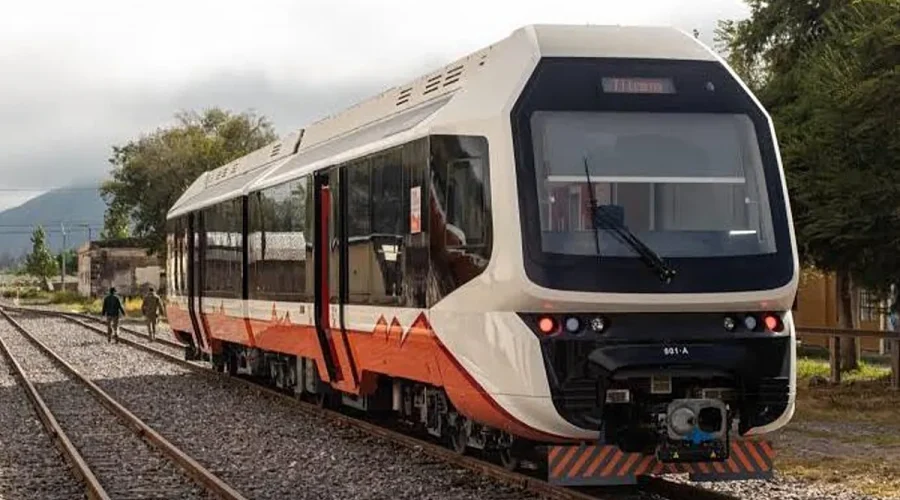
Usagevpn.com – In the sun-drenched highlands of northern Argentina, a railway is demonstrating how renewable power can reshape travel in remote landscapes. The Tren Solar de la Quebrada, operating in Jujuy province, carries passengers through the Andes using batteries charged with solar electricity produced locally.
The service covers 42 kilometres across the Quebrada de Humahuaca, a valley recognised as a UNESCO World Heritage site. For thousands of years, this mountain corridor has linked communities and provided a route through the Andes. Today, the train connects six towns in the valley while offering visitors a lower-emission alternative to conventional diesel rail travel.
A battery train, not a train covered in panels
Despite its name, the Tren Solar does not rely on photovoltaic panels fixed to its roof. Its two-car unit is driven by six lithium batteries, which receive their energy from solar generation in Jujuy. This distinction matters: the railway uses renewable electricity produced elsewhere rather than attempting to generate all of its power while in motion.
The system also recovers part of the train’s energy during braking. Instead of allowing all of that motion to be lost as heat, regenerative braking converts some of it into electricity and stores it for later use. That approach can reduce the amount of external charging needed over a journey and makes particularly good sense on routes with regular stops and changes in elevation.
The batteries can power the train for between 100 and 120 kilometres, giving it more than double the range needed for the existing route. Fast-charging facilities are available at Volcán and Purmamarca, and another charging point is planned at Tilcara, the line’s northern end.
Rail Returns to Quebrada de Humahuaca
The service began in June 2024, restoring passenger rail to the Quebrada de Humahuaca after a 30-year absence. Its launch was intended to improve access to communities along the valley and support tourism without adding the exhaust emissions associated with diesel locomotives.
More than 90,000 passengers have used the train since its introduction, figures from the Jujuy government show. For travellers, the line provides a way to experience an Andean landscape while moving between settlements that form part of one of Argentina’s most culturally and historically significant regions.
The project is also notable because it operates without overhead electrical wires. Traditional electric railways normally depend on extensive infrastructure, either through overhead lines or electrified tracks. Building such systems can be difficult and expensive in sparsely populated or geographically challenging areas. Battery traction offers a different path when a route is relatively short and renewable charging power is available nearby.
Why the location matters
Northern Argentina’s high-altitude desert environment receives abundant sunshine, making solar generation a practical local energy resource. The train turns that regional advantage into transport power, linking electricity generation, battery storage and passenger rail in one operating model.
That does not mean every railway can simply replace diesel equipment with batteries. Route length, gradients, passenger demand, charging time and the availability of clean electricity all affect whether the technology is suitable. Yet the Quebrada service illustrates how a carefully matched route and power supply can eliminate the need for diesel without waiting for a full-scale electrification project.
Its role as a tourist railway is important as well. Tourism can bring economic activity to smaller communities, but transport to scenic destinations can also increase fuel use. A battery-powered train does not remove every environmental impact connected with travel, but it can reduce emissions from the rail journey itself when its batteries are supplied with renewable electricity.
Rail Networks Beyond Fossil Fuels
Argentina’s experiment forms part of a wider effort to reduce fossil-fuel use on railways. In Europe, where electric rail infrastructure is much more widespread, 58 per cent of the European Union’s railway network was electrified in 2024. Electrification allows trains to draw power directly from the grid, although the climate benefit depends on how that electricity is generated.
In the Netherlands, rail operator NS has purchased sufficient renewable electricity to match the annual electricity use of its trains since 2017. From 2025, that renewable mix has included solar power as well as wind energy. The example shows how existing electric rail networks can be paired with cleaner power supplies.
Switzerland is testing another approach. Start-up Sun-Ways installed 48 solar panels between the rails on a 100-metre section of active track in Buttes in 2025. During its first year, the pilot produced about 16,000 kWh, an amount roughly equivalent to the annual electricity use of four or five European homes. Sun-Ways has also reached an agreement with Italian railway infrastructure company GCF to examine possible installations in Italy.
These projects address different pieces of the same challenge. Overhead electrification can serve heavily used networks, solar panels near or on railway infrastructure can add renewable generation, and battery trains can help routes where wires are impractical. None is a universal solution, but together they broaden the choices available to rail operators seeking to move away from diesel.
A Model for Sunny, Isolated Routes
The Tren Solar de la Quebrada is especially relevant for places without easy access to an established electric rail network. Rather than requiring kilometres of overhead lines through a mountainous valley, the train relies on charging sites and batteries with a range comfortably beyond its daily route length.
For Jujuy, the railway connects the valley’s history with modern energy technology. For other regions with strong solar resources, it offers a clear example of what may be possible: renewable electricity generated close to the route can help keep passenger trains running while leaving diesel behind.
Related Reading
Frequently Asked Questions
What is Argentina s first solar train runs?
Argentina s first solar train runs is the main topic of this guide. The article explains the context, practical details, and next steps readers should understand.
Why does Argentina s first solar train runs matter?
Argentina s first solar train runs matters because readers are looking for a useful answer, not just a short summary. Good content should match search intent and help them decide what to do next.