Brussels Sends Its Top Leader to Nuuk as Arctic Rivalry Intensifies
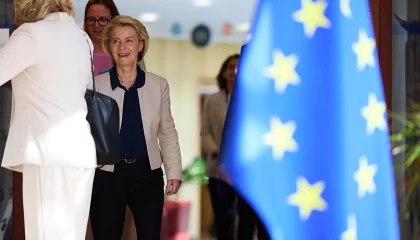
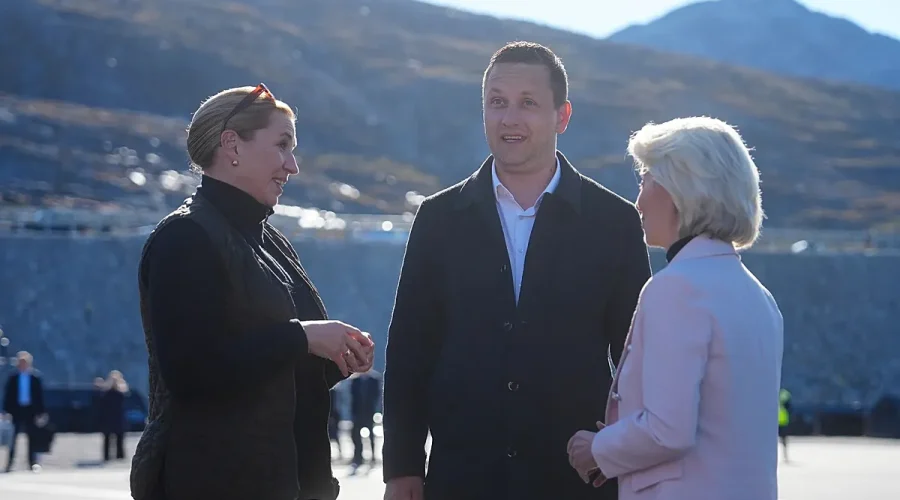
Usagevpn.com – The European Commission’s president, Ursula von der Leyen, landed in Greenland’s capital Nuuk on Sunday for a two-day visit that carries far more weight than a routine diplomatic stop. The trip lands at a moment when the island — a Danish autonomous territory sitting at the crossroads of North Atlantic shipping lanes and polar military corridors — has become the flashpoint of a transatlantic dispute that neither side appears willing to defuse. Washington has pressed its claim repeatedly since Donald Trump returned to the White House in January, while Brussels has responded with a combination of rhetorical solidarity and concrete financial commitments aimed at anchoring European presence in the Arctic.
A Joint Declaration on the Agenda
On Monday, von der Leyen is expected to sign a joint declaration with Greenland’s government, formalizing a framework of cooperation between the EU and the territory. The document is designed to codify the bloc’s institutional commitment to Greenland’s development, research, and security interests, giving the island a direct channel into European policy-making beyond its existing relationship with Copenhagen. For a territory of roughly 56,000 inhabitants, such a declaration represents a meaningful expansion of its diplomatic footprint and a tangible hedge against external pressure.
The American Pressure Campaign
Trump has framed his interest in Greenland as a matter of existential national security, warning that if the United States does not take control of the island, either China or Russia will. The argument has been repeated across multiple public appearances since January, transforming what was once a fringe geopolitical curiosity into a recurring headline. The president’s rhetoric has not been confined to speeches; it has been operationalized through the appointment of a dedicated special envoy.
Landry’s Mission and Messaging
Jeff Landry, governor of Louisiana, was named Trump’s special envoy to Greenland in December 2025. During a May trip to the territory — his first since taking the role — Landry told journalists in Nuuk that the moment had arrived for Washington to reassert its historical presence.
“I think that you’re seeing the president talk about increasing national security operations and repopulating certain bases in Greenland.”
He went further, suggesting local receptivity to a renewed American military footprint:
“Everyone that I’ve talked to in Greenland would love to see the US repopulate those bases.”
Landry concluded that the territory “needs the US,” a framing that treats Greenland’s strategic value as inseparable from American stewardship. The envoy’s comments land against a backdrop in which the United States currently maintains a single installation on the island, a stark contrast to its Cold War-era footprint.
Europe’s Economic Counter-Strategy
Brussels has moved to match American rhetoric with European capital. Speaking at the World Economic Forum’s annual meeting in Davos earlier this year, von der Leyen outlined what she called a “massive European investment surge” directed at Greenland, explicitly linking the spending to the need to strengthen Arctic security architecture under European auspices.
The Commission’s budget proposal for the 2028–2034 multiannual period allocates €530 million to Greenland, a figure the institution justified by the territory’s “growing geostrategic importance in the Arctic.” During the current visit, von der Leyen is additionally expected to announce a further €200 million in funding, bringing the near-term European commitment to roughly three-quarters of a billion euros. The money is earmarked for infrastructure, research stations, renewable energy projects, and connectivity upgrades — investments that simultaneously improve local living standards and embed European institutional presence in the region.
In January, von der Leyen and European Council President António Costa issued a joint statement underscoring the primacy of “territorial integrity and sovereignty” and declaring that the EU stood “in full solidarity with Denmark and the people of Greenland.” That language, while diplomatically measured, was widely read as a direct rebuke to Washington’s acquisition rhetoric.
Greenland’s Own Voice
The island’s political establishment has made its position unmistakable. In January, leaders of all five parties represented in Greenland’s parliament (Inatsisartut) released a joint statement addressed squarely to the American overture:
“We do not want to be Americans, we do not want to be Danes; we want to be Greenlanders.”
The declaration underscores a political reality that both Copenhagen and Washington must navigate: Greenland’s governing consensus favors gradual autonomy within the Danish realm, not annexation by any external power. The statement also signals that the territory views its future as a question of self-determination rather than a binary choice between two metropolitan capitals.
Historical Backdrop: From Cold War Bastion to Single Outpost
The United States maintained 17 military facilities and more than 10,000 troops on Greenland at the height of the Cold War, using the island’s latitude for early-warning radar, bomber staging, and submarine tracking. That infrastructure was largely dismantled after 1991 as the bipolar threat receded. Today the American presence is concentrated in a single installation: Pituffik Space Base, located on the island’s southwestern coast near the settlement of Sermersooq.
Pituffik is the Department of Defense’s northernmost facility and serves as a node for missile warning, missile defense, and space surveillance missions under the US Space Force. Its continued operation gives Washington a permanent sensor and communications foothold in the high Arctic without requiring a larger garrison — but it also means that any expansion of American military activity on the island would represent a dramatic escalation from the current minimal footprint, precisely the kind of shift Landry’s “repopulate” language appears to anticipate.
For Greenland, the calculus is clear: European investment offers development without sovereignty transfer, while American military expansion, however framed in security terms, would fundamentally alter the island’s geopolitical alignment. Von der Leyen’s visit is, in practical effect, a bid to make the European option the default before the American option is fully tabled.
Related Reading
Frequently Asked Questions
What is EU chief von der Leyen heads?
EU chief von der Leyen heads is the main topic of this guide. The article explains the context, practical details, and next steps readers should understand.
Why does EU chief von der Leyen heads matter?
EU chief von der Leyen heads matters because readers are looking for a useful answer, not just a short summary. Good content should match search intent and help them decide what to do next.