Stockholm Frigate Pact Signals a New Era in Franco-Swedish Defence Alignment
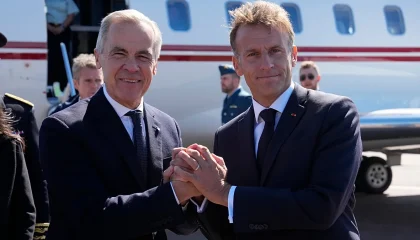
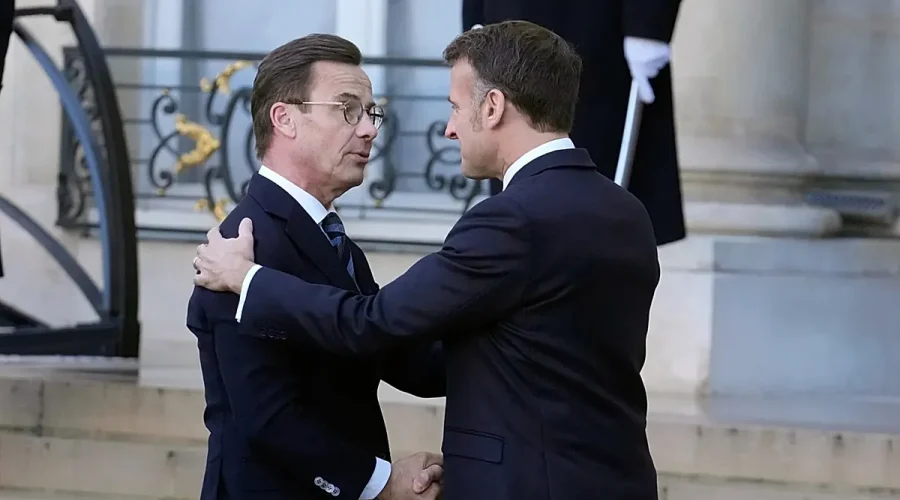
Usagevpn.com – Swedish Prime Minister Ulf Kristersson will welcome French President Emmanuel Macron to Stockholm on Monday for a ceremony that locks in a €4.3 billion purchase of four warships and a sweeping bilateral framework designed to deepen military cooperation across operational, capability, and industrial domains. The signing represents what the Élysée Palace describes as a decisive step forward in the two nations’ strategic partnership, one explicitly oriented toward reinforcing European defence capacity and the North Atlantic Alliance.
The Frigate Contract and Its Industrial Backbone
At the centre of the Monday event sits the naval procurement itself: four frigates built by France’s Naval Group, with the first hull slated for delivery in 2030. The contract, announced by Stockholm back in May, slots into a wider Swedish rearmament programme that accelerated after the country joined NATO in 2024 and after the war in Ukraine exposed gaps in European conventional deterrence. Kristersson himself framed the magnitude of the purchase when he called it
“one of the largest Swedish defence investments since the Gripen fighter jet was introduced in the 1980s.”
That comparison is telling. The Gripen programme, developed by Saab and fielded from the mid-1990s onward, reshaped Swedish air power for a generation. Placing a surface-combatant acquisition in the same historical bracket underscores how fundamentally Stockholm’s defence calculus has shifted in the post-2022 security environment.
Naval Group positions the vessels as multi-domain platforms engineered to
“detect and neutralise all types of threats,”
whether those threats arrive from
“surface, airborne, underwater, asymmetric or cyber”
vectors. In practical terms, that means each frigate will carry integrated sensor suites, layered missile defences, anti-submarine warfare equipment, and a cyber-operations node capable of operating alongside allied command-and-control networks. For a Baltic littoral state that has spent decades calibrating its navy around coastal defence and mine warfare, the acquisition of four ocean-going multi-mission frigates marks a qualitative leap in sustained power projection.
A Framework Beyond the Hulls
The frigate purchase is only one pillar of the Monday agenda. French Defence Minister Catherine Vautrin and her Swedish counterpart Pål Jonson are expected to initial a separate framework agreement covering joint training, shared industrial development, and interoperability standards. The stated aim is to build what both capitals describe as a durable, multi-layered defence relationship rather than a single-transaction procurement link. Industrial collaboration under such a framework could extend beyond shipbuilding into electronics, munitions, and autonomous systems, areas where both countries hold complementary strengths.
The Élysée’s framing of the visit as a “new phase” in the bilateral partnership signals that Paris views Stockholm not merely as a customer but as a structural partner in European security architecture. For Sweden, which completed its NATO accession in 2024 after decades of formal neutrality, the relationship with France offers a bridge between its Nordic defence traditions and the broader European industrial base.
Forward Land Forces and the Finland Commitment
The strategic dimension of the Stockholm visit extends beyond bilateral ties. During the NATO summit held in Ankara in July, France formally pledged ground forces to a Swedish-led NATO mission in Finland. A trilateral joint statement issued at that summit specified that
“France will contribute with ground forces deployments to rotations of Forward Land Forces Finland, including a battle unit.”
The Forward Land Forces concept, championed by Sweden and Finland, envisions a permanent, rotating NATO ground presence along the eastern flank of the alliance. France’s commitment of a full battle unit — typically a battalion-sized formation with organic logistics and air defence — would make Paris one of the principal contributors to the scheme. The timing of the pledge, weeks before the frigate signing, suggests the two tracks are deliberately sequenced: industrial cooperation in Stockholm underwrites the political and military commitments made in Ankara.
Precedent: The GlobalEye Surveillance Deal
The frigate contract does not arrive in a vacuum. In December, France finalised a separate procurement worth more than €1 billion for two GlobalEye long-range surveillance aircraft produced by Saab, the Swedish aerospace and defence conglomerate. That deal demonstrated that Swedish industry can compete at the top tier of European military aviation, and it created a reciprocal industrial relationship: Sweden buys French warships; France buys Swedish surveillance platforms. The Monday framework agreement is designed to institutionalise and expand that two-way flow.
Implications for European Defence Architecture
Viewed in aggregate, the Stockholm signing, the Ankara pledge, and the December Saab contract outline a pattern in which France and Sweden are weaving a dense web of mutual dependence across naval, aerial, and land domains. For the European Commission’s long-running push toward greater defence-industrial integration, such bilateral exemplars carry outsized symbolic weight. They demonstrate that interoperable, multi-domain partnerships between member states can proceed without waiting for a single EU-level procurement mechanism, while still feeding into NATO’s collective force-generation structure.
For Sweden, the practical effect is a navy that will, by the early 2030s, operate four modern multi-mission frigates alongside its existing corvettes and submarines, giving Stockholm a credible blue-water and sustained Baltic presence. For France, the deal secures a long-term Naval Group order book, deepens Paris’s influence in the Nordic security sphere, and anchors a forward-deployment commitment that keeps French ground forces integrated with allied rotations in Finland. The Monday ceremony in Stockholm, in short, is less a single transaction than the keystone of a broader strategic architecture still taking shape.
Related Reading
Frequently Asked Questions
What is Macron in Sweden to sign multi?
Macron in Sweden to sign multi is the main topic of this guide. The article explains the context, practical details, and next steps readers should understand.
Why does Macron in Sweden to sign multi matter?
Macron in Sweden to sign multi matters because readers are looking for a useful answer, not just a short summary. Good content should match search intent and help them decide what to do next.