Nepal’s Monsoon Catastrophe: Army Races Through Flooded Tunnels While Diaspora Lights Candles Across the World
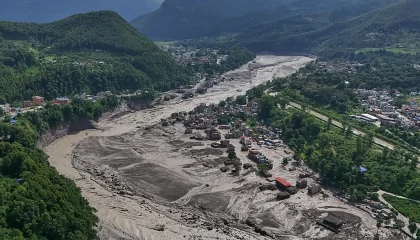
Usagevpn.com – Nepal – The Himalayan nation of Nepal is still reeling from one of its worst monsoon disasters in recent memory, with rescue crews working around the clock inside a submerged hydropower tunnel while thousands of kilometres away, members of the Nepali diaspora gather in silence to honour the dead. The scale of the flooding, which struck on 26 August and sent torrents of water and debris through critical infrastructure, has left more than 1,500 people unaccounted for across both Nepal and neighbouring China, according to figures jointly released by the two governments.
The Upper Trishuli-3A Tunnel: A Race Against Rising Water
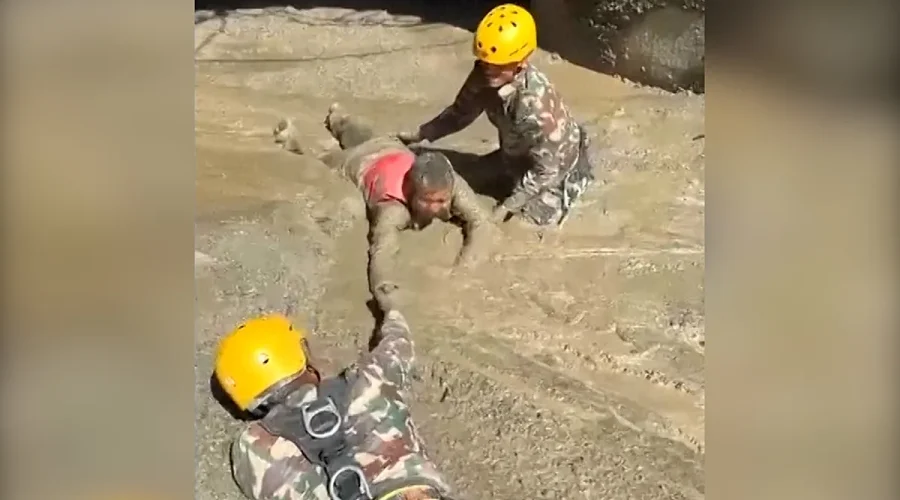
In the Rasuwa district, rescue footage captured soldiers wading through thick, clinging mud at the mouth of a hydropower tunnel, hauling a trapped man to firm ground and guiding additional survivors toward safety. Once extracted, those rescued were lifted out by helicopter, a necessary step given that the surrounding terrain had been rendered impassable by weeks of relentless monsoon rainfall.
The operation centres on the Upper Trishuli-3A hydropower project, a major infrastructure undertaking in Nepal’s long-running programme to harness the country’s abundant river systems for electricity generation. When floodwaters and a wall of debris breached the tunnel on 26 August, more than 100 construction workers and nearby residents were believed to have been cut off inside. By Friday afternoon, the Nepali Army announced it had pulled approximately 350 people from the flooded structure. Specialist units fitted with technical diving and search equipment continued probing deeper sections of the tunnel, working under conditions described as hazardous due to unstable sediment, limited visibility, and the constant threat of further water inflow.
Nepal’s hydropower sector has expanded rapidly over the past two decades, with dozens of large-scale projects under construction in the country’s mountainous river valleys. Workers on such sites often live in temporary camps near active tunnels, making them especially vulnerable when monsoon-season flash floods arrive with little warning. The Upper Trishuli-3A project sits in a region where glacial melt and seasonal rainfall combine to produce sudden, violent surges in river levels — a pattern that has repeatedly tested the country’s disaster-response capacity.
Airborne Rescue Extends to Nuwakot and Beyond
Just beyond Rasuwa, in the neighbouring Nuwakot district, military helicopters conducted aerial surveys of devastated stretches of road and settlement, identifying pockets of stranded residents and airlifting the injured to medical facilities. The helicopter programme represented a critical lifeline in areas where ground routes had been severed entirely by landslides and washed-out bridges.
Nationwide, hundreds of people — including foreign tourists and pilgrims travelling along Himalayan trekking routes — have been displaced from their homes or stranded in remote villages. The displacement figure continues to climb as assessments of remote areas are completed. China, which shares a long and often difficult border with Nepal, confirmed its own toll of missing persons from border-region flooding, bringing the combined total above the 1,500 mark.
Diaspora Vigil in Queens: “They Are Not Forgotten”
On 27 August, the evening after the worst of the flooding struck, members of the Nepali diaspora in New York assembled for a candlelight vigil to mourn those killed in the disaster. The memorial was jointly organised by 32 Nepali community organisations and held at Diversity Plaza in Jackson Heights, Queens — a neighbourhood long regarded as one of the largest concentrations of Nepali residents outside South Asia.
Community leaders, local association representatives, and ordinary residents filled the plaza. Participants lit individual candles and arranged them on the ground to spell out the word “NEPAL.” Others formed the geometric shape of the country’s distinctive double-pennant national flag using their bodies and candlelight. A period of collective silence followed, a quiet acknowledgment of devastation still unfolding in the mountains thousands of miles away.
At a separate vigil held at the United Sherpa Association Community Center, Michael Ashkenazey, secretary of the Rotary Club of New York Queens, addressed the gathered crowd:
“Let us show the people of Nepal that even from thousands of miles away, they are not forgotten and they are not alone.”
The vigils underscore a reality that Nepal’s geography and development trajectory make unavoidable: the country’s most vulnerable populations — construction workers in remote valleys, rural communities along fast-flowing rivers, and pilgrims on high-altitude trails — depend on rapid military and international response when monsoon infrastructure fails. With the rescue operation at Upper Trishuli-3A still ongoing and the missing-person count unresolved, the diaspora’s candlelight serves as both tribute and reminder that the disaster’s full human cost has yet to be counted.
Related Reading
Frequently Asked Questions
What is Nepal?
Nepal is the main topic of this guide. The article explains the context, practical details, and next steps readers should understand.
Why does Nepal matter?
Nepal matters because readers are looking for a useful answer, not just a short summary. Good content should match search intent and help them decide what to do next.