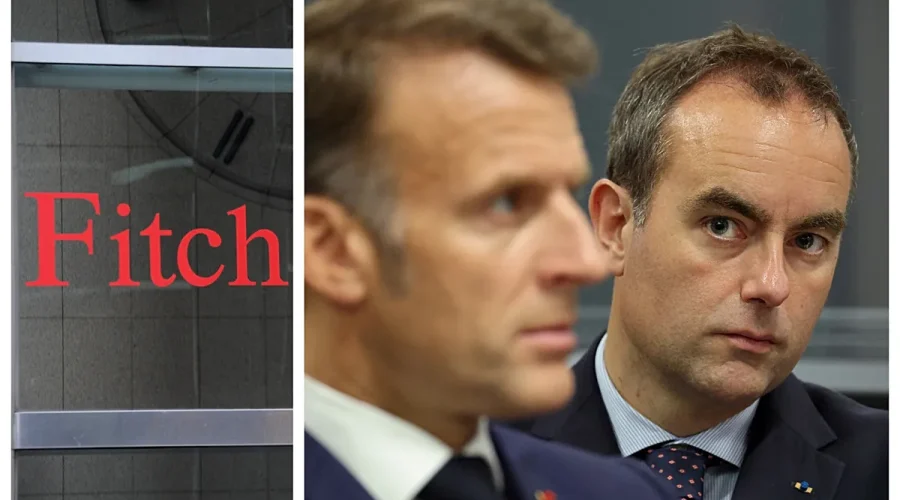
Fitch to Unveil France Debt Rating
Usagevpn.com – Fitch to unveil France’s debt verdict this Friday, just weeks before the 2027 national budget reaches the National Assembly. The agency’s decision arrives amid acute economic fragility: second-quarter GDP registered zero growth, agriculture was devastated by record heatwaves and drought, and the public deficit is tracking near five percent of GDP. For Prime Minister Sébastien Lecornu’s cabinet, simply avoiding a downgrade would amount to a narrow reprieve.
How France Lost a Notch
Paris currently carries an A+ sovereign grade with a stable outlook — the EU’s second-largest economy by nominal GDP. That tier was reached after a September 2025 downgrade stripped the final rung of the double-A category. The trigger was political: two short-lived cabinets followed the dissolution, the Barnier government lasting 99 days and the Bayrou government 270, before Lecornu assumed office. The agency penalised the resulting fiscal uncertainty and reaffirmed its revised assessment in March 2026.
The macro backdrop has deteriorated materially since that March review. Growth projections for 2026 have been slashed across the board. Where the agency had modelled roughly one percent expansion, the Lecornu government trimmed its own forecast to 0.7 percent, and Natixis CIB analysts pencilled in a more pessimistic 0.6 percent. Insee, France’s statistics office, confirmed the worst case: GDP was flat in the second quarter rather than showing the modest 0.2 percent rebound initially communicated.
Fiscal Headroom Has All but Vanished
Economy minister Roland Lescure framed the agricultural collapse bluntly at the Summer Universities for Tomorrow’s Economy:
“This is the first concrete impact of the dreadful summer we’ve just been through.”
Repeated heatwaves and prolonged drought have compounded fiscal strain, shrinking tax revenues at precisely the moment spending pressures intensify. The agency projects a 4.9 percent-of-GDP shortfall for the coming year; Natixis CIB’s estimate sits slightly higher at 5.1 percent. Senior economist Hadrien Camatte and rates strategist Théophile Legrand, both covering France, Belgium, and the eurozone at Natixis CIB, argue these figures “leave no fiscal room for manoeuvre to reduce it over the coming years.”
Public debt is expected to keep climbing through at least 2030, accelerated by a sharp uptick in interest costs on the existing bond stock. Camatte and Legrand stress that this dynamic mirrors what the agency flagged in its March commentary:
“A lasting increase in the public debt-to-GDP ratio in the medium term, due to an inability to implement fiscal consolidation measures or to a persistent rise in financing costs.”
They describe the coming budget cycle as “particularly challenging for cutting the deficit,” noting that the presidential election on the horizon will amplify political volatility and constrain the government’s willingness to impose austerity.
What Analysts Expect on Friday
Camatte, speaking to Euronews, places his bets on continuity: retaining the A+ with a stable outlook is “the most likely scenario.” Yet he cautions that “a move to a negative outlook cannot be ruled out.” The reasoning is straightforward — the budget cycle has not yet opened, and principal risks could crystallise more fully during 2027 rather than before the agency’s next scheduled review. In other words, the agency may choose to observe one more full fiscal year before acting.
Lecornu intends to table the 2027 budget on 30 September, with parliamentary debate commencing in October. Opposition is already mobilised: Jean-Luc Mélenchon has signalled that France Unbowed (LFI) will table a motion of censure, seeking to force a vote of no confidence before the presidential campaign season fully under way. For bondholders watching the spread, Friday’s verdict will set the tone for the next fiscal year.
FAQ
When will the agency announce its decision? The verdict is scheduled for this Friday, ahead of the 2027 budget’s introduction to the National Assembly in late September.
What is France’s current sovereign grade? An A+ with a stable outlook, assigned after the September 2025 downgrade from the double-A tier.
What is the most likely outcome? According to Natixis CIB’s Hadrien Camatte, maintaining the status quo — A+ with a stable outlook — is the most probable scenario, though a shift to a negative outlook remains possible.
Why did the agency downgrade France in 2025? Political instability following the dissolution produced two short-lived governments and heightened fiscal uncertainty, prompting the removal of the final double-A notch.