Hungary’s Fish Farm Drought: A Fight for Water
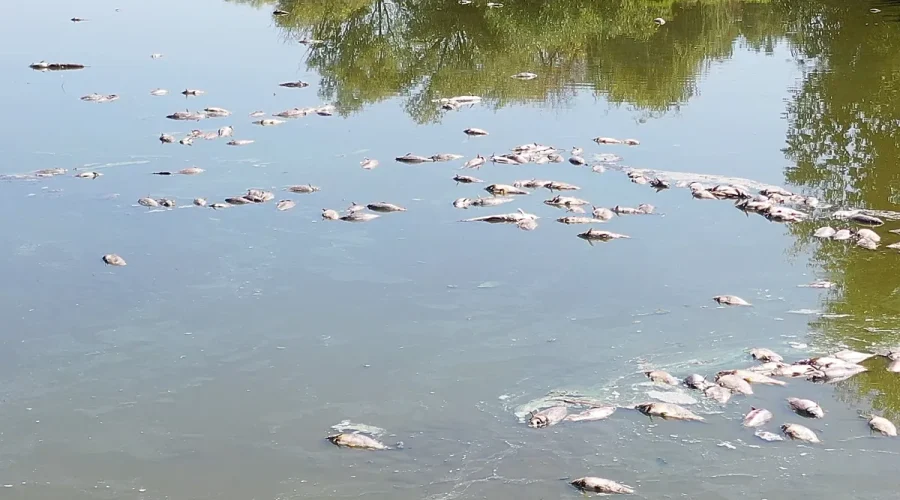
Usagevpn.com – At one of Europe’s most heavily protected wetlands, a fight for water turned lethal this August. The Rétszilasi Lakes—an 800-hectare fishpond complex south of Budapest—lost an estimated 300 to 350 tonnes of fish in a single month as extreme heat and evaporative loss drained the shallow waters to near nothing. The episode has laid bare deep fractures in how Hungary allocates scarce water among agriculture, aquaculture, and ecological preservation.
A Wetland Carrying Dual International Protection
The ponds at Rétimajor are not ordinary farm basins. They are the surviving fragment of the once-vast Sárrét marshlands: a mosaic of shallow, nutrient-dense lakes, dense reedbeds, small islands, and soft muddy margins that together concentrate waterfowl and amphibian life at extraordinary density. That ecological value has earned the site a Natura 2000 designation under EU law and a simultaneous listing as a wetland of international importance under the Ramsar Convention—few places in continental Europe hold that double shield.
The complex has been privately operated since 1994, when Ferenc Lévai acquired the site and reorganised it as an integrated agri-tourism estate under the company Aranyponty Zrt. Fish farming remains the dominant revenue stream, but the surrounding landscape also draws visitors and shelters a rich community of protected species.
How the Water Disappeared
Lévai places responsibility squarely on the Middle Danube Water Directorate, arguing that upstream irrigation withdrawals starved the ponds of their minimum ecological inflow. In his account, the water-management regime failed to deliver even the baseline level required by law for Hungary’s most protected aquatic area.
“In our view, because of a very poor water distribution regime, very little water reached us here; we could not even reach the water level that Hungary’s most protected area would be entitled to, the ecological water level, which stipulates at least 50% water across the whole water surface.”
He described the physical state of the complex in stark terms:
“We were unable even to maintain that 50% level: the extent of evaporation and the inadequate water supply led to a catastrophe. Around 150 hectares of our area are already dry, on another roughly 400 hectares the fish are eking out an existence in 30-40 centimetres of water, because they are not really living, and it is only on about 200-250 hectares that we have more than half the normal depth, where proper fish farming can take place.”
The mechanism of death was not simple dehydration. With water depth reduced to mere centimetres, surface temperatures spiked rapidly. Warmed sludge at the pond bottoms released dissolved gases into the thin remaining water column, effectively poisoning the fish in a process akin to a massive, slow-motion oxygen collapse.
The Water Authority’s Account
The Central Transdanubian Water Directorate, which administers the region’s water allocations, told Euronews that it had prepared contingency plans for drought conditions but that the unprecedented summer heat-dome event—which triggered a national emergency—had not been foreseeable when those plans were drafted.
Beginning 26 July, regional water restrictions took effect. Under those rules, fishpond operators could see their allocations trimmed by no more than 20 percent, while irrigation users faced cuts of up to 60 percent. The authority maintained it honoured those limits and did not withhold water from the ponds. To the contrary, it reported releasing 1.18 million cubic metres of water over a two-week window in August from the Fehérvárcsurgó reservoir—a body that largely holds Székesfehérvár’s treated municipal wastewater—specifically to top up the fishponds.
The authority noted that the reservoir currently holds barely more than that single release, at roughly 1.4 million cubic metres. Its hydrological estimate puts evaporative loss from the 800-hectare surface at as much as 100,000 cubic metres per day during peak heat, a figure it argues dwarfs any upstream irrigation drawdown.
“In our view, meeting (restricted) irrigation demands does not materially affect the very substantial volume of water requested to compensate for evaporation losses from fish-farming water use.”
The directorate added that the emergency “may not have been caused by the abstraction of irrigation water, but by the oxygen-depleted state of water heated up by the heat,” and stated it was commissioning a hydrological study of the entire water system, with particular attention to reserves held by licence-holding operators.
Financial and Ecological Fallout
For Lévai and Aranyponty Zrt., the loss of 300 to 350 tonnes of marketable fish represents a blow that will take multiple seasons to absorb. Beyond the direct revenue hit, the drying of roughly 150 hectares of previously inundated ground threatens the very habitat features—shallow margins, reedbeds, island refuges—that underpin the site’s Natura 2000 and Ramsar designations. If the ecological water level cannot be restored, the question becomes whether the complex can retain its protected status at all, reshaping the fight for water from a seasonal dispute into a structural one.
The hydrological study now underway will determine whether upstream abstraction, evaporative loss, or a combination of both was the dominant driver. Until its findings are published, both sides—operator and authority—will continue to frame the crisis in their own terms, while the ponds remain at a fraction of their required depth.
FAQ
What happened at the Rétszilasi Lakes in August? Extreme heat and evaporative loss reduced water depth across the 800-hectare fishpond complex to near zero in parts of the site, killing an estimated 300–350 tonnes of fish through oxygen collapse.
Why is the site considered so heavily protected? The Rétimajor ponds carry both a Natura 2000 designation under EU law and a Ramsar Convention listing as a wetland of international importance, giving them a dual layer of protection rare in continental Europe.
Who is blamed for the water shortage? Operator Ferenc Lévai blames the Middle Danube Water Directorate for failing to deliver the minimum ecological inflow. The Central Transdanubian Water Directorate counters that evaporative losses of up to 100,000 cubic metres per day far exceeded any irrigation drawdown and that it released 1.18 million cubic metres from the Fehérvárcsurgó reservoir to top up the ponds.
What restrictions were in place during the crisis? From 26 July, regional water restrictions limited fishpond allocation cuts to a maximum of 20 percent and irrigation cuts to up to 60 percent. A national emergency was declared in response to the heat-dome event.
What happens next? The water authority has commissioned a hydrological study of the entire system to determine the dominant cause of the shortage. Results will inform whether allocation rules, reservoir management, or both require structural revision.