Italy Braces for Its Deadliest Heat of 2026 as African Anticyclone Pins the South
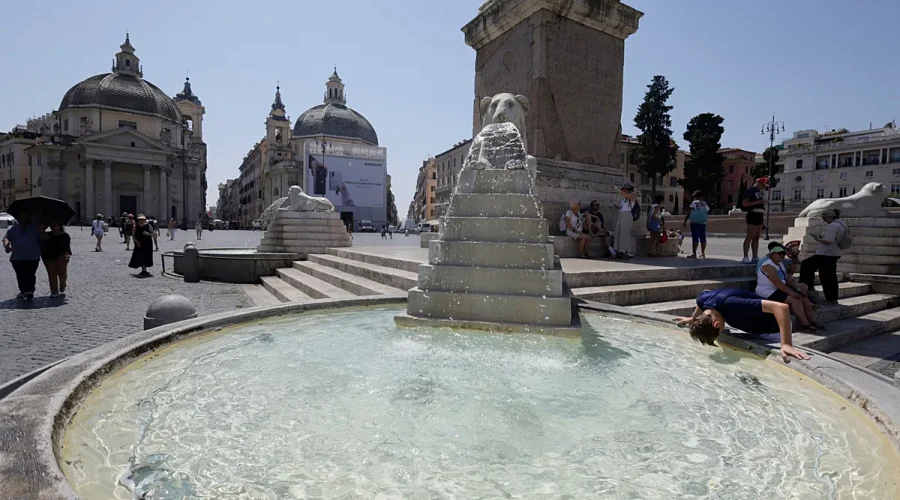
Usagevpn.com – Friday, 28 August, is shaping up to be the single hottest day of summer 2026 across the Italian peninsula. Forecasters project mercury readings of 45 °C across eastern Sicily and 44 °C in Puglia, while several inland valleys of Calabria may briefly spike to 45–46 °C. The episode marks the fifth consecutive extreme-heat event of the season and, by every metric available, the most severe one yet.
The Engine Behind the Furnace
The culprit is a deep African anticyclone that has stalled over the central Mediterranean, funneling superheated air northward and, in some scenarios, entraining Saharan dust that will further degrade air quality and visibility. Unlike earlier summer spells that swept through the country in a matter of days, this system is expected to hold its grip for roughly three days — from 27 through 29 August — before finally weakening. That compressed duration is precisely what makes it dangerous: sustained multi-day exposure at these magnitudes overwhelms the body’s thermoregulatory capacity far faster than a brief spike.
The heat will be most concentrated across southern and central Italy, where daytime maxima are running 8 to 10 °C above the climatological norm for late August. The brief lull of unsettled weather earlier in the week had offered a narrow window of relief, but that reprieve is now over.
Alert Levels Escalate Sharply
The Health Ministry’s latest bulletin places three cities under a red alert as of Thursday: Bari, Palermo, and Campobasso. Nine additional municipalities sit on orange watch — Ancona, Cagliari, Catania, Florence, Latina, Messina, Reggio Calabria, Rieti, and Rome.
By Friday the red-alert list nearly triples. Bari, Cagliari, Campobasso, Catania, Latina, Messina, Palermo, Reggio Calabria, and Rome will all carry the highest danger designation. In central and southern zones, Foggia is forecast to hit 42 °C, Isernia 40 °C, and Rome 38–39 °C — figures that, sustained over two or three days, carry serious risks of heatstroke, cardiovascular events, and dehydration among outdoor workers, the elderly, and those without reliable air-conditioning.
“Super-Tropical” Nights in Sardinia
Sardinia will not escape the episode. Maximum temperatures of 44 °C are anticipated across the island, but the more unusual feature is the overnight behaviour. Meteorologists describe the coming nights as “super-tropical”: on the island’s low-lying plains, minimum temperatures will fail to dip below 25 °C. That persistent nocturnal warmth prevents the body from recovering its thermal balance during sleep, compounding daytime stress and elevating the risk of heat-related illness well beyond what daytime maxima alone would suggest.
The North Gets a Different Story
For once, northern Italy is largely outside the worst of the thermal load. Maximum temperatures there are trending downward. The Milan metropolitan area may not even touch 30 °C, Turin is expected to hover between 27 and 28 °C, and the Veneto Plain should peak around 34 °C. In practical terms, the north will experience a warm but manageable late-August day rather than the life-threatening conditions afflicting the south.
What the north will receive instead is deteriorating convective weather. By Friday, the most severe atmospheric instability is forecast across the northern regions, carrying a credible risk of torrential rainfall, hail, and damaging wind gusts. The contrast between a 45 °C furnace in Sicily and a hailstorm over the Po Valley on the same afternoon underscores how sharply the anticyclone’s western flank is dividing the country into two distinct weather regimes.
Weekend Relief and the September Question
A broad easing of conditions is anticipated over the weekend, with temperatures falling most noticeably in central and southern Italy as the anticyclone finally begins to erode. The opening days of September should retain a summery character, offering a brief respite before the seasonal transition.
However, between Tuesday 1 and Wednesday 2 September, a fresh unstable front is expected to push into northern Italy, with the possibility of later involvement of parts of central Italy. The south, by contrast, is likely to remain warmer than the north through that window, extending the thermal divide that has defined much of this summer.
Why This Episode Matters
Five extreme-heat events in a single summer is well outside the historical norm for the Italian peninsula. Each successive episode arrives with less time for infrastructure to recover — shaded rest areas, cooling centres, and public-health messaging all face cumulative strain. The combination of multi-day duration, nocturnal heat retention, and Saharan-dust loading makes this particular event a stress test for emergency services, agricultural operations (particularly olive and citrus groves in Puglia and Sicily), and the energy grid, which typically sees electricity demand surge past 30 GW on such days. For residents of the affected zones, the practical guidance is straightforward: limit outdoor activity between 11:00 and 18:00, hydrate aggressively, check on neighbours who live alone, and use air-conditioned public spaces — libraries, shopping centres, metro stations — as temporary shelters during peak hours.
Related Reading
Frequently Asked Questions
What is Italy faces summer s most intense?
Italy faces summer s most intense is the main topic of this guide. The article explains the context, practical details, and next steps readers should understand.
Why does Italy faces summer s most intense matter?
Italy faces summer s most intense matters because readers are looking for a useful answer, not just a short summary. Good content should match search intent and help them decide what to do next.