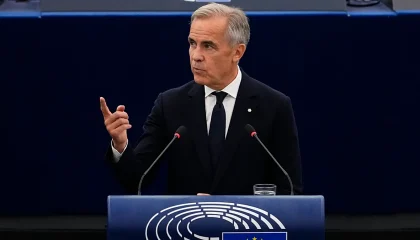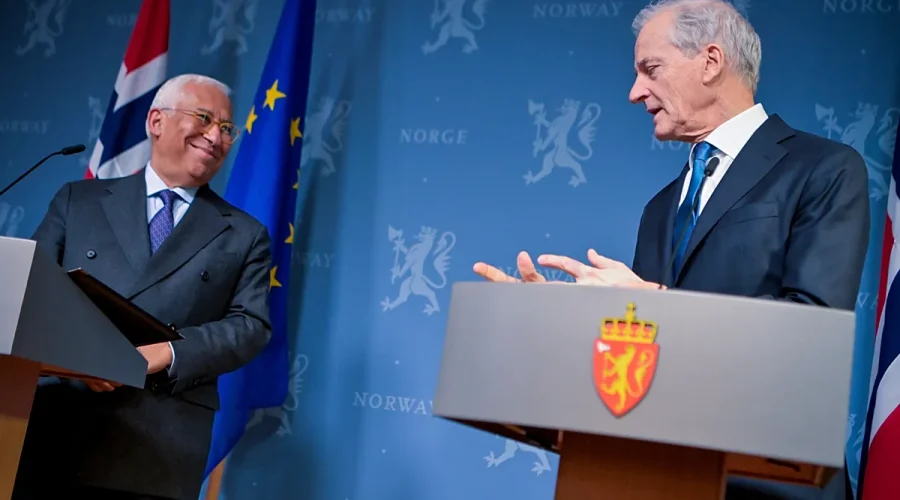
Iceland’s EU Referendum and the Uncomfortable Question for Oslo
Usagevpn.com – When Icelandic voters head to the polls on Saturday to decide whether their government should resume accession talks with Brussels, the eyes of at least one neighbouring capital will be fixed on the result with unusual intensity. Norway, a nation of roughly five million people that has never joined the European Union, stands to lose its most significant institutional anchor to the bloc’s single market if the “Yes” camp prevails. The stakes for Oslo are not merely diplomatic; they are structural.
The EEA’s Fragile Arithmetic
The European Economic Area, which took effect in 1994, functions as the legal bridge that extends the EU’s four freedoms—free movement of goods, services, capital, and persons—to three non-member states: Iceland, Liechtenstein, and Norway. Should Iceland complete its accession process, that tripartite arrangement collapses into something far thinner. Liechtenstein, a microstate of approximately 40,000 inhabitants whose economy is deeply intertwined with Switzerland’s, would remain alongside Norway. In practical terms, the EEA would devolve into a bilateral framework between the European Union and one Scandinavian country.
The numerical imbalance makes the point stark. Foreign Minister Espen Barth Eide laid out the arithmetic to the Storting in May:
“If Iceland should become a member of the EU, the balance of power between the parties to the EEA Agreement – originally 12 countries to 7 – will become 28 to 2.”
That ratio renders the arrangement’s original purpose—giving smaller European states a meaningful voice in single-market governance—largely moot. Norway would remain the sole major economy inside the EU’s regulatory perimeter without a vote in the institutions that set the rules.
A Precedent Already Written
Iceland would not be the first EEA participant to graduate into full membership. When the agreement was signed, it also encompassed Austria, Finland, and Sweden. All three held referendums, all three voted in favour, and all three subsequently joined the Union. The institutional pathway from EEA participation to EU accession is therefore well trodden, and its completion by Iceland would strip Norway of the most convenient argument for staying outside: that the EEA offers a workable, sovereign-preserving alternative to full membership.
Technically, the EEA treaty would survive an Icelandic accession. Politically, however, defending it as a viable long-term strategy would grow increasingly difficult for a government that has already twice told its citizens the arrangement is sufficient.
Two Rejections, One Persistent Pattern
Norway’s relationship with the European project is defined by two referendums in which it was the sole candidate country to vote against joining. In 1972, 53.5 per cent of voters said no. In 1994, the figure was 52 per cent. The underlying anxieties—control over North Atlantic fisheries, protection of a small-scale agricultural sector, and scepticism about trading national sovereignty for a diluted voice inside a far larger bloc—have shifted little over five decades.
A poll published earlier this month by the Norwegian daily ABC Nyheter found 49 per cent of respondents would vote against EU membership, set against 37 per cent in favour. The gap is narrower than in either prior referendum, yet it remains wide enough to deter most parties from reopening the question. Norwegian politicians, scarred by the bitterness of earlier campaigns, have shown little appetite for a third national debate on the issue.
What Iceland’s Vote Actually Decides
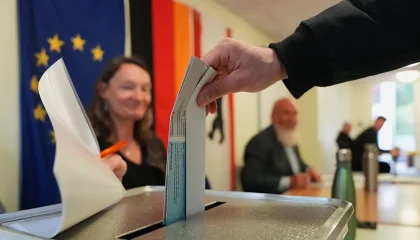
A critical distinction for observers in Oslo: Saturday’s ballot does not ask Icelanders to join the EU. It asks whether the government should receive a mandate to restart accession negotiations, which were suspended in 2015. A “Yes” outcome triggers talks; a subsequent referendum would then determine whether voters ratify any eventual treaty. A “No” outcome leaves the status quo intact and reinforces the EEA as Iceland’s primary European framework.
Prime Minister Kristrún Frostadóttir addressed both scenarios after meeting her Norwegian counterpart, Prime Minister Jonas Gahr Støre, in February:
“We will keep the EEA Agreement active whatever happens. Because if a yes comes out of this referendum on our side, there is still a decision to be taken on full membership. If a no comes out of it, we need to rely on the EEA Agreement being strong and active.”
Oslo’s Calculus
For Norway, the referendum outcome shapes the political landscape in ways that extend well beyond trade policy. Hallgrimur Oddsson, director of the Reykjavík-based think tank Evrópustraumar, told Euronews that Norwegians would “follow very closely” how any resumed negotiations unfold, with particular attention to fisheries provisions. He anticipates that pro-EU factions in Norway will seize on any negotiating momentum to reignite the membership debate, while acknowledging that Norway’s two prior referendums give it a distinct historical trajectory.
“Their history is also different,” he said.
Even a successful Icelandic accession would not automatically translate into Norwegian enthusiasm. The domestic political architecture—party positions, voter sentiment, institutional memory of past campaigns—would still need to shift before a third referendum became politically feasible. Iceland’s vote, in other words, supplies external pressure but cannot manufacture internal consensus.
Barth Eide’s own framing in May acknowledged the dilemma without prescribing a solution:
“We must recognise that an Icelandic membership process will pose special challenges for Norway as an EEA country.”
He added that regardless of Reykjavík’s choice, Norway would continue working to deepen its cooperation with the EU. The statement is carefully calibrated: it neither commits Oslo to a third referendum nor entrenches the EEA as a permanent endpoint. It leaves the question open, which, for a government whose voters have answered it twice already, may be the only politically survivable position.
The broader implication for European integration is equally pointed. If the last major Nordic economy outside the Union finds its remaining institutional tether rendered functionally bilateral, the question of whether the EU’s eastern and northern periphery can be held together through partial arrangements—EEA, EFTA, bilateral trade deals—loses its most prominent test case. Norway’s eventual answer, whenever it comes, will carry weight far beyond the Scandinavian peninsula.
Related Reading
Frequently Asked Questions
What is If Iceland joins the EU where?
If Iceland joins the EU where is the main topic of this guide. The article explains the context, practical details, and next steps readers should understand.
Why does If Iceland joins the EU where matter?
If Iceland joins the EU where matters because readers are looking for a useful answer, not just a short summary. Good content should match search intent and help them decide what to do next.