Ten Thousand Voices Fill Stockholm’s Streets as Sweden Heads to the Polls
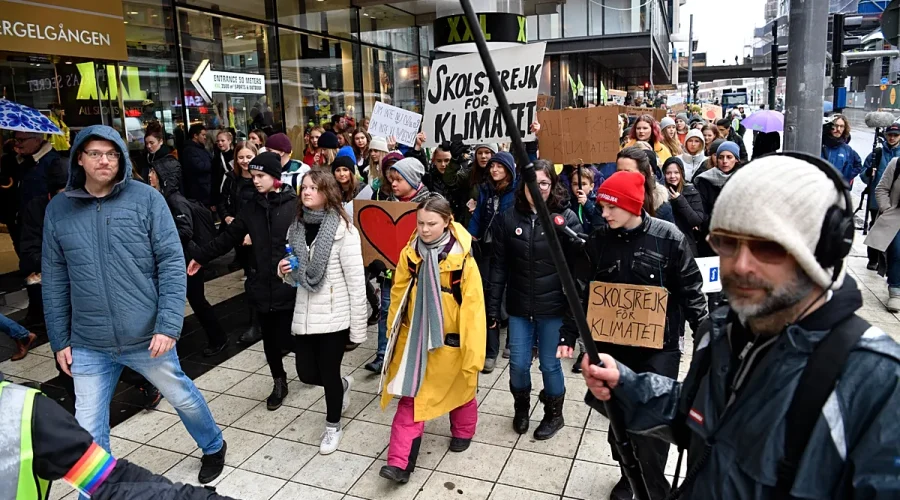
Usagevpn.com – With barely three weeks separating the nation from its next general election, Sweden’s capital became a stage for one of the largest climate demonstrations in recent memory. Roughly ten thousand marchers poured through the heart of Stockholm on Sunday, turning sidewalks and intersections into a sea of placards, banners, and chanting voices. Their message was singular and pointed: the country must accelerate its climate response before the ballot boxes open on 13 September.
The timing is no accident. Opinion polling in the run-up to Swedish elections has consistently placed environmental policy among the issues voters weigh most heavily, alongside cost-of-living pressures and immigration. For parties on both sides of the political spectrum, the climate vote has become a litmus test, and a march of this scale three weeks before polling day lands squarely in the campaign’s crosshairs.
From Vasaparken to the Steps of Parliament
The demonstration traced a deliberate arc through the city. It launched from Vasaparken, a leafy green space in the city’s western districts, where the activist collective known as Mothers Rebellion took the stage first. The group, composed largely of Swedish parents who have organized weekly protests demanding concrete emissions cuts, performed songs and chants designed to energize the gathering before the main speaker took the microphone.
That speaker was Greta Thunberg, the young climate activist whose solitary school sit-in outside the Swedish parliament in August 2018 ignited a global movement. Thunberg addressed the crowd from the park, calling on attendees to translate their frustration into electoral choices. The march then wound its way eastward through central Stockholm, passing landmarks and commercial districts, before concluding at Gustav Adolfs torg — the square directly facing the Riksdag, Sweden’s parliament building. Ending at the seat of government was a deliberate rhetorical choice: the protesters wanted their demands delivered, literally, to the doorstep of the legislators who would decide the next four years of policy.
The School Strike Legacy, Now Aimed at a Ballot
Banners carried along the route bore the visual language of the school strike movement that Thunberg founded — the raised fist, the bold typography, the urgent slogans that became instantly recognizable from London to Lima. What began as a teenager skipping class to sit outside a government building has, over more than seven years, evolved into a decentralized global campaign with local chapters on every continent. In Sweden, however, the movement’s home turf carries particular weight. Thunberg’s presence in Stockholm is not a visiting celebrity appearance; it is a homecoming of sorts, and the political stakes feel correspondingly sharper.
Signs reading “vote for the climate” were among the most visible messages in the crowd. The phrasing reframes the march from a general protest into an explicit electoral instruction. Organizers and participants framed the day not merely as a show of solidarity but as a final pre-campaign nudge: choose candidates and parties whose platforms contain enforceable, dated emissions-reduction commitments rather than aspirational language.
What the Election Stakes Mean for Climate Policy
Sweden’s 13 September general election will determine which coalition governs the Riksdag and, by extension, which climate targets receive legislative backing. The country has long positioned itself as a Nordic leader on renewable energy, carbon taxation, and industrial decarbonization. Yet the pace of implementation — particularly in heavy industry, transport, and agriculture — has drawn criticism from both domestic activists and international observers. A government elected on a platform that treats climate action as a secondary concern, subordinate to short-term economic growth, would face immediate pressure from movements of the scale demonstrated on Sunday.
The march also arrives against a broader European backdrop. Across the continent, climate activism has shifted from street-level disruption toward electoral accountability, with young voters and their parents increasingly treating green policy as a non-negotiable condition of their vote. Sweden’s election, taking place in the same window as other European contests, will be watched closely as a bellwether for how far climate politics has penetrated mainstream electoral competition in the region.
A Day That Speaks to the Next Four Years
Whether or not the ten thousand marchers succeed in bending the political outcome in a specific direction, the event has already accomplished something concrete: it has made visible, in the capital, in the final weeks of the campaign, the scale of public demand for accelerated climate action. For the candidates who will face voters over the coming fortnight, the image of a packed Gustav Adolfs torg will be difficult to ignore. The question the march poses is not abstract. It is a question with a deadline, and that deadline is thirteen days after the next Sunday.
“Vote for the climate.”
Those four words, repeated across thousands of handmade signs, distilled the entire purpose of the day into a single imperative. The marchers walked to parliament not to be heard by journalists but to be heard by the people who, in three weeks, will hold the keys to Sweden’s next legislative agenda. How those keys are turned will define whether the energy of that Sunday translates into policy, or dissipates into the next cycle of protest.
Related Reading
Frequently Asked Questions
What is Huge climate protest in Sweden ahead?
Huge climate protest in Sweden ahead is the main topic of this guide. The article explains the context, practical details, and next steps readers should understand.
Why does Huge climate protest in Sweden ahead matter?
Huge climate protest in Sweden ahead matters because readers are looking for a useful answer, not just a short summary. Good content should match search intent and help them decide what to do next.