Portugal’s Biggest Solar Farm Slides Into Insolvency as Market Pressures Bite
Usagevpn.com – A British-owned solar installation that once symbolised Portugal’s ambitions to become a leading renewable-energy producer on the Iberian Peninsula has now entered formal insolvency proceedings. Welink Energy Portugal 2 UK, the operator of Solara4 — the country’s single largest photovoltaic facility by installed capacity — has filed for insolvency, according to a report issued this month by the consultancy firm BDO. The filing marks a sharp reversal for a project that was inaugurated in 2021 and had been positioned as a flagship of the Algarve’s green-energy transition.
A 219 MW Plant in Alcoutim, Five Years Into Operation
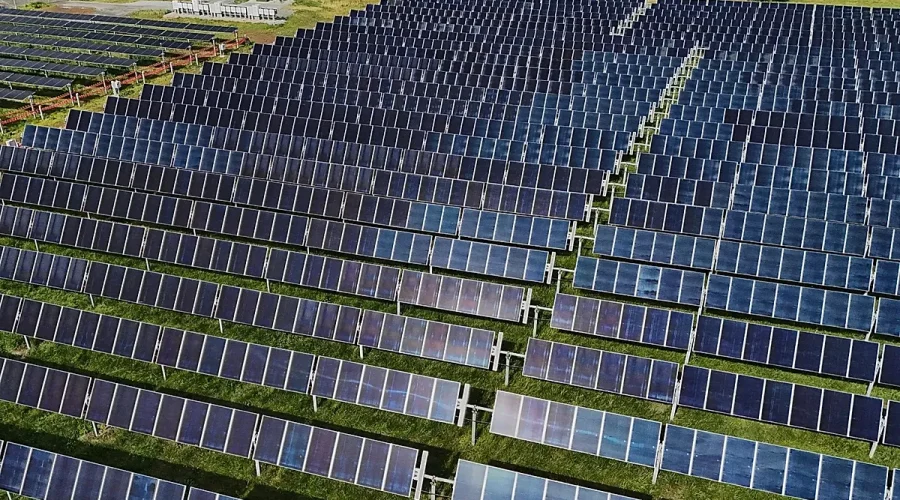
Solara4 sits in the municipality of Alcoutim, in the southernmost stretch of the Algarve, and carries 219 MW of installed solar capacity. The plant began generating electricity in 2021, meaning it has now been running for roughly five years. For a region long associated with tourism and agriculture, the facility represented a major industrial investment and a visible commitment to decarbonising the local grid. Its scale made it the largest solar installation in Portugal at the time of commissioning, and its continued operation was expected to anchor the country’s growing share of renewables in the national energy mix.
Yet the five years since commissioning have been anything but smooth. The BDO report describes a plant that has endured “a combination of operational and market challenges that have adversely affected its performance and cash flow generation.” In practical terms, the facility has consistently produced less electricity than its original engineering forecasts projected. Meanwhile, the broader Iberian wholesale electricity market has been flooded with new solar capacity, pushing day-ahead and intraday prices down to zero and, on occasion, into negative territory. When generators must pay to deliver power into the grid, revenue streams that were modelled on stable wholesale prices evaporate almost overnight.
“Electricity production has consistently fallen short of initial forecasts. At the same time, the Iberian energy market has seen significant growth in solar generation capacity. We have seen wholesale prices drop to zero or into negative territory, and revenues have been lower than expected.”
Contractor Disputes and Technical Failures Compound the Problem
Market headwinds alone do not tell the full story. The plant’s operator has also been locked in protracted disputes with its original construction contractor, China Triumph International Engineering, a subsidiary of a large Chinese state-owned industrial conglomerate. Contractual disagreements over performance guarantees and warranty obligations have drained management attention and added legal costs. On top of that, recurring fires and other technical faults at the site have forced unplanned outages, further depressing output during periods when the plant was already struggling to meet its generation targets.
The convergence of below-forecast production, collapsing wholesale prices, contractor litigation, and equipment failures created a cash-flow spiral that, by the time BDO was engaged, had left the company unable to meet its financial obligations.
The €400 Million Hybridisation Plan and Its Environmental Roadblock
Before the insolvency filing, Welink had already announced an ambitious expansion strategy. In 2024, the company outlined a plan to “hybridise” Solara4 by layering wind generation and battery storage onto the existing solar array. The proposed investment stood at roughly €400 million and would have added 50 MW of further solar capacity, 264 MW of wind power delivered through 40 turbines, and a 100 MW battery energy storage system. Upon completion, the combined facility would have exceeded 600 MW of installed capacity, transforming a single-site solar plant into a multi-technology energy hub capable of smoothing output across day and night cycles.
The plan, however, ran into a regulatory wall. The Portuguese Environment Agency (APA), which leads the national environmental assessment committee, issued an unfavourable opinion on the original design. The agency concluded that the project as submitted would not be “compatible with safeguarding the environmental values present in the affected area.” Welink subsequently revised the scheme, cutting the number of planned wind turbines to just over half the original count, and resubmitted the modified proposal through a public consultation process. As of the latest available information, the APA has not rendered a definitive decision on the revised plan, leaving the hybridisation project in regulatory limbo.
What Happens Next: Finding New Owners
With the insolvency process now formally underway, the immediate priority has shifted from expansion to survival. The central question facing the administrators is whether new investors can be identified who are willing to acquire the Solara4 asset at a price that reflects both its physical value and its troubled recent history. The plant’s location in the Algarve, its grid connection, and its five-year operating record give it intrinsic worth, but the unresolved contractor disputes, the stalled hybridisation application, and the structural weakness of Iberian solar wholesale prices all weigh on any prospective buyer’s valuation.
For Portugal’s energy sector, the episode underscores a broader tension: the country has pursued aggressive solar build-out targets to meet EU decarbonisation deadlines, yet the very success of that build-out has compressed the wholesale prices on which individual projects depend. A plant that was financially viable at the moment of commissioning can become structurally unprofitable within a few years if the market it was designed to serve is flooded with competing generation. Solara4’s insolvency is the latest, and most visible, illustration of that dynamic — and a cautionary signal for the pipeline of solar projects still seeking financing across the Iberian Peninsula.
Related Reading
Frequently Asked Questions
What is UK firm running Portugal s largest?
UK firm running Portugal s largest is the main topic of this guide. The article explains the context, practical details, and next steps readers should understand.
Why does UK firm running Portugal s largest matter?
UK firm running Portugal s largest matters because readers are looking for a useful answer, not just a short summary. Good content should match search intent and help them decide what to do next.