Dolly Parton Shares Health Update, Teases Avatar Shows
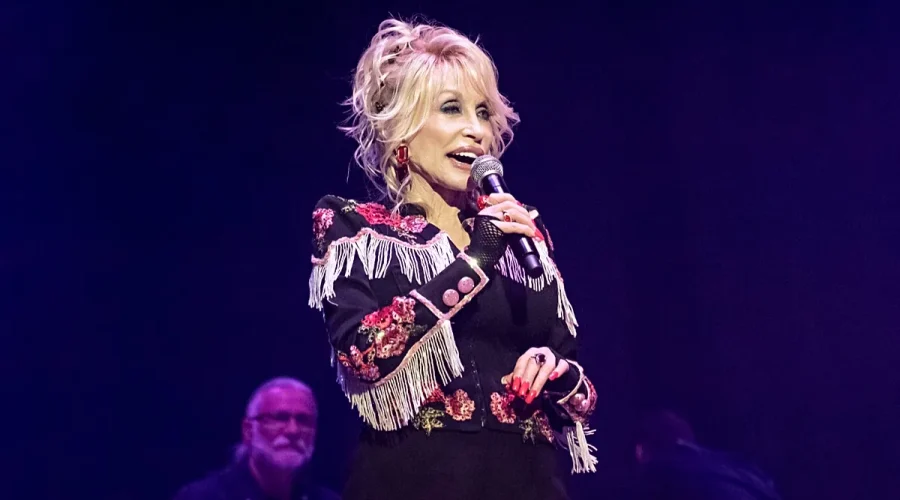
Usagevpn.com – Dolly Parton shares health update details in a candid interview, explaining that she has had to cancel a run of scheduled performances after neglecting her own well-being while caring for her late husband, Carl Dean, through his final months. Dean passed away in March following nearly sixty years of marriage, and Parton says the grief and exhaustion left her body paying a price she had postponed addressing. She framed the cancellations not as a dramatic event but as a long-overdue correction.
“I am dealing with some health issues that I just didn’t pay attention to when I was watching over Carl.”
The country icon noted that this is far from her first brush with serious medical trouble. She recalled being sidelined for months in the early 1980s by what she called “female issues,” a stretch that tested her endurance long before the present crisis. What has changed, she observed, is the speed and reach of modern information: every setback now travels instantly to millions of screens.
“I used to joke that I was the Queen of the Tabloids, but now I guess I’m the Queen of Social Media AI!”
Even amid recovery, Parton stressed that she remains professionally active and is continuing to work. Her determination has defined six decades of output, and she made clear the current pause is temporary rather than terminal.
Avatar Performances: A Digital Stage in Early Talks
Separate from her immediate medical situation, Parton disclosed preliminary conversations with several technology firms about producing what she termed “avatar performances” — digitally rendered versions of herself engineered to deliver new kinds of fan experiences. She emphasized that these discussions sit at the earliest developmental stage; no formats, timelines, or concrete plans have been locked in.
Were such a project to advance, Parton would join a widening circle of artists who have turned to digital projection and motion-capture technology to extend stage presence beyond the limits of the physical body. Michael Jackson, Elvis Presley, and Tupac Shakur have all appeared in holographic form for posthumous tours, while the virtual band Gorillaz and the Swedish pop group ABBA have built sustained concert attractions around the same toolkit.
From Victorian Parlour to Stadium: The Technology’s Lineage
The visual trick at the core of these shows descends from a Victorian theatrical gag. English scientist John Henry Pepper popularized the illusion during a Christmas Eve staging of Charles Dickens’ “The Haunted Man and the Ghost’s Bargain” in 1862. The method — now universally called “Pepper’s ghost” — employs angled glass and precisely positioned lighting to cast a convincing phantom image into a performance space. After its initial theatrical success, the technique migrated into carnival sideshows, early cinemas, and amusement parks before finding its modern application in live entertainment.
The first documented deployment at a major music event arrived at the 2006 Grammy Awards, where Pepper’s ghost placed Madonna on stage alongside the animated members of Gorillaz. Since that landmark moment the approach has evolved considerably. The most ambitious current example is ABBA Voyage, a permanent London attraction that layers Pepper’s ghost with high-resolution digital projection and real-time motion capture to recreate all four members of the group in a fully immersive environment.
The technology has also crossed into politics. In 2014, Indian Prime Minister Narendra Modi was projected simultaneously at eighty-eight locations across the country. In 2017, French presidential candidate Jean-Luc Mélenchon delivered a campaign speech in Aubervilliers via digital projection, appearing before an audience to which he was not physically present.
Fan Backlash and the Ozzy Osbourne Precedent
Not every digital resurrection has been received warmly. When it was recently announced that an AI avatar of Ozzy Osbourne was being developed, fans pushed back sharply, labeling the venture a “cash grab” and calling it “heresy.” Sharon Osbourne, the rocker’s widow, responded with characteristic bluntness.
“For somebody to turn around to me and say I’m doing a cash grab? No, you don’t know my husband, OK? I know my husband.”
She added that Osbourne himself would have supported the project, recalling how he repeatedly asked her, after his death, how long he thought he would be remembered. The episode illustrates the tension that now surrounds digital performance: audiences want continuity of presence, yet they also guard the boundary between memory and spectacle.
FAQ
Why did Dolly Parton cancel recent performances? She attributed the cancellations to health complications that went unaddressed while she focused on caring for Carl Dean during his final months. She described the situation as a long-overdue correction rather than a sudden crisis.
What are “avatar performances” and are they confirmed? Parton described them as digitally rendered versions of herself designed for new fan experiences. She stressed the talks remain in their earliest phase, with no finalized plans, timelines, or formats.
Is Parton still working? Yes. She told interviewers she continues to work even as recovery proceeds, underscoring the determination that has defined her six-decade career.
What is the historical origin of the holographic effect used in these shows? The technique traces to John Henry Pepper’s 1862 theatrical illusion, later known as “Pepper’s ghost,” which uses angled glass and lighting to project a phantom image. It has since evolved through carnival sideshows, early cinema, and modern motion-capture systems.