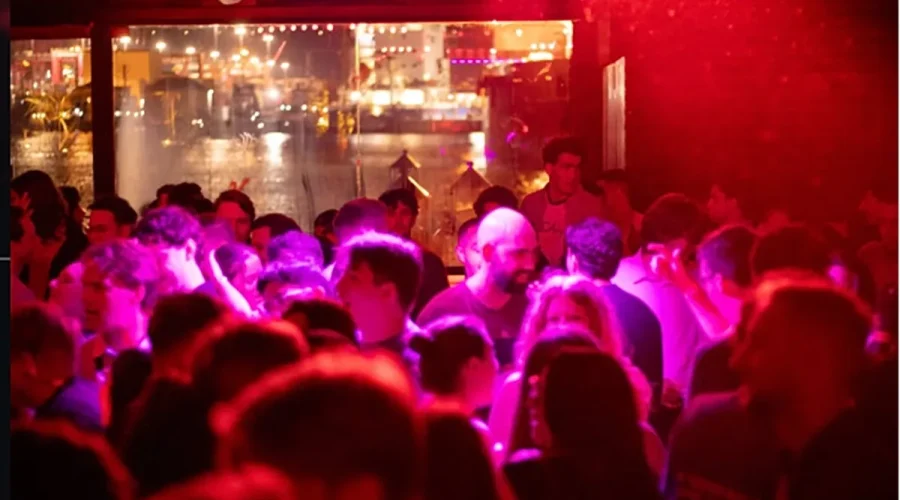
Two American Brothers Say Lisbon’s Most Famous Nightclub Turned Them Away Over Skin Colour
Usagevpn.com – A short video posted late last week has reignited a long-running controversy surrounding one of Lisbon’s most prominent nightlife venues. Two American brothers, both in their early thirties, claim they were denied entry to K Urban Beach — a large, high-profile club situated along the Tagus River and routinely ranked among the busiest in the Portuguese capital — because of their skin colour. The footage, recorded in the small hours of Friday, went viral before being taken down by its creator.
The Night at the Door
The photographer and videographer, who posts under the handle nyc.buddha, described the episode as the most racist moment of his entire life. In the clip, he recounts how he and his brother approached the entrance and were told they must pay a €250 entry fee. Surprised, he asked the guard whether he was joking. The guard, audible in English, replied flatly:
“No, this is my decision, it is my job.”
The two men pointed out that other guests were being admitted without any such charge. Rather than accept the explanation, they left the premises, purchased tickets through the club’s website for roughly 32 euros total, and returned. By then, a woman had taken a position beside the original guard, and both turned them away again, citing a full house and promising reimbursement.
“I Do Not Like Black People”
Pressed once more on the reason for the refusal, the brothers challenged the guard over their skin colour and hair. The guard’s response, captured on camera, drew a sharp exchange:
“Yes, I do not like black people.”
He said this while gesturing toward the woman beside him, who is also Black. The young man asked what she was, to which the guard answered:
“He is my bro!”
The retort that followed landed with particular force in an American context:
“And to you, what am I? A nigga?”
The guard confirmed:
“You are a nigga.”
In the United States, the full form “nigger” is regarded as deeply offensive. The shortened variant “nigga” is sometimes used informally within Black communities and is perceived as softer, yet it remains context-dependent and can still wound. For a non-American audience, the exchange underscores how loaded the terminology is and why the moment struck such a nerve.
A Pattern Stretching Back Over a Decade
The brothers’ account did not emerge in a vacuum. José Falcão, founder and head of the Lisbon-based NGO SOS Racismo, confirmed that complaints about K Urban Beach have been reaching his organisation since at least 2013. The venue, perched on the Tagus and drawing thousands of visitors nightly, has accumulated a troubling record of alleged discriminatory and violent conduct at its entrance.
The 2014 Évora Incident
The most widely publicised episode dates to April 2014. Olympic sprinter Nelson Évora, a celebrated Portuguese athlete of Cape Verdean descent, recounted on his Facebook page how friends surprised him with a night out at Urban Beach. Sixteen of them arrived with pre-booked tables. Management, however, turned them away. Évora’s explanation was blunt:
“Why? Too many black people in the group!”
The 2017 “Ruben” Case
Three years later, a near-identical scenario unfolded. Ruben, a young Black Frenchman travelling with a group of white friends, was asked by the doorman to pay 250 euros for entry while his companions were waved through free of charge. When the group protested the differential treatment, a physical altercation broke out between the security staff and members of the party. The incident drew enough public attention that the Public Prosecutor’s Office moved to have the club closed. K Urban Beach operated under a shutdown order from November 2017 through January 2018.
Complaints That Never Stopped
The temporary closure did not end the pattern. Online review platforms continue to surface accounts from Black patrons describing inflated door charges, condescending treatment, and occasional physical aggression. A comment posted in June 2025 describes a woman being struck on the head at the entrance and accuses local police of inaction. Similar language — accusations of racist rudeness, selective pricing, and violence — recurs across dozens of entries.
For visitors to Lisbon, the episode raises a practical question: how does one navigate a nightlife scene where a single venue, despite its size and popularity, appears to have cultivated a reputation that deters a meaningful slice of its potential clientele? The brothers’ video, though now deleted, ensured that the question reached a global audience once again, and it will likely keep the debate alive well beyond the weekend it was posted.
Related Reading
Frequently Asked Questions
What is I don t like black people?
I don t like black people is the main topic of this guide. The article explains the context, practical details, and next steps readers should understand.
Why does I don t like black people matter?
I don t like black people matters because readers are looking for a useful answer, not just a short summary. Good content should match search intent and help them decide what to do next.