DRC Ebola Crisis Accelerates as Death Toll Surpasses 2,500
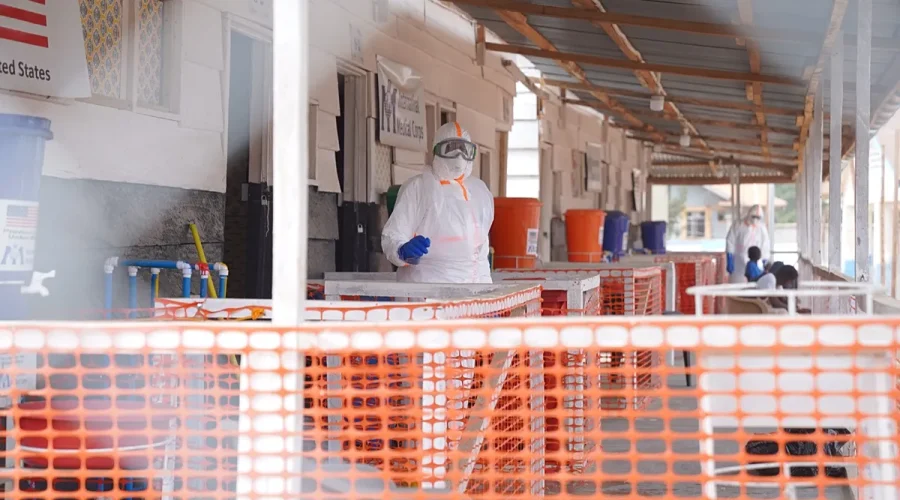
Usagevpn.com – The Ebola epidemic gripping the Democratic Republic of the Congo has entered a phase of alarming acceleration, with fatalities now exceeding 2,500 and the pace of new infections outstripping every previous outbreak in the country’s recorded history. Julien Harneis, the United Nations’ senior coordinator for Ebola response, described the trajectory to journalists on Friday as “exponential,” delivering the assessment from Bunia, a town in the Ituri province that has become the operational nerve centre of the crisis.
The scale of the emergency is difficult to overstate. Declared officially on 15 May, this is the seventeenth Ebola episode the DRC has endured since the virus was first identified in the region in 1976. Yet unlike earlier waves, which were typically contained within weeks through ring-vaccination and contact tracing, the current outbreak appears to have been circulating silently for several weeks before its formal announcement. By the time authorities confirmed the first cases, the pathogen had already established footholds across multiple provinces.
A Footprint Larger Than France
Harneis offered a striking geographic comparison to convey the spatial reach of the epidemic: the affected zone now spans an area larger than France. The virus has pushed into northern and eastern provinces where government authority is thin, clinic networks are sparse or nonexistent, and decades of overlapping armed conflicts have fractured communities and disrupted supply chains. In such settings, the standard tools of outbreak containment — rapid case identification, isolation of contacts, safe burial protocols — become extraordinarily difficult to deploy at scale.
“The epidemic is spreading widely. It’s now covering an area that is bigger than France….It is growing faster and wider than the Ebola response.”
That last clause — the response lagging behind the pathogen — captures the central dilemma facing international health agencies and Congolese ministries alike. Every day without adequate staffing and logistics in remote eastern districts allows the virus to seed new transmission chains, compounding the difficulty of eventual containment.
The Toll in Numbers
Over the preceding three months, more than 2,500 people have died from the outbreak. What makes the figure especially grim is its internal distribution: roughly half of those deaths occurred within the final twenty days of that window. In epidemiological terms, such a compressed mortality curve signals that the basic reproduction number is climbing, that case-fatality ratios remain high, and that detection systems are struggling to keep pace with community spread.
“More than 2,500 people” had died, “and half of those in the last 20 days.”
For context, the 2018–2020 Ebola epidemic in North Kivu and Ituri — the deadliest in DRC history before the current wave — claimed approximately 2,300 lives over a span of more than a year. The present outbreak has already surpassed that total in a fraction of the time, underscoring how rapidly conditions have deteriorated.
Why the East Remains a Flashpoint
The eastern DRC has long been a pressure point for infectious-disease emergencies. The region’s dense tropical forests harbour non-human primates that serve as natural reservoirs for filoviruses. Simultaneously, the same terrain that shelters wildlife makes road access to villages treacherous, particularly during the rainy season. Decades of militia activity — involving groups such as the M23, the FNL, and numerous smaller armed factions — have displaced populations repeatedly, eroded trust in public-health messaging, and damaged the very health posts that would serve as first-line detection points.
Bunia itself, situated along the Uele River in Ituri province, has experienced its own cycles of inter-ethnic violence. Its position as a transport hub makes it a logical staging point for response teams, but also a potential corridor through which the virus can migrate into neighbouring settlements and, ultimately, across borders into Uganda, South Sudan, or the Central African Republic.
The Narrow Window for Intervention
Harneis framed the situation as one of urgent choice. Additional personnel, cold-chain logistics for vaccines and therapeutics, and sustained funding directed specifically at the most isolated eastern districts could, within a matter of months, bend the transmission curve downward and begin the process of halting spread entirely.
“If we provide more staffing, if we get more resources into remote areas across…the east of the Democratic Republic of Congo, within months we can slow the transmission and move to stopping it.”
The alternative, he warned, is a trajectory in which the epidemic deepens its lethality, widens its geographic envelope, and crosses national frontiers — a scenario that would transform a national public-health emergency into a regional one, straining already fragile health systems in neighbouring states.
“If we do not,…then this epidemic will become more deadly. It will spread wider and it risks to spread into neighbouring countries.”
For the communities living in the outbreak zone, the stakes are immediate and personal. Families are burying relatives with minimal protective equipment. Schools remain closed. Market activity has contracted, squeezing household incomes in provinces already dependent on subsistence agriculture and informal trade. The international community’s response in the coming weeks will determine whether this seventeenth outbreak becomes the last of its kind in the eastern DRC, or merely the most lethal chapter in a continuing cycle of preventable catastrophe.
Related Reading
Frequently Asked Questions
What is Ebola outbreak in Democratic Republic?
Ebola outbreak in Democratic Republic is the main topic of this guide. The article explains the context, practical details, and next steps readers should understand.
Why does Ebola outbreak in Democratic Republic matter?
Ebola outbreak in Democratic Republic matters because readers are looking for a useful answer, not just a short summary. Good content should match search intent and help them decide what to do next.