Underground Passage Exposes New Layer in Latvia’s Prolonged Border Crisis
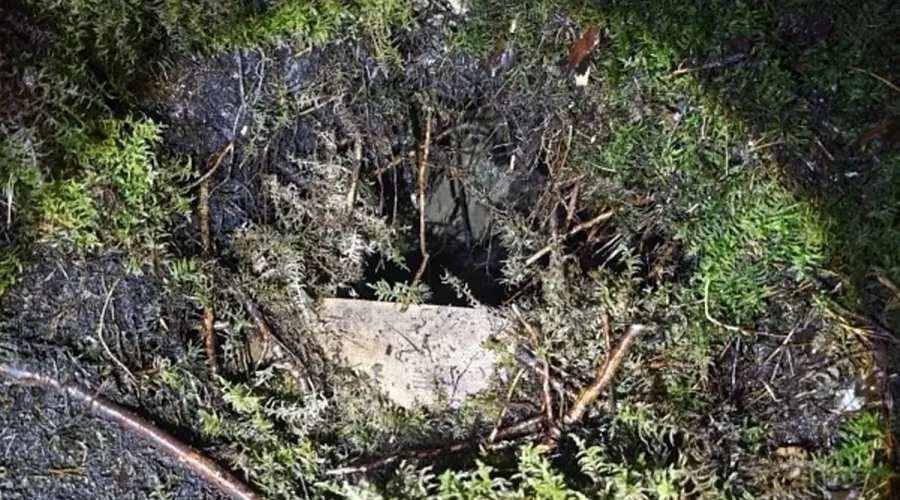
Usagevpn.com – A moss-covered tunnel running roughly 20 metres beneath the Latvian-Belarusian frontier became the latest flashpoint in a migration standoff that has defined Baltic security for over five years. Latvian border authorities intercepted 28 migrants who had used the concealed underground route to slip across the eastern edge of the European Union. The discovery marks the second such subterranean corridor identified within Latvia’s territory, underscoring how creative the smuggling networks operating out of Belarus have become in circumventing the country’s physical barriers.
Just days earlier, on 10 August, guards uncovered a comparable tunnel through which 15 migrants had already entered Latvia from the Belarusian side. The repeated use of hidden passages beneath the fence line signals that the pressure on this stretch of border has not merely persisted but evolved in method.
A Transit Corridor, Not a Destination
For a nation of roughly two million people, the scale of the problem is staggering. In the first eight months of 2026, Latvian authorities have logged close to 10,000 individual attempts to cross the border illegally — a figure that already approaches the 12,000 recorded across all of last year. On peak days, guards register more than 100 separate crossing attempts along the 173-kilometre fenced boundary.
Yet the vast majority of those arriving do not intend to remain. Guntis Pujāts, Chief of the State Border Guard, made the transit nature of the flows explicit:
“Latvia is not a target country. We are guarding, you know, Germans, Belgians, Netherlands here in Latvia. They just try to use Latvia, like a trans-country.”
The claim finds corroboration in neighbouring Lithuania, which has documented a fourfold surge in migrants arriving from the Latvian direction. In effect, the Baltic states are functioning as a shared buffer zone through which people originating far outside Europe are funnelled toward Western destinations.
Roots in Sanctions and Retaliation
The current wave traces its origins to 2021, when Aliaksandr Lukashenka’s government threatened to channel migrants — and, it alleged, narcotics — into the EU as leverage following the bloc’s sanctions regime. European leaders have since characterised the sustained pressure as a form of hybrid warfare waged against the Union’s eastern flank.
“We haven’t had such problems before 2021,” Pujāts noted, framing the crisis as an externally engineered phenomenon rather than an organic migration trend.
Migrants have arrived from Iran, Iraq, Eritrea, Afghanistan, Syria, Cameroon, and Cuba, among other nations. Pujāts stressed that none of these countries share a border with Latvia, and that the flows are not following any legal asylum pathway, even though official crossing points remain open to those seeking protection.
Criminal Investigation and State-Level Accusations
In mid-July, the Latvian Prosecutor General’s Office opened a criminal case against officials of Belarus’ border service, acting on a formal complaint lodged by the State Border Guard. The complaint characterises the situation not as isolated incidents by individual third-country nationals but as “deliberate and systematic unlawful activities by a criminal organisation that includes officials of the border authorities of the Republic of Belarus, aimed at illegally moving large numbers of people across the state border of the Republic of Latvia with the intention of causing harm to the Republic of Latvia.”
When pressed on evidence, Pujāts pointed to migrants transported in Belarusian state vehicles and housed in Belarusian state facilities before being pushed across the line. He suggested the operation carried a punitive, almost transactional logic:
“We understand that this was organised like some revenge or I think even more that Lukashenka thought that the European Union would start some negotiations, you know and pay some money to stop this illegal [migration].”
Cooperation, Infrastructure, and a Persistent Shortfall
Latvia is not managing the pressure alone. Bilateral agreements with Estonia, Lithuania, and Finland have brought additional border-guard personnel into the country to reinforce its defences. A comparable arrangement with Poland is expected to be signed later this month, extending the cooperative perimeter to the next eastern neighbour.
President Edgars Rinkēvičs has argued that a broader European consensus is forming around the idea that the Baltic states’ and Poland’s frontiers with Belarus and Russia constitute external borders of the Union itself.
“That understanding is increasing,” he said.
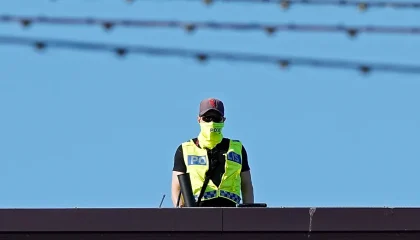
On the physical front, Latvia completed construction of its full-length fence along the 173-kilometre boundary last year. Final installation of supplementary surveillance and sensor technology is slated for completion by year’s end. In mid-August, the government also launched a dedicated security operation codenamed “Vilkatis” — Lithuanian for “Werewolf” — aimed specifically at what officials describe as instrumentalised illegal migration from Belarus.
Despite these measures and the influx of allied personnel, the border service still reports a shortfall of approximately 200 guards. The gap between the scale of the task and available manpower remains one of the most acute operational challenges facing the country as it approaches parliamentary elections scheduled for 3 October — elections that, in the context of a border under sustained pressure, carry implications well beyond domestic politics.
Related Reading
Frequently Asked Questions
What is We are guarding Germans Belgians?
We are guarding Germans Belgians is the main topic of this guide. The article explains the context, practical details, and next steps readers should understand.
Why does We are guarding Germans Belgians matter?
We are guarding Germans Belgians matters because readers are looking for a useful answer, not just a short summary. Good content should match search intent and help them decide what to do next.