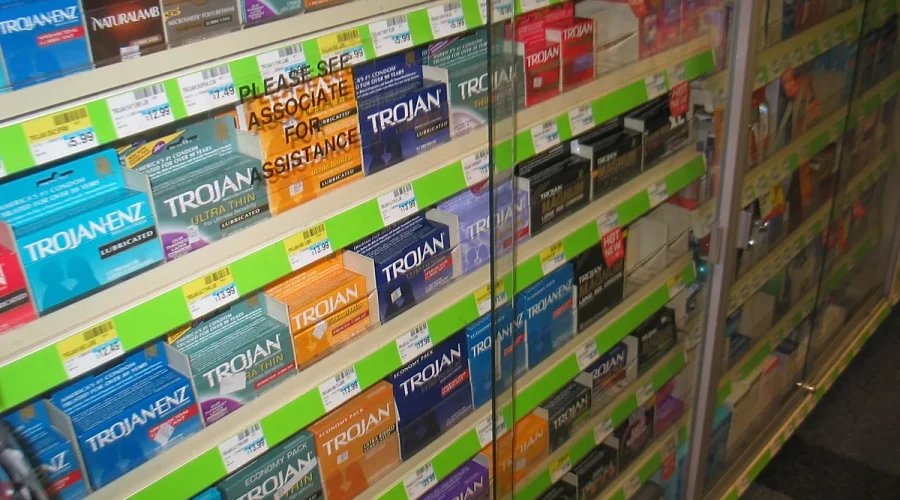
French Health Authorities Flag Widespread Sale of Unapproved Condoms, Urge Consumers to Seek Medical Testing
Usagevpn.com – Thousands of French consumers who purchased condoms online over recent months may have used products that never met European safety requirements. On Friday 21 August, two government bodies — the Directorate-General for Consumer Affairs and Fraud Control (DGCCRF) and the Directorate-General for Health (DGS) — jointly issued a public alert covering multiple brands whose packaging carried no European conformity certification and whose contents had never been evaluated against applicable EU standards.
The scale of the problem extends well beyond a handful of stray listings. Authorities confirmed that roughly one thousand boxes, containing “more than 40,000” individual condoms, had been distributed through e-commerce channels, “mostly” via “Asian” distributors operating in the French market. Retail outlets and pharmacies were not immune: the same unapproved items had also reached physical shelves, meaning buyers who never shopped online could still have ended up with a non-compliant product.
Which Brands and Retailers Are Affected
The Rappel Conso national recall portal has published a list identifying the specific product lines involved. Among them are:
Friday Bae, marketed under the name “Le Préservatif”; Okamoto’s ultra-thin 003 and 002 variants; Sagami Original 002, available through Amazon’s marketplace; and My Lubie, a brand whose items appear on Amazon, in pharmacy chains, and through a spread of smaller retailers including Nuoo, Mademoiselle Bio, Monoprix, Ayanature, and Passage du Désir.
The common thread across every item on that list is the absence of the CE mark — the symbol that signals a manufacturer has declared conformity with European health, safety, and environmental requirements. None of these products underwent any formal compliance assessment before reaching French buyers. Compounding the issue, the DGCCRF and DGS noted that the items, “for the most part, lack packaging in French,” leaving consumers without accessible instructions in their own language.
Even CE-Marked Products Failed Inspection
Not every problem stemmed from missing certification. During inspections carried out in brick-and-mortar shops and pharmacies, regulators identified “two products” that did bear the CE mark yet still failed to meet required standards. One carried a documented “risk of bursting” during use; the other exhibited “the presence of perforations” in the material. These findings underscore that the CE symbol, while a necessary baseline, does not eliminate every quality-control failure — particularly when third-party sellers import finished goods without independent verification.
Recall Scale and Timeline
The current alert is the latest chapter in a broader enforcement effort. The Health Ministry disclosed that approximately “260,000 units” have been caught up in “recalls launched in late May and early August,” indicating that the issue was first detected weeks before the August public warning. The cumulative volume suggests a sustained supply pipeline rather than a one-off shipment.
Health Risks and Recommended Action
Regulators were explicit about the stakes. Non-compliant condoms can, in their words, “pose serious risks to users’ health and safety: sexually transmitted infections, unwanted pregnancies.” A condom that bursts, tears, or contains hidden perforations defeats its primary purpose and exposes both partners to pathogens or unintended conception.
The authorities’ guidance is straightforward: anyone who has used one of the listed products should arrange an STI screening at a clinic, hospital, or pharmacy offering testing services. Those of reproductive age whose menstrual cycle has shifted should also take a home pregnancy test and consult a healthcare provider if results are positive or symptoms persist.
Platform Response and Ongoing Oversight
Online marketplaces received a direct order to strip the affected listings from their sites without delay. Within days of the directive, 36 listings had been removed, and platforms issued warnings to the third-party sellers responsible for those items. Beyond the immediate takedown, “several” platforms have “undertaken to review their verification systems and filtering rules” governing how such products are vetted before they appear in search results.
The DGCCRF used the statement to reiterate a core principle of European consumer protection: the CE conformity marking is the manufacturer’s formal declaration that a product meets applicable safety directives. Its absence on a consumer item sold within the EU is not a minor paperwork gap — it means no one has verified that the product will perform as advertised under normal conditions of use.
What Buyers Should Check Before Purchase
Given the findings, French consumers are advised to apply a simple checklist before adding any condom to their cart or picking one off a pharmacy shelf:
First, confirm the CE mark is visibly printed on the packaging. Second, verify that an information leaflet in French is included, detailing composition, storage conditions, and usage instructions. Third, inspect the expiry date and examine the outer packaging for tears, swelling, or other signs of damage that could compromise the seal. Fourth, when buying online, favour sellers who identify the manufacturer or importer of record and who can produce documentation on request.
For French shoppers accustomed to purchasing intimate-care products through both mainstream retail and niche online boutiques, the episode highlights a gap that cross-border e-commerce can widen: the distance between a product’s label and the regulatory scrutiny that label is supposed to represent. The August warning, and the recalls that preceded it, are intended to close that gap — at least for the products already identified.
Related Reading
Frequently Asked Questions
What is Nearly 40 000 non compliant condoms?
Nearly 40 000 non compliant condoms is the main topic of this guide. The article explains the context, practical details, and next steps readers should understand.
Why does Nearly 40 000 non compliant condoms matter?
Nearly 40 000 non compliant condoms matters because readers are looking for a useful answer, not just a short summary. Good content should match search intent and help them decide what to do next.