Ervebo Vaccine Arrives for Congo’s Fastest-Spreading Ebola Outbreak
Usagevpn.com – Seventy thousand doses of the Ervebo Ebola vaccine are on their way to the Democratic Republic of the Congo, arriving amid what has become the most lethal Ebola epidemic the country has ever endured. The World Health Organisation and its implementing partners confirmed the shipment on Thursday, describing it as a critical intervention for a crisis that has already claimed more than 2,300 lives across six eastern provinces.
The timing is urgent. The current outbreak, driven by the Bundibugyo strain of the virus, is expanding at roughly three times the pace of the 2014–2016 West African epidemic — the deadliest Ebola event in recorded history, which killed over 11,000 people. With a case fatality rate now sitting at 47.5 percent, and climbing toward 70 percent in hard-to-reach zones such as North Kivu province, every additional tool available to medics becomes a matter of life and death.
A Vaccine With a Complicated Fit
Ervebo, developed by Merck, carries formal approval against the Zaire strain of Ebola — the subtype responsible for most past outbreaks. It does not yet hold that same regulatory clearance for the Bundibugyo strain currently ravaging eastern Congo. Nevertheless, the WHO indicated that preliminary laboratory findings and animal-model data point toward at least partial protective benefit against the circulating variant.
“Early laboratory and animal data suggest it may provide some protection.”
That cautious phrasing underscores a reality facing health workers in the field: no vaccine or specific antiviral treatment has been formally validated for the Bundibugyo strain. For months, clinicians in Mongbwalu, Beni, and surrounding communities have relied on supportive care, isolation protocols, and contact tracing alone. The arrival of Ervebo, even without full regulatory endorsement for this particular strain, represents a meaningful shift in the therapeutic landscape.
Two-Track Deployment: Trial and Frontline Protection
The allocation is split into two distinct streams. Twenty thousand doses will be earmarked for a Phase 3 clinical trial designed to measure Ervebo’s actual effectiveness against the Bundibugyo virus in a real-world Congolese setting. The outcome of that trial will determine whether the vaccine can be formally extended to cover this strain in future outbreaks.
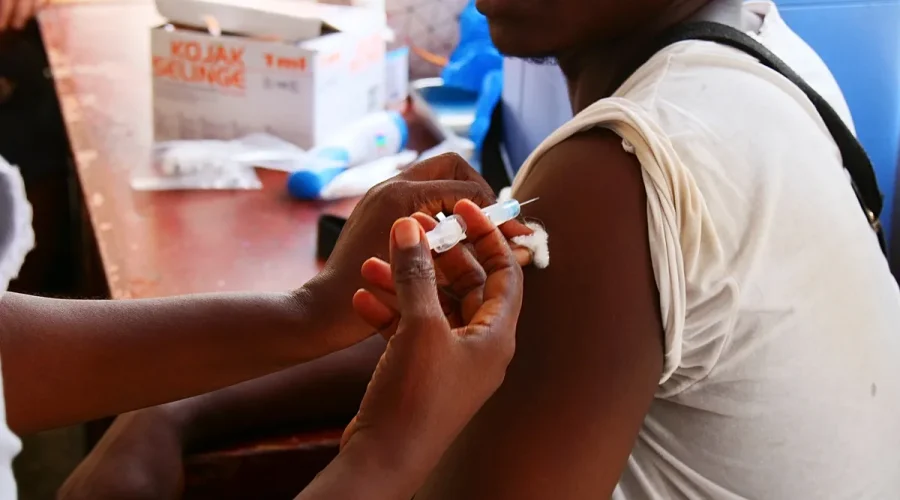
The remaining fifty thousand doses will be administered to frontline healthcare workers, community health agents, and other personnel at the sharpest end of the response, following recommendations from WHO technical experts. Protecting the people who treat patients reduces nosocomial transmission and preserves the fragile capacity of an already overstretched health system.
Global Solidarity in a Local Crisis
WHO Director-General Tedros Adhanom Ghebreyesus framed the decision as a demonstration of collective commitment.
“An important example of global solidarity in action.”
He added that the agency and its partners would continue backing strengthened surveillance, rapid case detection, quality clinical care, community engagement, and vaccination campaigns until the outbreak is brought under control. The language signals that the international response is not limited to a single vaccine shipment but encompasses the full architecture of epidemic management.
How the Outbreak Took Hold
Epidemiologists believe the virus began circulating in the mining town of Mongbwalu as early as February, several months before authorities officially declared the outbreak on 15 May. That gap between initial transmission and formal recognition allowed the pathogen to seed multiple provinces before containment measures could be scaled up.
Since the declaration, Congo has logged more than 5,000 confirmed cases and over 2,300 deaths. A troubling pattern has emerged: the majority of newly identified infections occur among individuals who were not already under active monitoring. In practical terms, the virus is outrunning the contact-tracing apparatus, slipping through gaps in surveillance and converting undetected exposure into new chains of transmission. This dynamic is a principal driver of the elevated fatality figures.
Why This Outbreak Demands a Different Response
The Bundibugyo strain, while less frequently encountered than Zaire-type Ebola, has historically produced severe disease with high mortality. Its rarity means that fewer clinicians have hands-on experience managing its complications, and fewer pre-positioned countermeasures exist. The absence of an approved specific therapy for months of this outbreak left treatment teams dependent on fluid resuscitation, management of secondary infections, and supportive nursing — interventions that reduce but do not eliminate the risk of death.
The introduction of Ervebo, even in a precautionary or trial capacity, alters that calculus. If the Phase 3 data confirm meaningful protection against Bundibugyo, the vaccine could become a cornerstone of future preparedness in a region where Ebola remains endemic. If the data fall short, the trial still generates the evidence needed to guide development of strain-specific candidates.
For the communities of eastern Congo now living under the shadow of the outbreak, the immediate significance is simpler: fifty thousand doses reaching the hands of the people who walk into clinics, homes, and burial sites every day. In a crisis measured in days between exposure and death, that margin of protection may be the difference between a contained outbreak and a catastrophe that outpaces every intervention.
Related Reading
Frequently Asked Questions
What is DR Congo to receive 70 000 doses?
DR Congo to receive 70 000 doses is the main topic of this guide. The article explains the context, practical details, and next steps readers should understand.
Why does DR Congo to receive 70 000 doses matter?
DR Congo to receive 70 000 doses matters because readers are looking for a useful answer, not just a short summary. Good content should match search intent and help them decide what to do next.