Sand, Heat, and Weeks of Flame: Serbia’s Deliblatska Peščara Fire Defies Containment
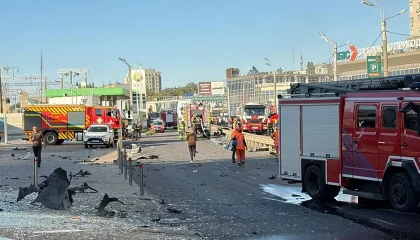
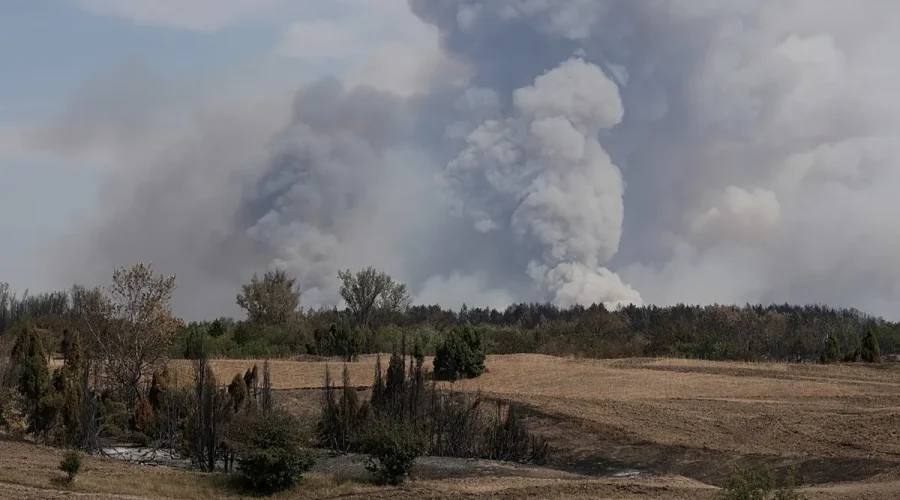
Usagevpn.com – For more than two weeks, an unrelenting blaze has consumed sections of one of Serbia’s most ecologically distinctive landscapes — the Deliblatska Peščara, a sprawling sand-forest reserve roughly 60 kilometres east of Belgrade. What began in early August as a manageable ignition has grown into a prolonged emergency, forcing residents of a small settlement on the reserve’s periphery to abandon their homes on Thursday as gusting winds pushed the fire line toward inhabited structures. Temperatures across parts of the country climbed to 39 °C that day, compounding conditions that firefighting teams have been battling since the first smoke columns rose over the dunes.
Evacuation and the State of the Fire
The hamlet in question sits at the boundary where the sandy woodland gives way to scattered rural dwellings. When sustained winds shifted the flame front in residents’ direction, local authorities ordered a precautionary evacuation. Interior Minister Ivica Dačić addressed the developing situation publicly, acknowledging the severity while noting that, as of his remarks, no structural damage had been confirmed.
“The situation remains difficult,” Dačić stated, adding that no reports of property damage had yet emerged.
The minister’s candour about the fire’s persistence reflects a reality that has defined the past fortnight: conventional suppression tactics have struggled against a fuel bed of dry grasses, low shrubs, and the fine, wind-borne sand that characterises the reserve. Unlike dense hardwood forests, the Deliblatska Peščara’s vegetation is thin, highly flammable, and interspersed with loose mineral substrate that scatters embers and makes ground-level hose work treacherous for crews.
A Russian Waterbomber Enters the Picture
Belgrade formally requested aerial firefighting support, and late on Wednesday an Ilyushin Il-76MD-90A waterbombing aircraft — capable of carrying 42,000 litres of retardant per pass — touched down in Serbia. Journalists present on the ground observed the plane making multiple runs over the active front on Thursday afternoon, releasing its payload while local residents watched from safe distances. The sight of a foreign military transport converted for firefighting duty underscored how far beyond domestic capacity the incident had stretched.
Yet even repeated aerial bombardment of the fire line has not produced a decisive break. Dačić cautioned that the blaze retained its momentum despite the additional resource.
“Few people truly grasp the seriousness of the situation, due to the sand, the heat and the extreme temperatures,” he warned.
The minister’s reference to sand is not merely descriptive. The Deliblatska Peščara covers approximately 3,400 square kilometres of dune and semi-arid woodland — the largest sand-forest complex in continental Europe. Its substrate behaves unlike typical forest soil: it does not retain moisture, it shifts underfoot, and it carries airborne particulate that degrades visibility and irritates respiratory systems of ground crews working long shifts in near-40-degree heat. These factors collectively slow suppression timelines well beyond what a comparable fire in a temperate deciduous forest would require.
A Regional and Continental Heatwave Context
The Serbian incident does not exist in isolation. Extreme-heat advisories have been issued across most of the Balkan peninsula as a renewed heatwave sweeps the region, igniting dozens of separate fires in Greece, North Macedonia, Albania, and elsewhere. The pattern mirrors the broader European wildfire season that has dominated headlines since June, a season driven by a combination of record-breaking temperatures, prolonged drought, and vegetation reduced to tinder by weeks without meaningful rainfall.
Scientists attribute the increasing frequency and intensity of such heat events to anthropogenic climate change, noting that each additional fraction of a degree in global mean temperature raises the probability of compound extreme-weather days. The cumulative human toll of this summer’s fire season across Europe has already reached into the thousands of deaths, according to aggregated national figures, making each new ignition a matter of urgent public-health concern as well as ecological loss.
For the communities bordering the Deliblatska Peščara, the immediate question is whether the combination of aerial retardant drops, sustained wind shifts, and eventual cooling will finally arrest a fire that has now burned through the better part of three weeks. Until the last ember is confirmed out, evacuation orders will remain in force, and the sand forest will continue to smoulder under a sky that offers little relief.
Related Reading
Frequently Asked Questions
What is Emergency crews struggle to bring wildfire?
Emergency crews struggle to bring wildfire is the main topic of this guide. The article explains the context, practical details, and next steps readers should understand.
Why does Emergency crews struggle to bring wildfire matter?
Emergency crews struggle to bring wildfire matters because readers are looking for a useful answer, not just a short summary. Good content should match search intent and help them decide what to do next.