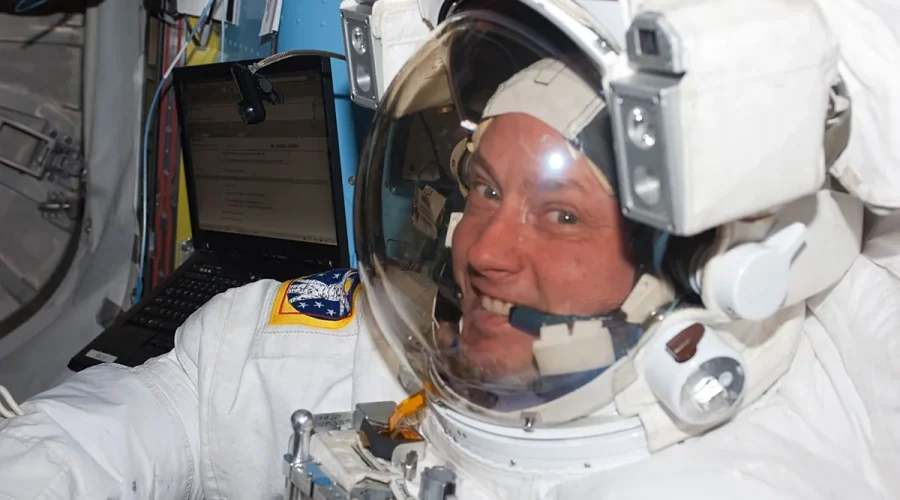
Astronaut Gut Dysfunction Traced to Microgravity-Driven Protein Fermentation
Usagevpn.com – When the human body leaves Earth’s gravitational field, something measurable shifts inside the digestive tract — and new blood-based evidence now pinpoints when and how that shift begins. Researchers at the University of Copenhagen, collaborating with NASA, have identified biochemical markers in astronaut blood that reveal a rapid escalation of intestinal protein fermentation within weeks of departure from Earth. The work, drawing on samples from 52 crew members across multiple International Space Station (ISS) missions, offers the clearest explanation yet for why constipation has long plagued spaceflight crews.
What the Blood Tells Us
The team did not simply ask astronauts how their digestion felt. Instead, they applied a non-targeted metabolomics strategy: rather than hunting for one or two known compounds, they scanned a wide spectrum of small-molecule metabolites circulating in the bloodstream and flagged patterns that tracked with time in orbit. Across three separate studies spanning several years of different missions, a consistent signature emerged. Within weeks of launch, markers associated with protein fermentation rose above baseline levels. They remained elevated for the duration of each mission and fell back to normal once the astronauts returned to Earth.
Protein fermentation itself is not exotic. On Earth, gut bacteria occasionally break down amino acids when dietary fibre runs short. What distinguishes the spaceflight signal is its consistency and magnitude: every astronaut in the combined cohort showed the same directional shift, something that does not occur at comparable levels in terrestrial populations.
The Mechanical Trigger: Gravity and Peristalsis
Under normal gravity, the intestines propel food forward through rhythmic muscular contractions called peristalsis. The Copenhagen-NASA team suspects that microgravity disrupts this mechanical rhythm, slowing transit time. When chyme lingers longer in the intestinal lumen, resident microbes exhaust the available fibre and pivot toward fermenting protein. The resulting metabolites — small molecules small enough to cross the intestinal wall — enter circulation and travel systemically.
That systemic reach is what makes the finding medically interesting beyond the gut itself. Several of the metabolites implicated in protein fermentation have been linked in prior research to effects on mood regulation and cognitive focus. The so-called gut-brain axis, a bidirectional communication channel between the enteric nervous system and the central nervous system, provides the anatomical route. If microgravity-driven fermentation elevates these compounds in orbit, astronauts may face not only digestive discomfort but subtle neurocognitive consequences that are difficult to isolate from other spaceflight stressors.
Methodology and Scale
Spaceflight research has historically been constrained by small participant pools. This analysis circumvented that limitation by pooling blood samples from three independent studies, yielding a combined cohort of 52 astronauts who flew different missions over multiple years. Despite variations in mission length, crew composition, and onboard dietary protocols, the protein-fermentation signal held steady. The non-targeted metabolomics design meant the researchers were not anchored to a single hypothesis; they let the data surface the pattern, then interpreted it through the lens of intestinal physiology.
Implications for Longer Missions
As space agencies advance toward sustained lunar surface operations and eventual Mars transit, crew members will spend months — potentially years — in microgravity. If intestinal transit slows and protein fermentation escalates over extended durations, the cumulative metabolic load could compound other known spaceflight health risks. The researchers propose practical countermeasures: increasing dietary fibre intake, administering prebiotics that favour beneficial bacterial populations, or employing pharmacological agents that stimulate intestinal motility. None of these interventions is exotic; the question is whether they can be calibrated for a closed-loop environment where dietary options are limited and medical monitoring is remote.
A Terrestrial Parallel
The physiology does not stop at the cabin wall. Patients confined to beds for prolonged periods — post-surgical recovery, intensive care, long-term disability — experience reduced intestinal motility through a different mechanism (immobility rather than microgravity), yet the downstream consequence converges: slower transit, fibre depletion, and a shift toward protein fermentation. The Copenhagen team notes that the same biochemical cascade could contribute to constipation-related complications in these terrestrial populations, opening a line of inquiry that extends well beyond aerospace medicine.
The disappearance of gravity does not merely alter how astronauts feel weightless; it rewires the chemistry of their own digestive tract within weeks, and the blood carries the record of that rewiring long after the mission ends.
For now, the study supplies a mechanistic framework for one of spaceflight’s least celebrated problems. It transforms a vague complaint — “my digestion has slowed” — into a measurable, time-stamped biochemical event with identifiable triggers and plausible interventions. Whether that framework will prove sufficient to keep future deep-space crews comfortable, focused, and healthy remains an open question, but the blood evidence makes the question far more answerable than it was a year ago.
Related Reading
Frequently Asked Questions
What is Why do astronauts get constipated in space?
Why do astronauts get constipated in space is the main topic of this guide. The article explains the context, practical details, and next steps readers should understand.
Why does Why do astronauts get constipated in space matter?
Why do astronauts get constipated in space matters because readers are looking for a useful answer, not just a short summary. Good content should match search intent and help them decide what to do next.