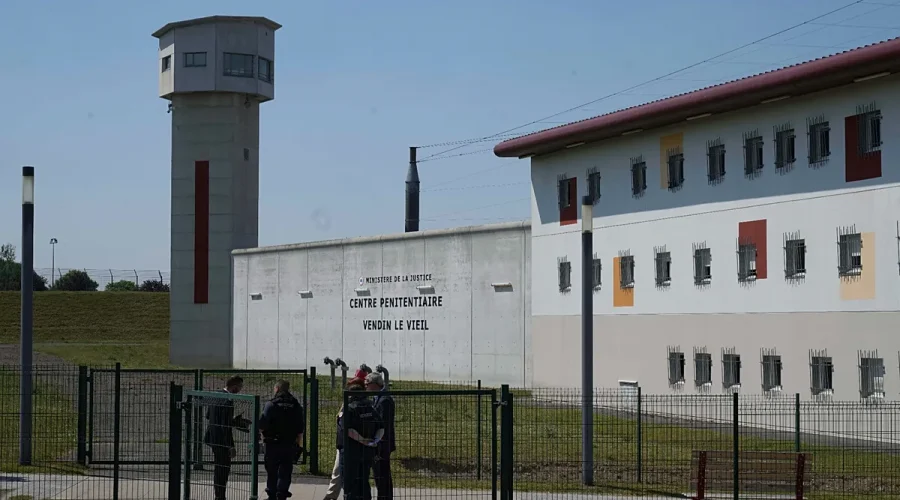
Prison Walls No Longer Enough: How Drones Are Reshaping French Detention Security
Usagevpn.com – France – For decades, the perimeter of a French prison was considered its primary line of defence. Guards, fences, and controlled gates kept the outside world at bay. That assumption is now crumbling from above. Across France, small unmanned aircraft have turned the airspace over detention facilities into a new smuggling corridor, delivering everything from narcotics to mobile phones directly into the hands of inmates. What began as isolated incidents has hardened into a coordinated, quasi-industrial operation that is forcing the justice system to rethink how it protects both prisoners and the public.
The Villefranche Operation: A Smuggling Ring Exposed
The most dramatic unmasking to date took place at the Villefranche-sur-Saône remand prison in the Rhône department. Starting in early August 2026, investigators began tracking an extraordinary pattern of aerial deliveries. Within a single 25-day window, they logged 880 separate drone drops, each one carrying contraband into the facility. Two launch points, situated immediately adjacent to the prison grounds, served as the operational base for the network.
On 4 August, gendarmes moved to dismantle the ring. Five individuals were arrested during a coordinated sweep; three were caught in the act of preparing or executing a delivery. The seizure haul included 500 grams of cannabis, ten cartons of cigarettes, 6,000 euros in cash, a vehicle used for logistics, and the drone itself. But the physical evidence was only the visible tip of the operation. Digital telemetry stored on the aircraft told a far larger story: over a period of just under two months, the device had completed an estimated 1,826 drops, ferrying more than 30 kilograms of narcotics into the prison.
Investigators described the organisation as tightly compartmentalised. Each participant occupied a defined role — taking orders from inmates, coordinating logistics, staging parcels, and executing the final aerial handoff. The structure mirrors that of a small courier company, except the cargo is contraband and the delivery windows are measured in seconds.
A Pattern That Predates the Drone Era
The Villefranche case did not emerge from a vacuum. In earlier years, French prisons had already documented airborne consignments containing cocaine, heroin, cannabis, mobile phones, and SIM cards. What has changed is scale and regularity. Where once a single smuggled phone might arrive by hand or by a visiting relative, drones now allow dozens of drops per week without a single person crossing the prison gate. The professionalisation of the trade means that inmates can maintain near-continuous access to substances and communication devices that were previously difficult to sustain inside a locked facility.
Collateral Damage: When Smuggling Meets Air Ambulance
The consequences of unregulated drone traffic extend well beyond the prison yard. In Strasbourg, the phenomenon has produced a direct conflict between illicit deliveries and emergency medical operations. For several weeks running, drones have made it impossible for helicopters carrying injured patients to land at night on the helipad at Hautepierre hospital. Some of the aircraft are believed to be making clandestine drops to inmates at the Strasbourg-Elsau remand prison, which sits within the same urban airspace.
The practical result is a degraded emergency pathway. Because of collision risk, medical helicopters can no longer use the hospital helipad after dark. They must divert to an alternative landing platform, after which patients are transferred by ambulance to the hospital. For trauma cases where minutes matter, that added transit time represents a tangible reduction in the window for life-saving intervention. The episode underscores how a smuggling problem confined to one institution can impose costs on an entire city’s healthcare infrastructure.
The State’s Countermeasure: Building an Anti-Drone Shield
Faced with a threat that conventional perimeter security cannot intercept, the prison administration has moved to equip its most exposed facilities with dedicated detection and neutralisation technology. The Ministry of Justice ordered 78 anti-drone systems for deployment across the national prison estate. By February 2026, 62 of those units had been installed and were operational. The remaining 16 are scheduled for installation before the end of 2026.
The systems combine radar, radio-frequency sensing, and in some cases directed-energy or net-capture mechanisms to identify, track, and disable small unmanned aircraft before they reach the facility. Their introduction marks a shift from reactive policing — catching smugglers after the fact — to active airspace control over detention sites.
What Comes Next
The Villefranche and Strasbourg episodes illustrate a broader transition: drone technology, once the province of hobbyists and military units, has been absorbed into the criminal economy of prison contraband. As long as inmates can command a steady supply of drugs, phones, and cash from the outside, the incentive structure that drives smuggling persists. Anti-drone hardware narrows the window of opportunity but does not eliminate the demand. French authorities will need to pair technological countermeasures with sustained investigative pressure on the logistics networks that organise the drops, and with clear rules governing civilian drone use in the airspace above sensitive installations. Until both fronts advance together, the sky above French prisons will remain an open front in a conflict that has moved out of the shadows and into the open air.
Related Reading
Frequently Asked Questions
What is France?
France is the main topic of this guide. The article explains the context, practical details, and next steps readers should understand.
Why does France matter?
France matters because readers are looking for a useful answer, not just a short summary. Good content should match search intent and help them decide what to do next.