Yemen Braces for Full-Scale War as Houthi Offensive Shatters Fragile Truce
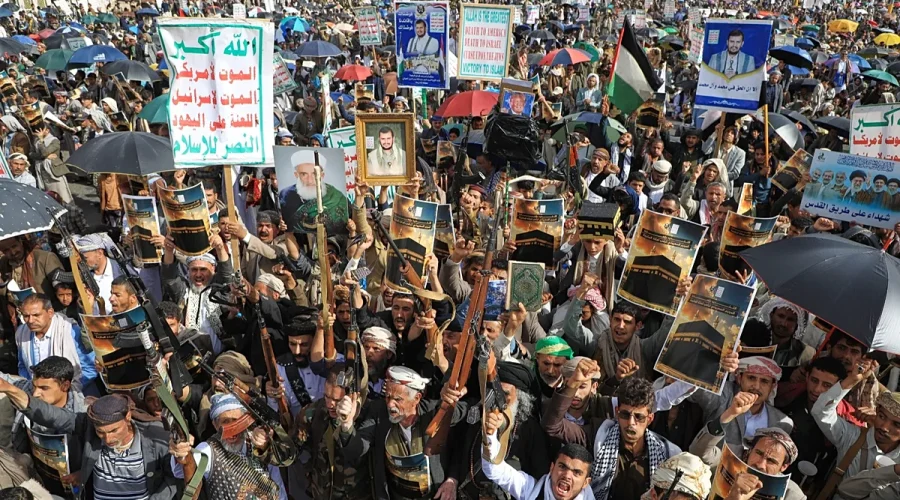
Usagevpn.com – The Arabian Peninsula’s poorest nation is sliding back toward total war. After more than a decade of civil conflict that has already displaced millions and hollowed out public infrastructure, Yemen now faces what the United Nations describes as the spectre of a return to full-scale hostilities. The trigger: a renewed and intensifying campaign by the Tehran-backed Houthi movement, which last month abandoned the 2022 truce with the Saudi-backed government and dragged the country into the wider Iran war as its latest theatre.
On Monday, UN human rights chief Volker Türk issued a stark warning, calling on every party involved to de-escalate tensions before the civilian death toll climbs further. His intervention came amid a sharp spike in violence across multiple fronts, from oil-rich provinces in the interior to Red Sea port cities and shipping lanes that carry a significant share of global trade.
“I call on all parties to de-escalate tensions and spare the Yemeni people from further misery. The Yemeni people have already suffered way too much from the devastating legacy of years of conflict, displacement and humanitarian crisis,” Türk said.
“I urge all parties to halt immediately any actions that risk returning Yemen to full-scale conflict.”
A Decade of Conflict, Now Compounded by Regional War
Yemen’s civil war, which erupted in 2015 after President Abd-Rabbu Mansour Hadi was ousted by Houthi forces backed by Iran, has produced one of the world’s most protracted humanitarian emergencies. The 2022 truce — brokered with UN mediation and backed by Saudi Arabia — had offered a fragile pause, allowing limited reopening of ports, easing of blockades, and a tentative resumption of diplomatic talks. Its collapse last month, timed to coincide with the broader Iran conflict, has erased that narrow window of stability.
The Houthis, who control much of northern Yemen including the capital Sanaa, have framed their renewed offensive as solidarity with Tehran. For the government in Aden, backed by Saudi Arabia and the United Arab Emirates, the escalation represents an existential threat to the truce architecture and to the already-fragile economy that depends on Red Sea shipping and oil exports from Marib.
Deadliest Attacks in Years Strike Marib and Coastal Towns
The most recent wave of violence has been concentrated in two geographic corridors. In the interior, Houthi forces launched what a military source described as their deadliest attacks in years, killing 58 government troops primarily in Marib province — a region whose oil fields have become a strategic prize in the conflict. On the same day, Houthi shelling hit residential neighbourhoods and displacement camps in Marib, killing two civilians.
Along the coast, the Houthis targeted the port of Mokha on the Red Sea with missile and drone strikes on 9 August, killing three port workers and injuring four others. Two days later, on 11 August, a Houthi attack on a cargo vessel transiting the Bab al-Mandeb Strait — one of the world’s busiest maritime chokepoints, linking the Red Sea to the Gulf of Aden — reportedly killed four crew members, three of them Pakistani nationals and one Indonesian, while wounding several others.
The UN rights office tallied at least seven civilian deaths and ten injuries in Houthi strikes on government-controlled areas since 6 August. In Houthi-held territory, two civilians were reported injured in late July. Civilian infrastructure bore the brunt of several strikes: fuel storage depots and a residential compound attached to the Saudi Field Hospital in Mokha were among the sites hit.
Humanitarian Stakes: 18 Million Already Food-Insecure
The timing of the escalation makes the humanitarian calculus especially grim. Before the latest round of attacks, at least 18 million Yemenis — roughly two-thirds of the population — were already classified as food insecure, dependent on international aid for basic nutrition. Displacement camps, already stretched beyond capacity by years of internal flight, now face renewed shelling. Fuel depots struck near port facilities threaten energy supplies for hospitals, water pumps, and cold-chain logistics that keep vaccines and medicines viable.
“Attacks on civilian infrastructure risk further deepening civilian suffering at a time when at least 18 million Yemenis are already food insecure,” Türk said.
For readers tracking the broader regional picture, Yemen’s re-entry into active conflict carries implications well beyond its borders. The Bab al-Mandeb Strait handles roughly 10 percent of global container traffic and a comparable share of liquefied natural gas shipments. Sustained Houthi targeting of commercial shipping — a pattern that intensified during the 2023–2024 Red Sea crisis — could again push insurers to reroute vessels around the Cape of Good Hope, inflating freight costs and delivery times worldwide. Simultaneously, a full-scale resumption of ground warfare in Marib would put the country’s remaining oil production at risk, tightening an already-volatile energy market.
What Comes Next
The diplomatic window that produced the 2022 truce has narrowed considerably. With the Iran war consuming the attention of regional mediators and with both sides signalling that military pressure will continue until their respective objectives are met, the prospects for a near-term ceasefire appear slim. Türk’s appeal, while carrying the moral weight of the UN system, lacks an enforcement mechanism. Whether the parties respond will depend on whether external sponsors — Saudi Arabia, the United States, Iran, and their allies — judge that a contained exchange of strikes is preferable to an open-ended war that could consume another decade of Yemeni lives.
For the people of Yemen, the question is no longer abstract. It is written in the rubble of Marib’s displacement camps, in the empty fuel tanks of Mokha’s hospitals, and in the shipping lanes where four crew members lost their lives on a Tuesday in August. The warning has been issued. The clock, as it has for over a decade, keeps running.
Related Reading
Frequently Asked Questions
What is Yemen risks return to full scale?
Yemen risks return to full scale is the main topic of this guide. The article explains the context, practical details, and next steps readers should understand.
Why does Yemen risks return to full scale matter?
Yemen risks return to full scale matters because readers are looking for a useful answer, not just a short summary. Good content should match search intent and help them decide what to do next.