Reform UK Pledges to Strip Foreigner Benefits
Usagevpn.com – Britain’s Reform UK party has put forward what amounts to the most sweeping welfare overhaul proposed in Westminster in years: a plan to cut every state benefit for residents who do not hold British citizenship. Unveiled in a parliamentary speech on Monday, the scheme would sweep in European Union nationals who secured settled status after Brexit, effectively reopening the terms of the 2020 Withdrawal Agreement and forcing a second round of negotiations with Brussels. The announcement lands while Parliament is already wrestling with a welfare bill of extraordinary scale, making the fiscal and political stakes of the proposal difficult to overstate.
The Welfare Overhaul and Projected Savings
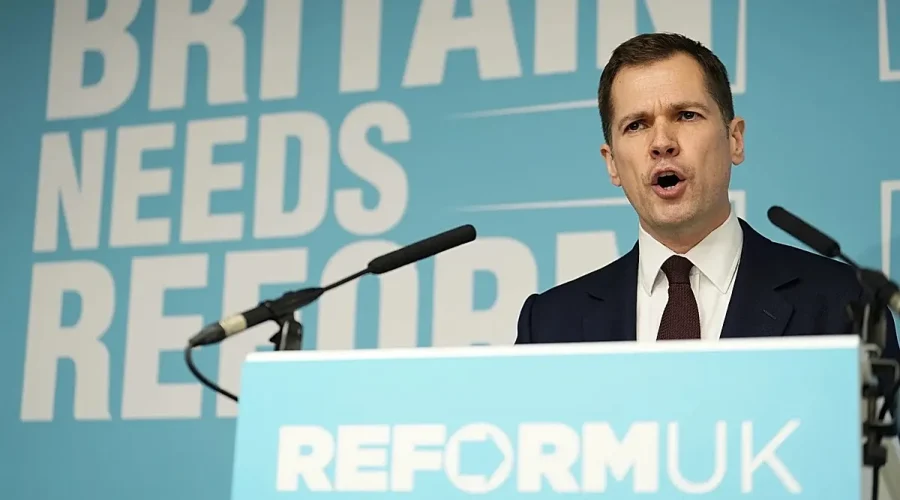
Robert Jenrick, the party’s economics spokesperson and MP for Newark, framed the initiative as a correction to what he called a systemic distortion in public finance. Addressing assembled journalists, he argued that the current arrangement places an unsustainable burden on domestic taxpayers while extending entitlements to people who have never contributed to the British social contract.
“The British taxpayer is acting as the welfare state for the world. That’s unfair,” Jenrick said, labelling the existing arrangement a “foreign welfare ripoff.”
Under the plan as outlined, only British citizens would retain access to the full suite of welfare payments. Jenrick acknowledged two narrow carve-outs: individuals who served in the armed forces and those who have made contributions into the state pension system would continue to qualify. Beyond those categories, the boundary would be absolute.
“But beyond that, the line will be clear. The welfare state is there for Britain. No British citizenship, no entitlement,” he added.
The affected benefit streams span the breadth of the current system: Universal Credit, Jobseeker’s Allowance, Child Benefit, free childcare vouchers, Housing Benefit, Pension Credit, and disability-related payments. Reform’s own modelling projects annual savings of £21 billion by 2029, assuming immediate enactment. That figure represents a meaningful slice of a welfare budget that Westminster expects to run at £322 billion across the 2025–2026 fiscal year alone — equivalent to 10.6 per cent of gross domestic product and 23.6 per cent of total government outlay in Great Britain.
Brexit Revisited: The Negotiating Consequences
The most consequential dimension of the proposal is its implication for the post-Brexit settlement. EU citizens who obtained settled status under the Withdrawal Agreement were guaranteed continued access to UK social benefits on the same terms as British nationals. Stripping that entitlement would constitute a material departure from the agreement’s terms, meaning the UK government would need to return to the negotiating table with the European Commission and the European Parliament.
Pressed on whether the British electorate would tolerate another extended cycle of Brexit renegotiation, Jenrick did not rule it out. He characterised the existing deal as containing a “number of points” that the party would seek to revise should it command a majority. His confidence in the process was explicit:
“I’m confident that we can do that and we can restore fairness in the process,” he told reporters.
For context, the original Withdrawal Agreement took roughly two years of negotiation and was ratified in January 2020. A second round of talks over benefit entitlements — a subject touching millions of settled residents, their families, and the children born to them in Britain — would likely prove at least as protracted, with implications for trade relations, mutual-recognition arrangements, and the broader political relationship between London and Brussels.
Opposition Reactions and Political Fallout
The governing Labour party moved quickly to dismiss the plan. A party spokesperson noted that the “vast majority of migrants have no access to the welfare system,” arguing that the framing exaggerates the fiscal problem while understating the human cost.
“These plans would mean ripping up the UK’s Withdrawal Agreement with the EU, plunging the UK back into years of Brexit renegotiations, and stripping support from potentially millions of people who have lawfully lived, worked, and paid taxes in Britain for years, and in many cases decades,” the spokesperson said.
From the Conservative benches, Helen Whately, MP, reportedly characterised the welfare package as “cobbled together,” suggesting the proposals lack the internal coherence and fiscal rigour required for a policy of this magnitude. The exchange underscored how quickly the measure had moved from a backbench speech to a cross-party flashpoint.
FAQ: Practical Questions
Who would lose benefits under the proposed rule? Any resident without British citizenship would lose access to Universal Credit, Jobseeker’s Allowance, Child Benefit, free childcare vouchers, Housing Benefit, Pension Credit, and disability-related payments. Two exceptions apply: former armed-forces personnel and individuals who have contributed to the state pension system.
Would EU settled-status holders be affected? Yes. Settled status, granted under the 2020 Withdrawal Agreement, currently guarantees the same benefit access as British nationals. The proposal would remove that guarantee, requiring renegotiation with the European Commission and European Parliament before it could take effect.
How much would the policy save? The party’s modelling projects £21 billion in annual savings by 2029, assuming immediate implementation. That figure sits against a total welfare budget of £322 billion for the 2025–2026 fiscal year.
Has the proposal been enacted? No. It was announced in a parliamentary speech and remains a party policy position. No legislation has been introduced, and the Withdrawal Agreement’s benefit provisions remain in force.