Russia Confronts Fresh Fuel Crisis as Ukrainian Long-Range Attacks Intensify
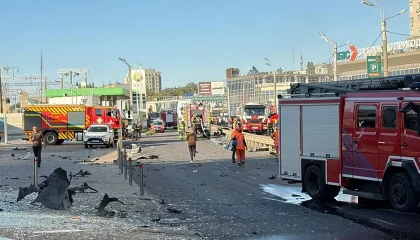
Usagevpn.com – Government officials in Moscow confirmed this week that multiple Russian territories are experiencing renewed petrol supply disruptions, a development coinciding with an escalation in Ukrainian aerial assaults against domestic energy infrastructure. Kyiv has maintained a sustained campaign utilizing unmanned aircraft and precision missiles against Russian oil processing facilities over several months, aiming to disrupt a critical financial pillar supporting the Russian military apparatus.
The most significant recent blow came when authorities closed a major Orsk processing plant, situated approximately 1,300 kilometres from active combat zones, for a half-year maintenance period following this week’s strike. This closure represents a substantial reduction in domestic refining capacity at a time when consumer demand remains steady.
Official Response and Regional Impact
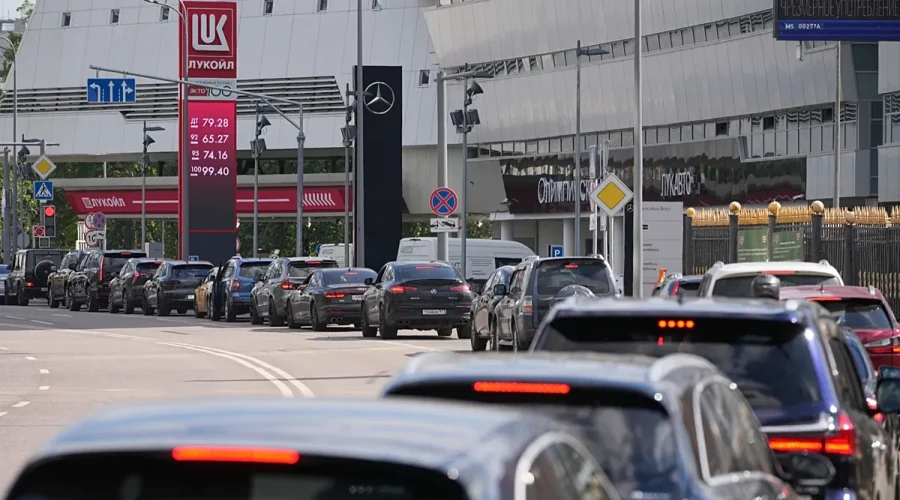
Government communications highlighted the severity of the situation through social media channels, noting that fuel availability at retail outlets remains under pressure across several territories. Energy sector operators have initiated emergency protocols to redirect supplies toward the most affected areas, while regulatory oversight has been strengthened.
“The situation remains tense in several regions of the country regarding fuel supplies to service stations,” the government stated in its official communication.
Deputy Prime Minister Alexander Novak, who oversees energy policy, has directed immediate monitoring of fuel pricing to prevent market instability. His intervention comes as both commercial enterprises and individual motorists have endured repeated supply interruptions throughout recent months.
The geographic scope of the crisis extends across nearly the entire Russian Federation. Regional authorities have implemented various rationing mechanisms, including restrictions on private vehicle refueling and prohibitions on bulk jerry can purchases. These measures reflect the widespread nature of the disruption rather than isolated incidents.
Krasnodar Region Bears Heavy Burden
The Krasnodar territory, a popular Black Sea destination renowned for its tourism sector, has emerged as one of the most severely impacted areas. The region’s governor, Venyamin Kondratyev, provided detailed assessment of the escalating situation.
“The situation regarding petrol supplies at service stations has become complicated,” regional governor Venyamin Kondratyev explained.
Energy corporations operating in Krasnodar have reinstated quantity limits on individual purchases and shortened operating hours at many stations. These operational constraints have generated noticeable anxiety among both local residents and seasonal visitors who depend on reliable transportation.
“Oil companies ‘have again started imposing restrictions on the amount of fuel supplied and reduced service station opening hours,’ he added. ‘This is causing concern among the region’s residents and visitors,’ the governor added, stating that he had asked the authorities to send more fuel.”
Strategic Implications and Presidential Acknowledgment
The Orsk refinery closure, located within the Orenburg region, was confirmed by local authorities on Thursday, with repair timelines extending over several months. This infrastructure setback compounds existing supply challenges across the country.
President Vladimir Putin publicly recognized the fuel deficit for the first time during June, marking a significant shift in official narrative. During a cabinet meeting focused specifically on energy security, the president characterized the current circumstances as a challenging period requiring coordinated response.
Putin admitted that the country was “going through a difficult period,” but insisted that Moscow would “honour all its social obligations.”
Following this acknowledgment, Putin addressed state television, announcing accelerated production schedules for air defense systems designed to counter Ukrainian aerial operations. He characterized the supply disruptions as temporary rather than structural, promising increased fuel imports and expedited facility repairs to resolve what he termed a “temporary deficit.”
Ukrainian President Volodymyr Zelenskyy has framed these deep-strike operations against Russian energy infrastructure as “long-range sanctions,” emphasizing their strategic purpose in weakening Russia’s economic foundation without direct territorial engagement.
Broader Context and Future Outlook
The Ukrainian energy campaign represents a calculated strategy to target Russia’s most valuable export commodity while minimizing civilian casualties. Oil revenues traditionally fund substantial portions of Russian military expenditure, making refinery disruptions economically significant beyond immediate fuel availability concerns.
The geographic reach of Ukrainian drones and missiles has expanded considerably, allowing Kyiv to strike facilities previously considered secure within Russia’s interior. This evolution in capability has forced Moscow to divert resources toward domestic air defense while maintaining operations on multiple fronts.
Analysts suggest that sustained refinery closures could have cascading effects on Russia’s transportation sector, agricultural operations, and industrial production. The government’s commitment to maintaining social obligations indicates awareness that prolonged fuel shortages could generate broader economic and political consequences.
As winter approaches, the combination of reduced domestic refining capacity and increased heating demand may intensify pressure on already strained supply chains. The government’s stated intention to accelerate repairs and increase imports will be closely monitored as indicators of whether the current crisis can be contained or if more fundamental restructuring of Russia’s energy distribution system becomes necessary.
Related Reading
Frequently Asked Questions
What is Russia admits new petrol shortages amid?
Russia admits new petrol shortages amid is the main topic of this guide. The article explains the context, practical details, and next steps readers should understand.
Why does Russia admits new petrol shortages amid matter?
Russia admits new petrol shortages amid matters because readers are looking for a useful answer, not just a short summary. Good content should match search intent and help them decide what to do next.