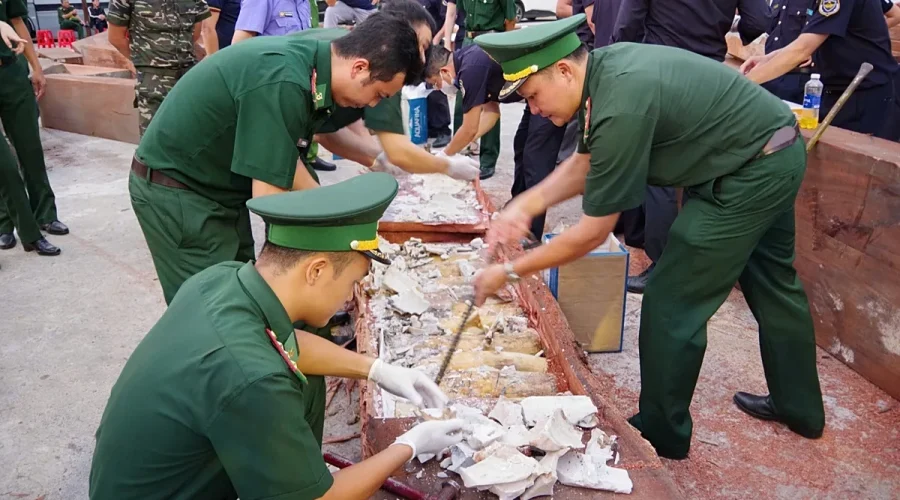
Vietnam discovers more than a tonne of concealed ivory
Usagevpn.com – Vietnam discovers more than a tonne of elephant ivory that was illegally shipped from Africa, marking one of the most significant wildlife seizures in recent years. Customs officials at Quy Nhơn port in central Vietnam uncovered the hidden cargo during routine inspections, revealing 1,193 kilograms of ivory concealed within timber containers. The discovery highlights Vietnam’s growing role as a key transit point for illegal wildlife trade between Africa and Asian markets.
Hidden Among Timber
The ivory was cleverly packed inside three shipping containers that arrived on July 9 from the Republic of the Congo. During thorough customs clearance, inspectors noticed irregularities in the sawn timber cargo, which led to the discovery of 221 individual pieces of elephant ivory hidden among the wood. The contraband was not immediately visible, making it an effective smuggling method for evading detection.
Alongside the elephant ivory, authorities also seized 79.3 kilograms of animal bones from big cat species, including tigers. These bones are highly valued in traditional medicine markets across Asia, particularly in Chinese medicine where they are believed to possess healing properties. The combination of ivory and tiger bones represents a substantial haul of protected wildlife products.
A Critical Trade Node
Vietnam has become a critical hub in the global wildlife trade network, handling both live animals and their products. While much of the contraband passing through Vietnamese ports eventually reaches China, domestic demand within Vietnam and neighboring Southeast Asian nations continues to drive the market. The Gia Lai Provincial Police confirmed that the Republic of the Congo was the country of origin for this particular ivory shipment.
Following the discovery, Vietnamese authorities immediately initiated a criminal investigation into violations of regulations concerning protected animal species. The investigation aims to trace the supply chain and identify all parties involved in the illegal transportation of the ivory and animal bones. This case underscores the importance of strengthening enforcement at major port cities.
International Protections
Most commercial trade in ivory from elephants and other endangered species is prohibited under international law. The Convention on International Trade in Endangered Species of Wild Fauna and Flora, commonly known as CITES, establishes the legal framework governing cross-border wildlife commerce. Nearly every member country of the United Nations has ratified this treaty, committing to protect vulnerable species from overexploitation.
Despite these international protections, illegal trafficking persists due to high demand in consumer markets and sometimes weak enforcement in transit countries. Vietnam’s position as a major port country makes it both a destination and a transit point for wildlife products moving between Africa and East Asia. The ongoing efforts by Vietnamese authorities to combat illegal wildlife trade reflect growing international pressure to protect endangered species.
Historical Seizures
While this seizure represents the largest ivory confiscation at Quy Nhơn port to date, it has been overshadowed by even more substantial findings in other Vietnamese cities over the past ten years. The central port city of Danang and the northern port of Haiphong have each recorded seizures exceeding seven tons of ivory, demonstrating the persistent challenge of wildlife crime in Vietnam.
Frequently Asked Questions
How much ivory was found in Vietnam?
Vietnam discovered 1,193 kilograms of elephant ivory, which is more than a tonne. The ivory consisted of 221 individual pieces hidden within timber containers at Quy Nhơn port.
Where did the ivory come from?
The ivory was illegally shipped from the Republic of the Congo in Africa. It arrived in three containers on July 9 and was concealed among sawn timber.
What other wildlife products were seized?
Alongside the ivory, customs officials found 79.3 kilograms of animal bones from big cat species, including tigers. These bones are commonly used in traditional medicine markets.
Why is Vietnam important for wildlife trade?
Vietnam serves as a critical transit point between Africa and Asian markets. Its major ports handle both domestic demand and re-export of wildlife products, making it a key location for combating illegal trade.