Global Trade Routes Under Scrutiny as US Reports Billions in Tariff Revenue Losses
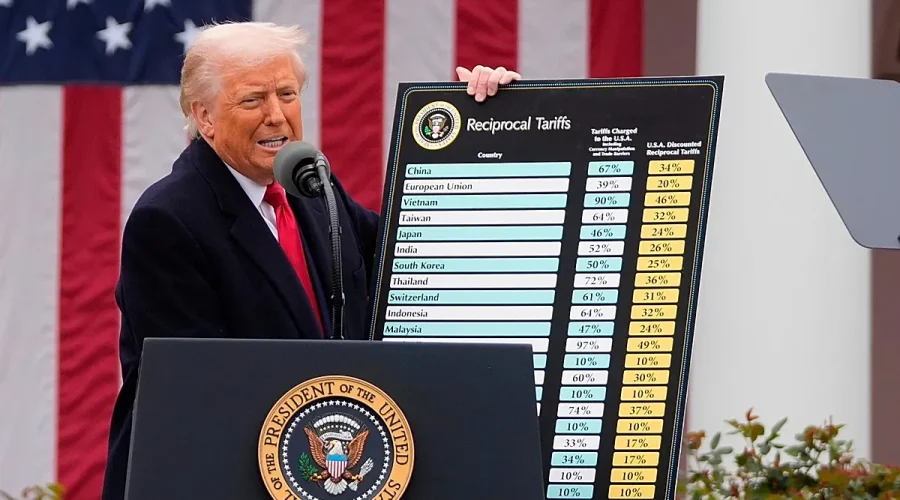
Usagevpn.com – A comprehensive assessment released by the Trump administration has identified significant gaps in tariff collection, with international commerce patterns revealing that exports are being systematically rerouted through more than forty intermediary nations. The findings suggest that this practice of circumventing duties generates annual shortfalls ranging from nineteen to twenty-six billion dollars in federal revenue, a figure derived from analyzing the volume of goods passing through third-party destinations before reaching American markets.
Methodology and Scale of the Problem
The assessment utilized a central estimate of seventy-five billion dollars in annually transshipped merchandise to calculate the revenue impact. This baseline figure sits within a broader range of thirty-four point two to three hundred three billion dollars in total goods movement through intermediate countries. The mechanism involves shipping products from their country of manufacture to an intermediary nation, where they receive minimal processing or documentation changes before being exported to the United States with altered origin declarations.
This practice has accelerated considerably since the initial wave of comprehensive tariffs targeting Chinese products during the first Trump administration in 2018. A subsequent escalation in 2025 further intensified the pattern, as importers sought to minimize costs by exploiting tariff differentials between countries.
Enforcement Mechanisms and Consequences
Peter Navarro, serving as the White House trade adviser, outlined a multi-pronged approach to addressing the issue. The administration plans to embed anti-transhipment provisions into forthcoming trade agreements, establishing clear penalties for partner nations that facilitate the practice. Importers discovered to have misrepresented product origins could face retroactive tariff assessments extending approximately twelve months into the past.
Technological advancement plays a central role in the new enforcement strategy. US Customs and Border Protection has deployed artificial intelligence systems capable of identifying patterns consistent with transshipped goods. These algorithms analyze shipping routes, documentation discrepancies, and volume anomalies to flag suspicious shipments for closer examination.
The administration would incorporate anti-transhipment clauses into new trade rules, and that partners found enabling the practice would face consequences.
China’s Response and Trade Position
Beijing has characterized the report as a distortion of China’s actual trade practices. Chinese officials maintain that their export model operates on competitive fundamentals rather than predatory behavior. They point to economies of scale achieved through massive production capacity, substantial infrastructure investment, and continuous workforce development as the primary drivers of manufacturing competitiveness.
The Chinese government’s analysis attributes trade surpluses to structural economic factors rather than deliberate state intervention. A key element in this argument centers on the US dollar’s position as the world’s primary reserve currency, which creates inherent demand for dollar-denominated assets and influences trade balances globally.
Other Nations and Supply Chain Shifts
While China and India have drawn particular attention, the report identifies a broader pattern affecting multiple economies. Malaysia, Vietnam, and Mexico have all experienced notable increases in exports to the United States in product categories where Chinese shipments declined substantially. Analysts note that this phenomenon reflects both tariff-driven rerouting and genuine manufacturing relocation, as companies establish production facilities in alternative locations to serve the American market directly.
Broader Trade Context
The timing of the report coincides with diplomatic developments between the two largest economies. President Xi Jinping is anticipated to travel to the United States in September, following a May visit by Trump to Beijing where trade relations featured prominently in discussions alongside broader diplomatic engagement.
Import statistics reveal that Chinese goods entering the United States reached a sixteen-year minimum of three hundred eight point seven billion dollars in 2025. The overall American trade deficit, measuring the difference between imports and exports, stood at three hundred seventy-one billion dollars for the period examined. This represents a reduction of approximately one hundred eighty-nine billion dollars compared to the corresponding timeframe in the previous year.
The administration credits tariff policy with contributing to this improvement, though independent economists caution that uncertainty-driven import reductions also played a substantial role in narrowing the gap.
Economic Debate Continues
Navarro’s approach has generated sustained scrutiny from the economics community. Despite holding a doctorate in economics from Harvard University, he has encountered persistent criticism regarding his analytical methods and policy conclusions. A 2016 open letter bearing signatures from over one thousand economists characterized his trade positions as reflecting viewpoints that had been largely discredited in academic circles.
The debate extends beyond methodology to fundamental questions about how tariffs affect global supply chains, consumer prices, and international economic relationships. As enforcement mechanisms evolve and diplomatic channels remain open, the full impact of these policy measures on trade patterns and revenue collection will become increasingly clear over the coming months and years.
Related Reading
Frequently Asked Questions
What is White House claims billions lost each?
White House claims billions lost each is the main topic of this guide. The article explains the context, practical details, and next steps readers should understand.
Why does White House claims billions lost each matter?
White House claims billions lost each matters because readers are looking for a useful answer, not just a short summary. Good content should match search intent and help them decide what to do next.