16th Century Renaissance Palace Becomes Five-Star Hotel in Spain
Palacio de Avellaneda Opens After Three-Year Restoration
Usagevpn.com – Travelers seeking an extraordinary blend of heritage and modern luxury now have a remarkable option in central Spain. The Palacio de Avellaneda, a magnificent 16th century Renaissance palace nestled within the medieval village of Peñaranda de Duero, has emerged from extensive restoration as a distinguished five-star hotel. This latest addition to Castilla Termal’s portfolio represents the hospitality group’s sixth property, bringing together centuries of architectural grandeur with contemporary comfort. The transformation required three years of meticulous work to honor the palace’s historical significance while introducing modern amenities. Each of the 80 rooms and suites now offers guests the opportunity to sleep within living history, where original Renaissance features coexist seamlessly with today’s expectations for luxury accommodation.
Centuries of History Within Stone Walls
The palace’s origins trace back to the 16th century when it was constructed by the influential Zúñiga and Avellaneda family. These noble Spanish lineages left an indelible mark on the region’s architectural landscape, creating a structure that would endure through centuries of political and social change. Recognition of the palace’s importance came early in the 20th century when it was officially declared a monument in 1923. This designation protected the building from potential demolition or inappropriate alterations during a period of rapid modernization. By 1940, the palace passed into state hands, ensuring its preservation for future generations. The recent conversion into a hotel represents a thoughtful approach to adaptive reuse, allowing the public to experience this historic space while generating sustainable revenue for its ongoing maintenance.
Peñaranda de Duero itself deserves mention as a setting. This medieval village in the province of Burgos offers visitors a glimpse into Spain’s rich past, with narrow streets and traditional architecture that complement the palace’s Renaissance elegance.
Accommodations with Panoramic Views
Guests selecting the junior suite will find a thoughtfully designed space featuring a separate sitting area, providing flexibility for both relaxation and work. The suite offers views of the Plaza de los Duques de Miranda, a central square that serves as the heart of the village’s social life. The larger suite option provides even more impressive vistas, with frontal views directly overlooking the Plaza. These windows frame daily village activity, from morning markets to evening gatherings, creating a living connection between guests and local culture.
Dining in Renaissance Splendor
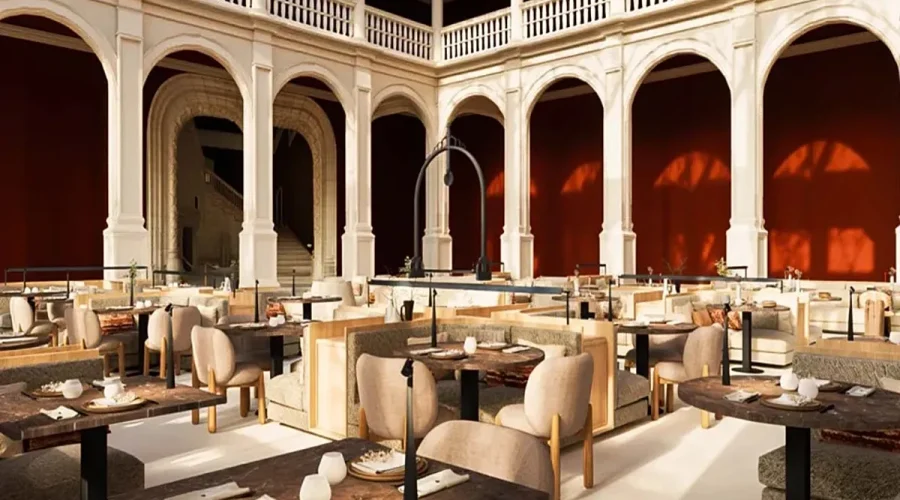
Culinary experiences at the palace center around two distinct concepts. The Los Zúñiga Restaurant occupies a particularly atmospheric location beneath the arches of the palace’s Renaissance cloister. This setting allows diners to enjoy meals surrounded by centuries-old stone columns and vaulted ceilings. The restaurant emphasizes local and seasonal produce, reflecting the agricultural richness of the Castile and León region. Shareable dishes form the foundation of the dining experience, including a board featuring local cheeses paired with quince paste and dried fruit. The menu extends to fish, meat, and salad preparations, alongside sweet treats that provide a fitting conclusion to meals. A second venue, the Condes de Miranda Gastrobar, will open at a later date, offering guests additional options for casual dining and drinks within the palace walls.
Therapeutic Waters and Wellness
Beyond its architectural significance, the palace offers something increasingly sought after by modern travelers: access to therapeutic waters. The Regional Government of Castile and León’s authorities have officially declared the palace’s waters as oligometallic mineral-medicinal and thermal water. This classification recognizes the water’s unique mineral composition and its potential health benefits. These therapeutic waters form the cornerstone of the hotel’s wellness program. Guests can enjoy body scrubs, a comprehensive array of massages, and facial treatments that utilize the mineral-rich waters. Looking ahead, the hotel plans to introduce a thermal pool and contrast circuit, further expanding its wellness offerings.
Four-Legged Guests Welcome
The palace extends its hospitality to pets as well. Each room accommodates one dog with pre-reservation, and the hotel provides bedding for canine companions. Dedicated spaces for dog walking ensure that pets can enjoy the village surroundings while their owners explore the palace. A specialized pet menu featuring duck, chicken, and lamb dishes allows four-legged guests to dine alongside their human counterparts.
Frequently Asked Questions
When did the Palacio de Avellaneda open as a hotel? The palace underwent a three-year restoration before reopening as a five-star hotel in 2026.
How many rooms does the hotel have? The converted palace features 80 rooms and suites for guests.
What makes the palace’s waters special? The Regional Government of Castile and León has officially classified the waters as oligometallic mineral-medicinal and thermal water, recognized for their unique mineral composition and health benefits.
Is the hotel pet-friendly? Yes, each room accommodates one dog with pre-reservation, and the hotel provides bedding and dedicated walking spaces for canine companions.
What dining options are available? Guests can dine at the Los Zúñiga Restaurant beneath the Renaissance cloister arches, with the Condes de Miranda Gastrobar opening at a later date for casual dining.