Portuguese Urban Centers Grapple with Rising Wild Boar Encounters
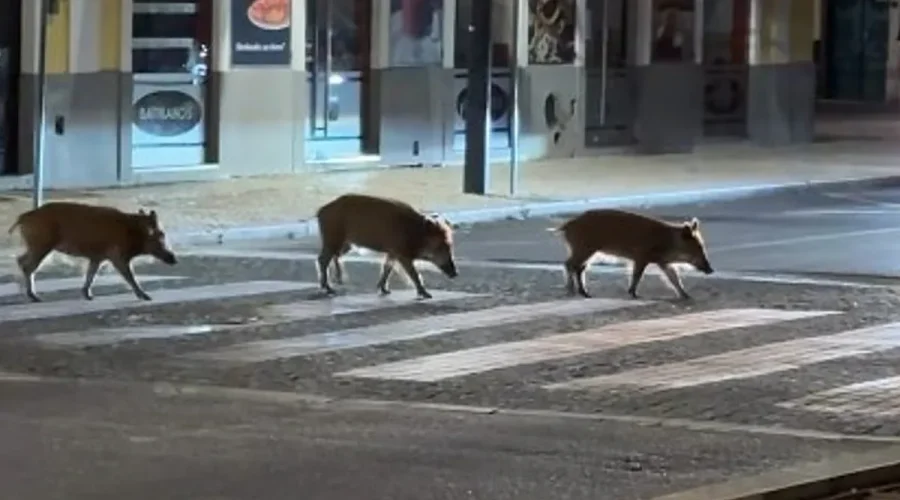
Usagevpn.com – Residents of Setúbal are growing accustomed to an increasingly unusual sight: wild boar wandering through city streets during evening hours. What began as occasional beach visits has evolved into a regular urban phenomenon, with these robust animals now navigating pedestrian crossings and rooting through landscaped areas alongside cars and commuters.
A video captured by a local resident has circulated widely on social media platforms, documenting a group of wild boar calmly crossing a road at night while vehicles passed nearby. The footage reveals the animals moving with purpose through planted sections of the city, using their distinctive snouts to search through soil for sustenance. This behavior marks a significant shift from their traditional habitat boundaries.
Official Recognition of an Urban Challenge
Setúbal’s municipal government has formally acknowledged the growing presence of these animals within city boundaries. In a public statement, local authorities confirmed that sightings have increased considerably over recent months.
“In recent months there have been several sightings of wild boar in urban and peri-urban areas of the municipality, particularly in gardens, parks, beaches and areas close to natural spaces.”
The council emphasized that this expansion of wild boar territory into residential zones represents an unwelcome development. Officials described the situation as neither natural nor desirable, noting that these animals bring both safety concerns and potential public health implications for residents and visitors alike.
“As a wild animal with unpredictable behaviour, it poses risks to the safety of people and pets, as well as public health concerns.”
Guidelines for Safe Encounters
In response to the increasing frequency of encounters, Setúbal City Council has distributed comprehensive guidance for residents and beachgoers. The recommendations emphasize maintaining distance from the animals and avoiding behaviors that might attract or provoke them.
Key precautions include refraining from approaching wild boar under any circumstances, retreating slowly if an animal approaches, and ensuring that food waste is properly secured in bins rather than left exposed. These measures aim to reduce both dangerous encounters and the tendency of boar to associate human settlements with reliable food sources.
A Nation Facing Wildlife Population Pressure
Setúbal’s experience reflects a broader national challenge. Portugal currently manages an estimated wild boar population ranging between 300,000 and 400,000 individuals, a figure that has grown substantially in recent decades. This overpopulation stems from multiple interconnected factors affecting wildlife management across the country.
One critical element involves the decline of natural predators. The Iberian wolf, once a significant controller of wild boar numbers, has seen its population diminish due to habitat fragmentation and conflicts with agricultural communities. Farmers have expressed frustration over livestock losses, leading to reduced tolerance for wolf presence in traditional territories.
Environmental conditions have further complicated the situation. Severe drought patterns across Portugal have diminished natural food supplies in forested areas, pushing wild boar to seek alternative nutrition in urban environments. This seasonal pressure coincides with summer tourism peaks, creating particularly challenging conditions for beach communities.
Beach Communities Bear the Brunt
During summer months, wild boar have become increasingly familiar sights on Setúbal’s coastal areas. Visitors to the beach often encounter these animals approaching towels, investigating coolers, and searching through discarded food containers left by less attentive sunbathers who venture into the water.
Three beaches in particular have emerged as hotspots for wild boar activity: Portinho da Arrábida, Creiro, and Galapinhos. Among these, Galapinhos stands out as the most frequently visited location, largely due to its position deep within the Serra da Arrábida natural park. This geographic placement makes it a natural corridor for animals moving between forested habitats and coastal zones.
Implications for Urban Planning and Tourism
The growing wild boar presence in Setúbal raises questions about long-term urban planning strategies. Municipal authorities must balance conservation efforts with public safety, ensuring that wildlife corridors remain functional while minimizing conflicts with human populations.
Tourism operators and local businesses are also adapting to this new reality. Beach facilities are considering additional signage and waste management improvements, while residential neighborhoods near natural spaces are exploring fencing and other deterrent measures. The situation underscores the need for integrated approaches that recognize wildlife as permanent residents rather than seasonal visitors.
As climate patterns continue to shift and urban expansion proceeds, Setúbal’s experience may serve as a model for other Portuguese cities facing similar challenges. The key lies in developing sustainable coexistence strategies that protect both human communities and the wildlife populations that have inhabited these regions for centuries.
Related Reading
Frequently Asked Questions
What is Wild boar roam Portuguese streets?
Wild boar roam Portuguese streets is the main topic of this guide. The article explains the context, practical details, and next steps readers should understand.
Why does Wild boar roam Portuguese streets matter?
Wild boar roam Portuguese streets matters because readers are looking for a useful answer, not just a short summary. Good content should match search intent and help them decide what to do next.