Extreme Heat Threatens to Stall European Economic Recovery
Usagevpn.com – A relentless heatwave sweeping across the continent this summer threatens to erase an entire year of economic progress for European nations. New analysis from Triodos Bank reveals that the combined effects of soaring temperatures and widespread wildfires could drain €180 billion from European economies in 2026 alone. This staggering figure represents approximately one percent of the European Union’s gross domestic product, potentially pushing the bloc toward economic stagnation when compared to projected growth of roughly 1.1 percent for the year.
Four Pathways of Economic Damage
The financial impact flows through multiple channels, with researchers identifying four primary mechanisms. Agricultural sectors face significant challenges as lower crop yields and reduced dairy production trigger cascading food price increases, contributing approximately 0.15 percent to the overall economic drag. Energy infrastructure experiences parallel strain, with constrained nuclear, hydroelectric, and thermal generation capacity alongside diminished solar panel efficiency driving wholesale electricity prices upward by 0.12 to 0.15 percent.
Transport networks suffer comparable disruptions as extreme temperatures impair rail, road, and waterway operations, adding another 0.15 percent to the cumulative cost. Perhaps the most substantial and difficult to quantify impact emerges from declining labor productivity. Workers experience measurable output reductions once ambient temperatures exceed the 25 to 30 degree Celsius threshold, with outdoor occupations and physically demanding roles bearing the heaviest burden.
Even office environments prove vulnerable to heat’s effects, as elevated temperatures degrade both sleep quality and cognitive function. Cross-country research referenced in the Triodos analysis, conducted by Allianz, indicates that each degree Celsius sustained above 30 degrees Celsius over multiple days reduces output per hour worked by approximately three percent.
National Variations in Vulnerability
The economic toll varies considerably across member states, with Triodos employing a sophisticated scoring system that weighs each economy’s exposure through multiple dimensions. The methodology examines the proportion of economic output generated in heat-sensitive sectors, average commute durations, air conditioning adoption rates, and historical acclimatization capacity, then multiplies these factors by the number of excess hot days recorded during the current summer.
France emerges as the most severely impacted nation, losing an estimated 1.4 percentage points of growth and potentially slipping into a contraction of approximately 0.6 percent from an already fragile economic position. The Netherlands experiences a loss of around 0.8 percentage points, leaving its growth trajectory essentially flat. Spain and Italy possess the most heat-exposed workforces alongside the highest number of extreme temperature days, yet decades of adaptation measures significantly moderate their vulnerability.
Poland presents an interesting case study in climate resilience. Despite possessing minimal air conditioning infrastructure and limited acclimatization experience, the country has benefited from a comparatively cooler summer and is projected to maintain growth of approximately 2.9 percent.
Human and Environmental Costs
The economic calculations capture only a portion of the summer’s devastation. Human mortality represents a substantial additional burden, with an estimated 20,400 heat-related deaths occurring across France, Germany, Spain, and Italy during the June heatwave alone. When valuing the summer’s approximately 25,000 total deaths in terms of life years lost, the economic cost ranges from €1.5 billion to €7 billion.
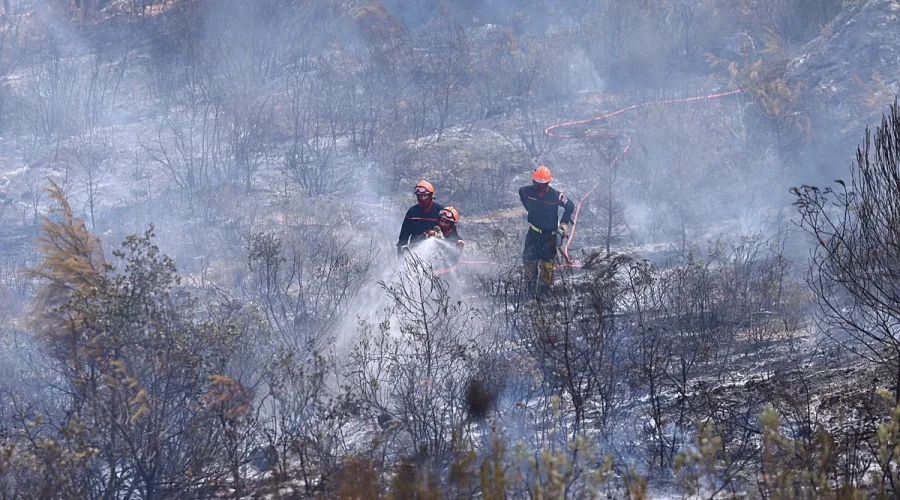
Environmental damage compounds these figures considerably. Wildfires consumed over 490,000 hectares across the European Union by the previous week, more than double the twenty-year average of 197,000 hectares recorded by the European Forest Fire Information System. France established a new national record for wildfire area burned. The loss of ecosystem services from damaged forested land may contribute an additional €100 million to €4.6 billion in economic costs.
Adaptation and Policy Implications
The research suggests that targeted adaptation measures could reduce productivity losses by approximately 40 percent, though such interventions cannot eliminate the economic damage entirely. Authors emphasize that their estimates rely on conservative assumptions, meaning actual costs could prove higher.
Triodos Bank argues that adaptation investments alone cannot address the root cause of the problem. The institution calls for more aggressive emissions reduction strategies, pointing to the European Commission’s July 17 decision to soften the trajectory of its primary carbon pricing mechanism as representing an opposing approach. As European economies navigate an increasingly volatile climate landscape, the balance between short-term economic flexibility and long-term environmental sustainability will determine whether the continent can maintain its growth momentum or faces prolonged stagnation in the years ahead.
Related Reading
Frequently Asked Questions
What is Europe s scorching summer could cost?
Europe s scorching summer could cost is the main topic of this guide. The article explains the context, practical details, and next steps readers should understand.
Why does Europe s scorching summer could cost matter?
Europe s scorching summer could cost matters because readers are looking for a useful answer, not just a short summary. Good content should match search intent and help them decide what to do next.