European Political Center Faces Historic Deficit in Upcoming Parliament
Usagevpn.com – For the first time since the European Parliament was established, the traditional centrist alliance may find itself unable to command a majority. The three political families that have consistently held power — the centre-right European People’s Party, the centrist Renew Europe movement, and the centre-left Socialists and Democrats — are projected to lose their collective dominance in the next legislative term. This potential shift represents more than a simple change in numbers. It signals a fundamental transformation in how European politics operates after decades of centrist hegemony. The projection comes from Europe Elects, a specialized data platform that analyzes voting patterns across all member states and applies each country’s specific electoral rules to forecast seat distributions.
A Century of Centrist Dominance Under Threat
Since the conclusion of the Second World War, European politics has been characterized by a stable centrist consensus. This political center has governed through coalitions that balanced conservative, liberal, and social democratic forces. The current projection suggests this era is drawing to a close. The trajectory has been visible for several years. Mainstream political organizations across Europe have experienced declining support as voters increasingly turn toward both the far right and anti-establishment movements. The 2024 European Parliament elections already demonstrated this movement, with right-leaning parties capturing nearly sixty additional seats. Much of this gain came from conservative, national-populist, and far-right organizations.
Seat Projections Reveal Significant Losses
The numerical breakdown shows substantial erosion for the traditional center. The Socialists and Democrats face the steepest decline, expected to lose eighteen members of parliament. The European People’s Party will shed fifteen seats, while Renew Europe loses nine. Meanwhile, the Greens and European Free Alliance group, which has frequently provided crucial support to centrist coalitions, will lose fourteen seats. This reduction places the Greens in an interesting position: despite becoming the smallest parliamentary group, their votes may become more valuable than ever. Centrist parties will need Green support more than at any previous moment to construct a working majority.
Right-Wing and Anti-Establishment Gains
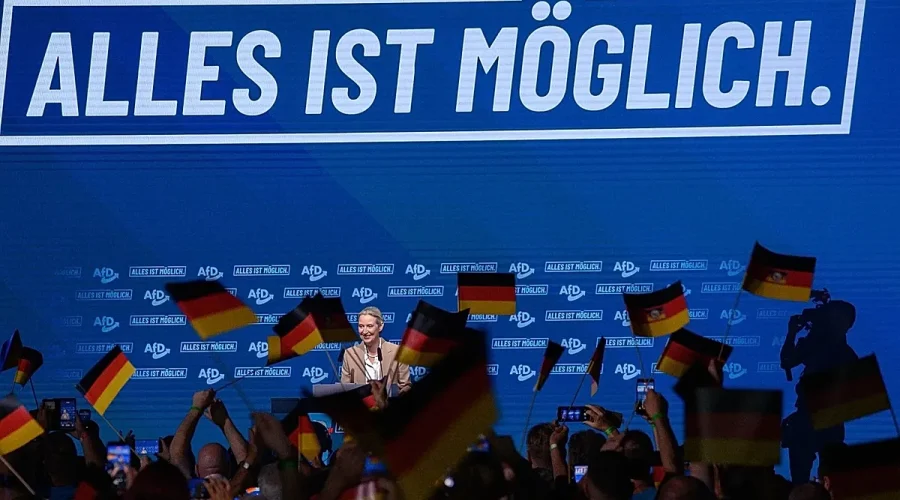
The political landscape is shifting in multiple directions simultaneously. The hard-right Europe of Sovereign Nations group, which encompasses Germany’s Alternative for Germany party, is projected to gain nineteen seats. The far-left The Left organization also gains nineteen seats, driven primarily by strong performances from leftist parties in France and Germany. This dual growth on the edges of the political spectrum indicates that voters are moving away from the center toward both conservative and progressive alternatives. The trend favors not only right-wing forces but also anti-establishment movements more broadly. Patriots for Europe, the group containing Marine Le Pen’s National Rally, is expected to add twelve seats. This growth stems largely from Spain’s Vox party and Austria’s Freedom Party. The European Conservatives and Reformists, led by Giorgia Meloni’s Brothers of Italy, will remain relatively stable with three additional members.
Restructuring Within Traditional Powers
One of the most notable changes will occur inside the European People’s Party itself. Spain’s Popular Party and Poland’s Civic Platform are projected to surpass the German Christian Democratic Union as the largest national delegations within the group. This ends the German party’s ten-year period of internal dominance. The EPP’s position remains strong overall, but its ability to form alternative majorities with right-wing parties provides significant negotiating power. This flexibility has already proven valuable in daily parliamentary negotiations and may become even more important as centrist coalitions weaken.
Expert Analysis on Political Fragmentation
Tobias Gerhard Schminke, director of Europe Elects, emphasizes that several interconnected trends are reshaping European politics.
The first one that’s often overlooked is that we see a fragmentation in the political system. So the EPP has about 21% support now in Europe. So, it will require a lot of political families to come together to form a majority.
Schminke identifies declining support for the political center as part of a broader crisis in consensus. Issues including liberal democracy, human rights protection, and European cooperation are facing renewed skepticism from voters. The director also notes an important distinction within the radical-right camp. While established forces like Meloni’s Brothers of Italy and Le Pen’s National Rally have reached a growth plateau, most expansion is occurring among more extreme organizations under the Europe of Sovereign Nations banner.
Implications for European Governance
The next European Parliament elections are scheduled for June 2029. Three years may seem brief, but political landscapes can transform considerably during this period. Parliamentary groups frequently adjust their compositions through defections and new alliances before and after elections. The projected changes carry profound implications for how the European Union operates. A weaker centrist coalition means more complex negotiations, potentially slower decision-making, and greater influence for smaller groups. The Greens, despite their reduced size, may wield disproportionate power in shaping legislation. The narrowing gap between centrist forces and the largest right-wing group suggests that future parliamentary dynamics will require new coalition strategies. Renew Europe’s position faces particular pressure from The Left, which could challenge the centrist movement’s traditional role as a bridge between political families. As European politics continues its evolution, the question is no longer whether the center will hold, but how it will adapt to a more fragmented, more polarized, and more dynamic political environment.
Related Reading
Frequently Asked Questions
What is EU s centrist coalition might fall?
EU s centrist coalition might fall is the main topic of this guide. The article explains the context, practical details, and next steps readers should understand.
Why does EU s centrist coalition might fall matter?
EU s centrist coalition might fall matters because readers are looking for a useful answer, not just a short summary. Good content should match search intent and help them decide what to do next.