July Inflation Data Leaves Federal Reserve’s Next Move in Balance
Usagevpn.com – The United States experienced a modest deceleration in price increases during July, though the decline arrived precisely where economists anticipated, keeping the central bank’s upcoming policy decision suspended between options. Consumer prices climbed by one-tenth of one percent over the month, recovering from June’s unexpected contraction of four-tenths of a percent. This movement brought the yearly inflation reading down to 3.4 percent, marking a notable improvement from May’s elevated 4.2 percent level.
When excluding volatile food and energy components, core inflation advanced by 0.2 percent monthly after remaining unchanged in the previous month. The annual core rate consequently eased to 2.5 percent from 2.6 percent. Every major metric aligned with expectations compiled by Dow Jones, yet the yearly declines stem largely from favorable comparisons against a robust summer period in 2025. Monthly momentum showed signs of strengthening following June’s subdued readings.
Markets React to Mixed Signals
Equity futures across American markets climbed immediately following the data publication, while participants in bond markets reduced their positioning toward tighter monetary conditions. The probability of a September rate increase, as tracked by the Chicago Mercantile Exchange’s FedWatch platform, dropped rapidly from 48 percent to 42 percent. Nevertheless, financial markets continue pricing in considerable uncertainty, with probabilities hovering near even odds.
The Federal Reserve maintained its benchmark interest rate range between 3.50 and 3.75 percent on July 29, extending a pause streak to five consecutive meetings. Three regional bank presidents broke from consensus, advocating for a quarter-point increase—the largest number voting in one direction in nearly ten years. This internal division highlights the complexity facing policymakers as they navigate competing economic pressures.
Employment Weakness Complicates Picture
The labor market delivered a surprising contraction in July, with the economy losing 23,000 positions against projections of approximately 83,000 new jobs. Meanwhile, average hourly earnings expanded by 3.2 percent over the past twelve months, creating a situation where wage growth outpaces price increases and reigniting concerns about stagflation. The unemployment rate settled at 4.1 percent, positioning it near most economists’ estimates of full employment capacity.
Cleveland Fed president Beth Hammack, one of the dissenters, stated on Monday that a single quarter-point adjustment would accomplish minimal results, suggesting multiple moves may prove necessary. She argued that current rates are not meaningfully restraining economic expansion.
Her counterpart in New York, John Williams, maintains confidence that inflation will decline during the current half of the year. These divergent perspectives among regional leaders reflect the broader challenge of determining appropriate monetary policy direction when economic indicators point in different directions.
Geopolitical Tensions Threaten Price Stability
A significant risk to continued disinflation emerges from developments in the Persian Gulf region. The Strait of Hormuz remains substantially restricted, with daily crossings averaging between 6 and 11 vessels compared to the pre-conflict range of 130 to 140. Negotiations aimed at reopening the critical waterway have encountered obstacles related to reparations requirements. US President Donald Trump has indicated that Iran should contribute financially for damages attributed to it across Lebanon, Syria, Yemen, and Gaza.
Crude oil prices have responded to these tensions, with Brent crude advancing approximately 5 percent since Friday to reach levels not seen since July 31. This represents roughly 25 percent above the lows recorded in early July. Energy costs previously pushed May inflation to 4.2 percent, and Goldman Sachs analysts estimate that airfares increased by 2 percent last month as jet fuel expenses transmitted through to consumers.
President Trump has communicated his intention to allow economic pressure on Tehran to accumulate gradually rather than initiating a new military campaign. Speaking with Axios, he characterized Washington’s approach as “low-keying it,” which suggests an extended standoff and a persistent premium embedded in crude oil prices going forward.
What Lies Ahead for Policymakers
Wednesday’s consumer price data does not represent the final assessment of inflation trends. Producer price information arrives on Thursday, followed by retail sales figures and consumer sentiment readings on Friday. Additional employment data and another inflation measurement will be released before policymakers convene for their September meeting.
Investor sentiment remains divided on the likely outcome. Odds of a rate increase currently sit on either side of 50 percent this week, a shift from the 67 percent probability recorded just seven days ago. This volatility in expectations demonstrates how sensitive markets are to each new data point as they attempt to forecast the central bank’s trajectory.
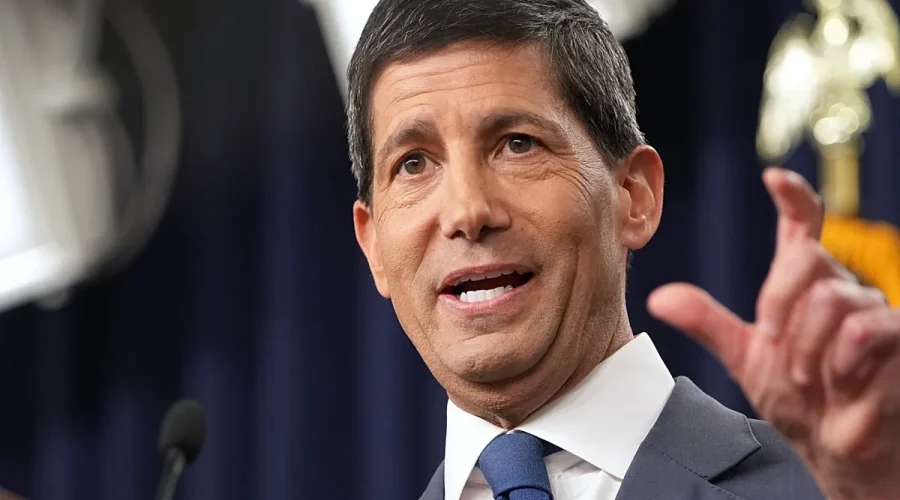
The dual mandate facing the Federal Reserve continues to pull in opposing directions. While price stability remains a primary objective, as Chair Kevin Warsh emphasized when he removed forward guidance and declined to publish personal projections, the employment component presents its own challenges. Warsh has characterized inflation as a policy choice and indicated readiness to intervene if necessary.
For American households, these developments carry tangible implications. Energy costs influence everything from grocery bills to transportation expenses. Wage growth that exceeds price increases provides some relief for consumers but may signal underlying pressures that could accelerate in coming months. The interplay between geopolitical tensions, labor market dynamics, and monetary policy decisions will likely determine whether the current cooling trend persists or reverses before the autumn season arrives.
Related Reading
Frequently Asked Questions
What is US inflation eases to 3 4?
US inflation eases to 3 4 is the main topic of this guide. The article explains the context, practical details, and next steps readers should understand.
Why does US inflation eases to 3 4 matter?
US inflation eases to 3 4 matters because readers are looking for a useful answer, not just a short summary. Good content should match search intent and help them decide what to do next.