Portugal Expands Maritime Watch with Indigenous Long-Range Drone Fleet
Usagevpn.com – Portugal is taking a significant step toward greater maritime sovereignty by acquiring advanced autonomous aircraft built entirely within its borders. Tekever, a Lisbon-based technology firm that has emerged as a notable force in the global unmanned systems sector, will deliver AR5 drones to the Portuguese Air Force for critical ocean surveillance operations. The delivery of these sophisticated platforms is set to begin in early September, marking a milestone for the nation’s defense capabilities.
The agreement encompasses more than just the aircraft themselves. Alongside the delivery of the drones, the contract covers comprehensive operator training programs, the provision of a Ground Control Station, and the integration of the ATLAS mission system. This holistic approach ensures that the Air Force will be fully equipped to utilize the new technology from day one of operations.
Technical Specifications and Operational Scope
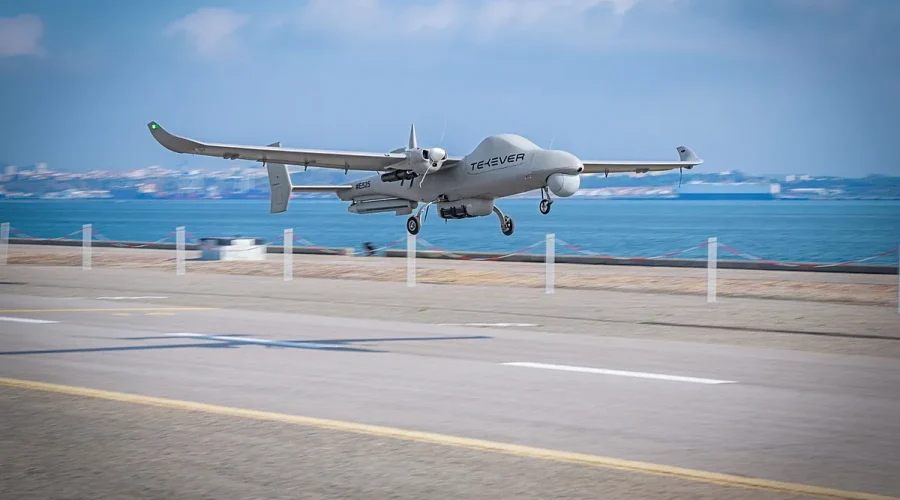
The AR5 represents a substantial leap forward in aerial surveillance technology. Measuring nearly eight meters across its wingspan and weighing approximately two hundred kilograms, the aircraft was engineered specifically for demanding maritime environments. Its robust construction allows it to operate at higher altitudes, providing extended visibility over vast stretches of ocean.
These capabilities will significantly enhance the Air Force’s operational autonomy during extended missions. The drone will be deployed across a wide spectrum of activities, including maritime surveillance, national security, and defense operations. A primary focus will be monitoring Portugal’s Exclusive Economic Zone, a critical maritime area that extends far beyond territorial waters and holds substantial economic and strategic value for the nation.
Beyond traditional defense roles, the AR5 will support various public interest missions. This includes assistance with the Special Rural Firefighting Device, known locally as DECIR, ensuring that coastal security and environmental protection efforts benefit from advanced aerial reconnaissance. The platform’s versatility makes it an invaluable asset for multiple government agencies.
Phased Training and Operational Readiness
Tekever has outlined a structured timeline for integrating the new systems into Air Force operations. During the initial phase, which extends through September, company specialists will train Air Force personnel to ensure they are prepared to operate the drones immediately upon delivery. This preparatory period is crucial for minimizing downtime and maximizing the utility of the new fleet.
Following the initial handover, a second training phase will commence in October. This extended period focuses on consolidating full operational readiness and fostering the development of new skills within the operating teams. The goal is to create a self-sufficient workforce capable of managing complex missions independently.
While Tekever has kept the financial details of the contract confidential, official documentation from the Ministry of Defence provides clarity on the investment. An authorization issued in November of last year permitted the Air Force to acquire an unmanned aerial system for maritime patrol with a maximum budget of just over 7.79 million euros. This funding is secured through the Military Programming Law, reflecting the government’s commitment to modernizing its defense infrastructure.
Strategic Implications for National Defense
Lieutenant Colonel Luís Henriques, who serves as the Operational Coordinator of the AR5 Working Group within the Portuguese Air Force, emphasized the transformative nature of this acquisition. He noted that integrating the AR5 system marks a substantial enhancement to the Air Force’s operational capabilities. The platform addresses contemporary requirements for surveillance, security, and defense while offering superior range, endurance, and flexibility compared to existing assets.
Henriques highlighted that the drone’s integration will bolster the nation’s capacity to monitor its Exclusive Economic Zone effectively. Furthermore, it will support a diverse array of public interest missions, positioning the Air Force to meet both current and emerging challenges with greater confidence and efficiency.
Pedro Petiz, the Director of Strategic Development at Tekever, underscored the importance of indigenous technology in this partnership. He stated that the contract places an autonomous capability, developed and manufactured entirely in Portugal, at the forefront of protecting the country’s airspace and maritime territory. Beyond simply supplying the aircraft, Tekever will collaborate closely with the Air Force to build and refine its own operational capabilities. This collaboration aims to strengthen national autonomy, readiness, and responsiveness in critical situations.
Advanced Technology for Extended Missions
The AR5 is classified as a fixed-wing unmanned aerial system designed for medium-altitude, long-endurance operations. It is particularly suited for information-gathering missions across expansive geographic areas. The aircraft can remain airborne for up to twenty hours and carries a payload capacity of fifty kilograms, allowing it to deploy various sensors and communication equipment.
A key feature of the AR5 is its satellite communications system, which enables operations beyond radio line-of-sight. This capability allows the drone to function effectively in remote maritime regions where traditional communication methods might fail. Such technological advancement ensures continuous data transmission and control, even when the aircraft is operating far from its base of operations.
Tekever’s systems have accumulated thousands of flight hours across numerous applications. These include coastal patrols, persistent surveillance, border protection, detection of suspicious activities, environmental monitoring, and search-and-rescue operations. The company has established partnerships with prestigious organizations such as the United Kingdom Home Office and the European Maritime Safety Agency, demonstrating the international recognition of its technology.
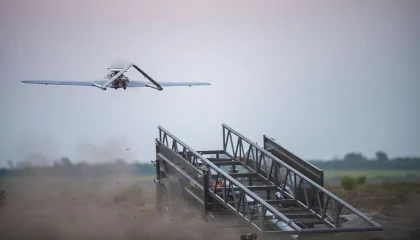
Currently, Tekever drones are actively engaged in Ukraine, conducting surveillance and reconnaissance missions in challenging operational environments. The company recently gained international attention when one of its drones, the Portuguese-made AR3, was captured by Russian forces in the Bryansk border region. After being shot down, the reconnaissance drone was recovered and transferred to a research institute for detailed technical and engineering analysis. This incident highlighted the strategic value of such aircraft and the interest they generate among global military powers.
As Portugal integrates these advanced drones into its fleet, the nation positions itself at the intersection of technological innovation and maritime security. The AR5 not only enhances immediate operational capabilities but also contributes to long-term strategic independence. By leveraging homegrown technology, Portugal reduces reliance on foreign suppliers while building a resilient defense framework capable of addressing complex modern challenges. The successful implementation of this program could serve as a model for other nations seeking to strengthen their maritime surveillance through indigenous innovation.
Related Reading
Frequently Asked Questions
What is Portugal boosts maritime surveillance with home?
Portugal boosts maritime surveillance with home is the main topic of this guide. The article explains the context, practical details, and next steps readers should understand.
Why does Portugal boosts maritime surveillance with home matter?
Portugal boosts maritime surveillance with home matters because readers are looking for a useful answer, not just a short summary. Good content should match search intent and help them decide what to do next.