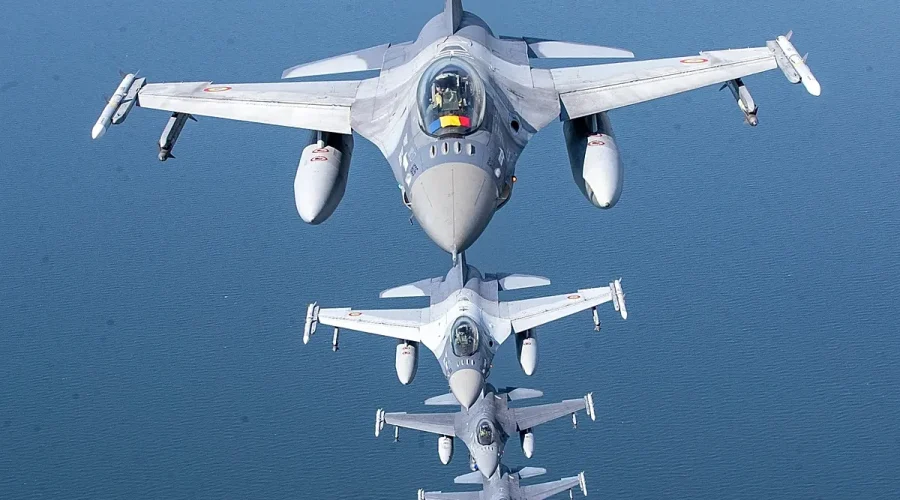
NATO Allies Unite Behind Poland and Romania Following Russian Airspace Incursions
Usagevpn.com – European security architecture faced renewed scrutiny this week as NATO member nations gathered to address escalating tensions along their eastern borders. The alliance convened a crucial meeting on Wednesday, bringing together representatives from across the Atlantic community to discuss recent aerial breaches involving two of its most strategically positioned frontline members. Both Poland and Romania have found themselves at the center of growing concerns regarding Russian military behavior, with multiple incidents in recent weeks highlighting vulnerabilities in European airspace monitoring systems.
Romania Confronts Persistent Drone Incursions
Over the past several weeks, Romanian authorities have documented multiple unauthorized entries by unmanned aerial vehicles into their sovereign airspace. These repeated violations have prompted strong diplomatic responses from Bucharest’s leadership, with President Nicușor Dan characterizing the ongoing situation as fundamentally unacceptable for a NATO member state.
It is inadmissible and intolerable for the Kremlin to continue violating the country’s skies.
The Romanian president’s firm stance reflects broader concerns within the alliance about Russia’s willingness to test NATO’s eastern perimeter through increasingly bold aerial maneuvers. These drone incursions, while not resulting in casualties, represent a calculated strategy of probing defensive capabilities and gathering intelligence near critical military installations.
Poland Responds to Cruise Missile Incident
Just days before the Romanian drone incidents gained prominence, Poland experienced a more dramatic aerial breach. On July 29, a cruise missile descended into Polish territory, creating immediate security concerns and prompting swift investigation by Polish authorities. The incident occurred approximately fifty kilometers from the eastern city of Lublin, placing it well within Polish borders but not directly threatening major population centers.
Polish Prime Minister Donald Tusk clarified that the armed unmanned aerial vehicle fell 50 kilometres away from the city of Lublin and was probably Russian.
The Polish government’s assessment, while cautious in its language, pointed toward Moscow as the likely source of the missile. This incident joined a growing list of aerial violations that have tested European defense systems and raised questions about the adequacy of current monitoring protocols.
Allied Solidarity and Strategic Response
NATO Secretary-General Mark Rutte wasted no time in addressing the dual incidents, framing them within the broader context of Russia’s ongoing military campaign. His assessment emphasized the interconnected nature of these violations and their significance for alliance cohesion.
This incident is yet another reckless act by Russia and a dangerous consequence of its war against Ukraine.
NATO spokesperson Allison Hart provided additional detail on Wednesday’s meeting outcomes, noting that member nations expressed unified support for both Poland and Romania. The alliance’s collective response included explicit condemnation of Russian behavior and a clear statement assigning responsibility for the airspace violations to Moscow.
Allies reiterated that Russia bears full responsibility for the airspace violations, which are dangerous and unacceptable, and demonstrate Russia’s increasing tolerance for risk.
The meeting’s official readout captured the alliance’s determination to maintain unity in the face of what it characterized as escalating Russian provocations. These violations, while individually manageable, represent a pattern that suggests Moscow is testing the limits of NATO’s response capabilities.
Ukraine Support and Military Capabilities
Beyond addressing immediate security concerns, the meeting reinforced NATO’s commitment to Ukraine as Russia’s full-scale invasion enters its fifth year. Member nations emphasized that their support for Kyiv remains unwavering, regardless of Russian attempts to create distractions or demonstrate strength through aerial violations.
Allies underscored that they will not be deterred by these and other irresponsible acts by Russia from their enduring commitment to Ukraine, whose security contributes to ours.
Romania’s Ambassador to NATO, Dan Neculăescu, used the meeting to advocate for continued investment in military capabilities. His remarks highlighted the importance of maintaining robust defensive systems that enable both Bucharest and the broader alliance to respond effectively to emerging threats.
I also expressed solidarity with our Polish friends, as we continue to coordinate on the Eastern Flank.
Polish Defence Minister Władysław Kosiniak-Kamysz echoed these sentiments, noting that the alliance demonstrated clear readiness to implement new security measures. His comments specifically referenced enhanced protection for NATO’s frontline borders and the Baltic Sea region, areas that have seen increased Russian military activity in recent months.
Broader European Security Implications
The incidents involving Poland and Romania reflect a larger trend affecting European nations. Germany and other European countries have increasingly reported unmanned aerial vehicles operating near sensitive infrastructure sites, including military bases, commercial airports, and industrial facilities. These episodes have strained European defense capabilities and raised questions about the adequacy of current hybrid warfare countermeasures.
The convergence of airspace violations, infrastructure threats, and ongoing support for Ukraine creates a complex security environment for NATO members. Alliance leaders recognize that addressing these challenges requires not only immediate responses but also long-term strategic planning to ensure European security remains robust against evolving threats.
Related Reading
Frequently Asked Questions
What is NATO stands with Poland and Romania?
NATO stands with Poland and Romania is the main topic of this guide. The article explains the context, practical details, and next steps readers should understand.
Why does NATO stands with Poland and Romania matter?
NATO stands with Poland and Romania matters because readers are looking for a useful answer, not just a short summary. Good content should match search intent and help them decide what to do next.