A Spanish Enclave Grapples with Uncertainty After Migration Crisis
Usagevpn.com – Ceuta, the Spanish territory perched on Africa’s northern coast, found itself caught in a maelstrom of conflicting emotions following a dramatic migration episode that exposed deep fractures in both local confidence and national governance. Within hours of the crisis unfolding, residents organized to voice their discontent, gathering in streets to protest what they perceived as governmental failure and abandonment.
The demonstration that emerged captured the complex mood of a community suddenly thrust into the spotlight. Crowds chanted slogans demanding accountability from Madrid while expressing profound feelings of betrayal. One woman, visibly exhausted, shared her frustration with reporters, explaining that she had been unable to rest for two consecutive nights. She had retreated to her home with her granddaughters, seeking refuge from the chaos that had engulfed the city.
“This cannot be, Spain cannot have such a useless intelligence service that it has no idea what is going on in Ceuta,” she declared, her voice carrying the weight of personal and collective disappointment.
Military Presence and Border Security Concerns
The city’s character as a military stronghold became a focal point of discussion among demonstrators. Another participant emphasized the inadequacy of the current security response, noting that the 3,000 soldiers stationed in Ceuta should have been more actively deployed to protect the territory. She waved a Spanish flag as she spoke, her gesture symbolizing both patriotism and demand for action.
What troubled residents most was the silence from authorities. A third demonstrator expressed bewilderment at the lack of clear communication, noting that no one had offered even a basic plan or explanation of what would happen next. This absence of leadership fueled fierce criticism of the government’s approach to migration management and crisis response.
The Human Dimension of the Crisis
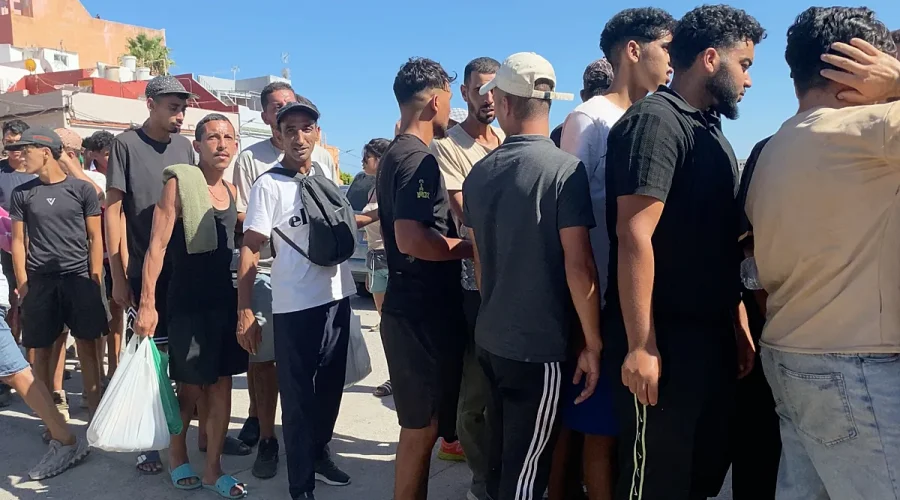
Beneath the political anger ran a current of genuine fear, particularly heightened by the demographic composition of those who had arrived. The vast majority were men, and an estimated 1,000 minors remained scattered across the city’s beaches, streets, parks, and vacant lots. Their presence created an atmosphere of vulnerability even among residents who considered themselves moderate and compassionate.
One migrant, wandering down a main thoroughfare in the midday heat of 33°C, offered a poignant perspective on why they had come. “There is no money in Morocco. That is why we came to Spain. But here we have been treated very badly,” he explained, his words reflecting both hope and disillusionment.
“My father, my whole family are poor. Now we are here and we try to get by. We sleep on the street. We are here, life is very hard, but…,” another migrant shared as he made his way toward the port, uncertainty evident in his response when asked whether he intended to stay or return.
Humanitarian Response and the Pull Factor Debate
The humanitarian dimension of the crisis drew attention to the work of organizations like Luna Blanca, which reported assisting at least 4,000 people since the crisis began. On one afternoon, the NGO distributed 2,000 food portions in just two hours, providing milk, bread, sponge cakes, and biscuits to those in need.
Coordinator Halima Ahmed Iacobi addressed concerns that such generous aid might encourage further migration. She challenged the conventional wisdom about pull factors, arguing that the real distortion came from social media narratives rather than actual conditions on the ground.
“We are human first and foremost. We cannot allow people to die of hunger. So, where does humanity come in? What do we care about the pull factor?” she asked rhetorically before dismantling the myth.
She described the pull factor as nothing more than exaggerated rumors circulating online—stories claiming that migrants arriving in Spain received between €1,500 and €1,800 in benefits, access to every conceivable social program, and even complimentary cars and holiday apartments. “The only thing they still need to tell them is that they are given a car and a holiday flat as well. That is the pull factor,” she concluded with characteristic wit.
A Tragedy at Sea
The crisis carried a heavy human toll beyond the living. Spanish authorities confirmed that at least 75 people had drowned while attempting to swim across the sea stretch between Ceuta and Morocco, a route now partially shielded by a floating barrier. Fears persisted that the actual number of victims might be higher.
Meanwhile, security forces conducted operations to manage the situation. One of the first days of the crisis, cameras captured migrants being gathered near one of Ceuta’s central beaches. At the border, others were removed from buses and escorted back to the exact locations where they had entered days earlier, creating a sense of circular movement without resolution.
Looking Toward Normality
The author remained in Ceuta for less than 30 hours, departing four days after the crisis began. What emerged was a portrait of a city navigating through indignation, fear, anguish, incomprehension, mistrust, bewilderment, and compassion simultaneously. The autonomous city now faces an uncertain struggle to regain its sense of normality, with residents demanding not just answers but a clear vision for the future of their border community and Spain’s broader migration policy.
Related Reading
Frequently Asked Questions
What is Anger fear shock and compassion?
Anger fear shock and compassion is the main topic of this guide. The article explains the context, practical details, and next steps readers should understand.
Why does Anger fear shock and compassion matter?
Anger fear shock and compassion matters because readers are looking for a useful answer, not just a short summary. Good content should match search intent and help them decide what to do next.