Spinning Infernos: Fire Tornadoes Sweep Across Europe as Extreme Heat Intensifies
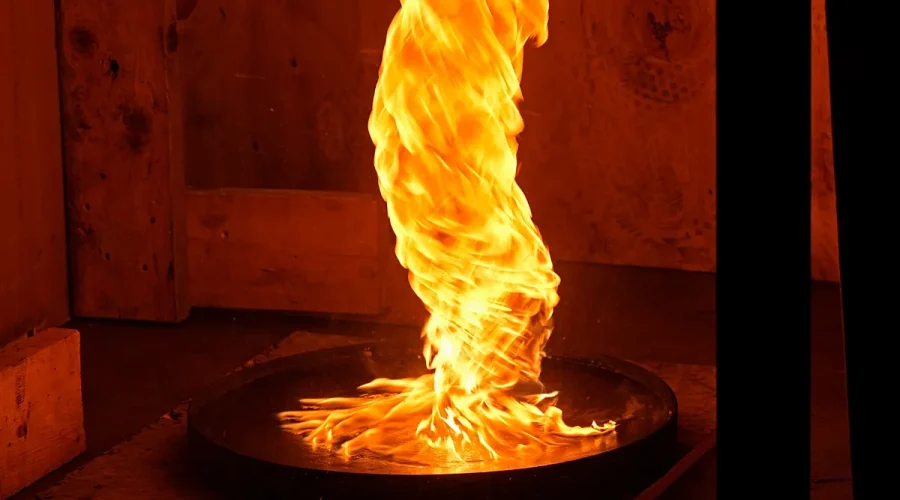
Usagevpn.com – Europe’s unprecedented summer of soaring temperatures and parched landscapes has ignited a wave of catastrophic wildfires stretching from the Mediterranean coastlines to the heart of the continent. Nations including France and Greece are currently engaged in desperate efforts to contain massive blazes that have consumed thousands of hectares of forest and scrubland. Within these raging infernos, scientists have identified a particularly menacing phenomenon: the fire whirl, commonly known as a fire tornado. These spinning columns of flame and smoke represent one of the most unpredictable and deadly aspects of modern wildfire behavior.
Understanding the Spinning Beast
Fire whirls occur when intense heat rising from a burning landscape combines with wind patterns to create a vortex of flames. The phenomenon transforms ordinary fire behavior into something far more volatile and difficult to predict. According to wildfire researcher James Urban, assistant professor at Worcester Polytechnic Institute in Massachusetts, this extreme fire behavior has been documented extensively across European nations in recent days.
So, fire tornadoes, or as we call them, fire whirls, are a scenario in which a fire has a strong rotational flow around it, and sort of a strong rotation flow around it.
Urban’s research team at Worcester Polytechnic Institute conducted controlled laboratory experiments to recreate these spinning fire columns under precise conditions. Their work revealed that the rotational motion develops through complex interactions between wind, terrain features, and the physical shape of the fire itself. When air is drawn into a burning area from multiple directions simultaneously, obstacles such as vegetation clusters, nearby active fires, or geographical formations can force that airflow into a spinning pattern.
The Mechanics of Destruction
The formation process of a fire whirl involves intricate atmospheric dynamics. As hot air rises from the fire, cooler air rushes in from surrounding areas to replace it. When this incoming air encounters obstacles or interacts with uneven terrain, it begins to rotate. This rotation intensifies as more air is pulled into the center of the vortex, creating a self-sustaining spinning column.
In a fire whirl, or commonly called a fire tornado, the fire entrains in air from the sides. And what can happen is through obstructions with, you know, other fires or obstacles such as vegetation or local geographical features, the flow can become constrained and create a recirculation pattern, causing it to circulate and sort of spin and that can allow the fire to burn more rapidly and get the fire … the flames closer to the ground – allowing them to burn the vegetation more quickly – resulting in more intense heat release and a more intense fire.
This spinning mechanism produces several dangerous effects. The flames are drawn closer to the ground surface, enabling them to consume vegetation at accelerated rates. The concentrated heat output increases dramatically compared to non-rotating fires of similar size. Most critically, the rotational motion allows the fire to change direction with remarkable speed, catching both firefighters and nearby communities off guard.
Threats to Life and Property
One of the most significant dangers posed by fire whirls involves their ability to launch burning debris far ahead of the main fire front. This process, known as firebrand spotting, creates spot fires that can ignite new areas completely disconnected from the primary blaze. These secondary fires can spread with alarming speed, overwhelming containment efforts and potentially surrounding firefighting crews.
Fire whirls can lead to a phenomena called firebrand spotting, where burning debris is launched ahead of the fire front and this can lead a very rapid fire spread, which is hazardous to the fire service, as well as nearby communities. But also, it can cause the fire to jump, essentially, over the fire service, increasing the chances for them to be trapped. And so when firefighters are operating in conditions where there are fire whirls occurring, they have to be very careful.
The unpredictable nature of fire whirls makes them particularly hazardous for emergency responders. Traditional containment strategies may fail when a spinning fire suddenly changes course or leaps over established firebreaks. Communities situated near active wildfire zones face heightened risks when these phenomena are present, as homes and infrastructure can be engulfed without warning.
A Climate-Driven Transformation
Urban and other researchers believe that the increasing frequency of fire whirls across Europe reflects a broader transformation in wildfire behavior driven by changing climate conditions. Human-caused climate change has elevated temperatures and reduced precipitation across southern Europe, creating an environment increasingly favorable for extreme fire events. The prolonged heat waves and extended dry periods have left vegetation parched and ready to ignite, while stronger wind patterns contribute to the formation of spinning fire columns.
As global temperatures continue to rise, scientists anticipate that fire whirls and similar extreme fire behaviors will become more common throughout Europe and other regions experiencing warming trends. The combination of hotter, drier conditions with more variable wind patterns creates the perfect recipe for these spinning infernos to develop with greater frequency and intensity.
Authorities across southern Europe remain on high alert as the summer season progresses. The ongoing battle against major wildfires continues to test resources and strain communities, with the added complexity of fire whirls making containment efforts more challenging than ever before. Understanding these spinning phenomena is becoming essential for protecting both human lives and natural landscapes in an era of increasingly volatile weather patterns.
Related Reading
Frequently Asked Questions
What is Fire tornadoes have reached Europe?
Fire tornadoes have reached Europe is the main topic of this guide. The article explains the context, practical details, and next steps readers should understand.
Why does Fire tornadoes have reached Europe matter?
Fire tornadoes have reached Europe matters because readers are looking for a useful answer, not just a short summary. Good content should match search intent and help them decide what to do next.