Kyiv’s Air Defense Struggles as Overnight Barrage Claims Dozens of Lives
Usagevpn.com – Ukraine’s air defense forces faced a significant challenge during a massive overnight assault, failing to intercept even one Russian missile despite the deployment of extensive defensive measures. The devastating attack resulted in a minimum of seventeen fatalities across Kyiv and its neighboring territories, marking one of the deadliest nights in recent months for the Ukrainian capital.
A comprehensive report released by the Ukrainian air force on Wednesday detailed the scale of the assault. Russian military forces launched an impressive arsenal comprising 115 unmanned aerial vehicles alongside 28 high-velocity missiles, several of which were ballistic in nature. This coordinated strike came at a critical moment when Ukrainian officials have been vocal about severe deficiencies in their anti-ballistic ammunition reserves.
Presidential Response and Critical Shortages
President Volodymyr Zelenskyy addressed the situation through a social media announcement, clarifying that the primary objective of the assault was civilian commercial infrastructure. The president noted that while warehouses belonging to civilian enterprises bore the brunt of the attack, additional strikes also impacted transportation infrastructure and a major railway station.
Ballistics interceptors are something that could have saved the lives of those who died today. It is very important that partners realise that delays in their delivery or unwillingness to transfer anti-ballistics leads to such terrible victims and destruction.
The president’s statement underscored a growing frustration with international allies regarding the pace of military aid. The absence of adequate ballistics interceptors has become a recurring theme in Ukraine’s defense narrative, with officials repeatedly emphasizing how these systems could have prevented numerous casualties during the night’s events.
Tragedy at the Railway Station
The Brovary district experienced the most severe losses during the overnight assault, particularly around the Kvitneva railway station. Commuters who had waited for what they believed would be a delayed final train found themselves trapped on the platform when the station came under fire. Vitaliy Bigun, who serves as the head of the Brovary District State Administration, confirmed that eight individuals perished in this incident, having been unable to board the train before the attack commenced.
This tragedy highlighted the vulnerability of civilian populations during nighttime operations, when many residents remain in transit or near transportation hubs. The timing of the strike, coinciding with evening rush hour activities, amplified the human toll significantly.
Prime Minister’s Assessment of Civilian Targeting
Ukrainian Prime Minister Sergii Koretskyi provided a detailed analysis of the attack’s nature, emphasizing that Moscow deliberately avoided military installations in favor of civilian economic centers. The prime minister characterized the assault as an act of terrorism rather than conventional warfare.
These strikes have no military purpose – this is terrorism. Russia is expanding its campaign of terror by deliberately targeting businesses that serve millions of people. Ukrainian manufacturers, commercial facilities, and logistics hubs came under attack.
Koretskyi announced that the government would convene with affected Ukrainian businesses to coordinate recovery efforts and assess the full extent of the damage. The systematic targeting of commercial infrastructure represents a strategic shift in Russia’s approach to the conflict, aiming to disrupt economic stability alongside military objectives.
Major Commercial Facilities Destroyed
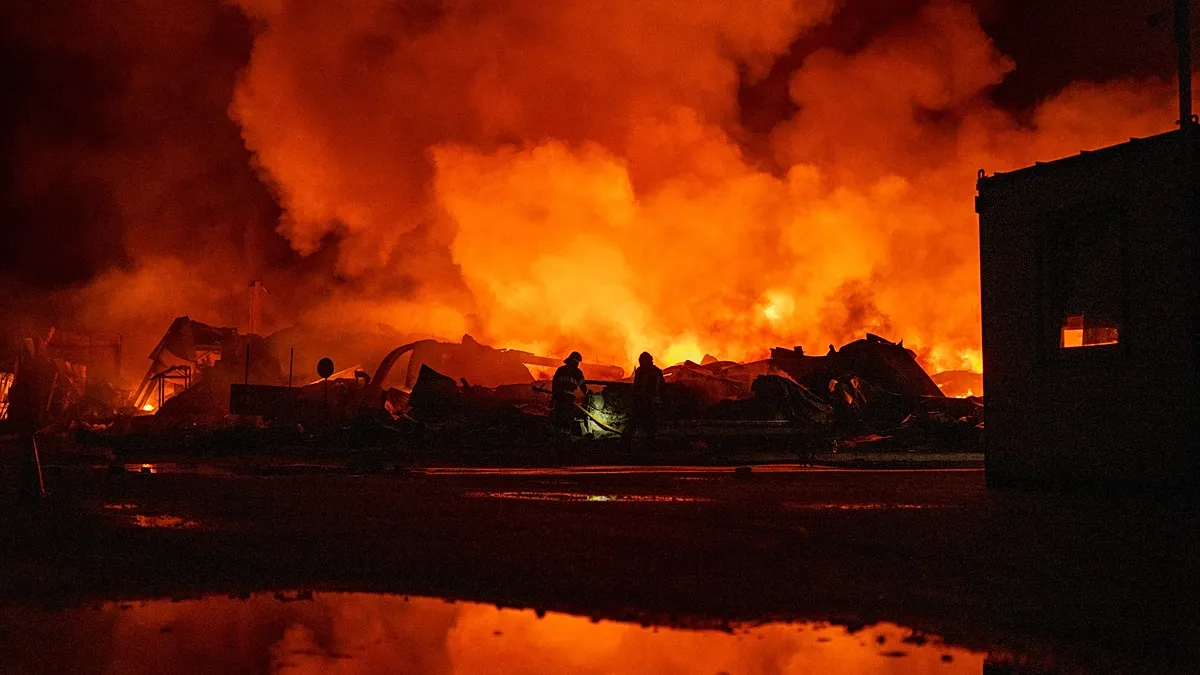
The overnight assault inflicted substantial damage on several of Ukraine’s most prominent commercial enterprises. Epicentre, which dominates the country’s do-it-yourself retail sector, suffered significant destruction to its facilities. ROZETKA, recognized as Ukraine’s premier online shopping platform and e-commerce destination, also reported extensive damage to its operations.
Nova Poshta, the nation’s largest private postal and courier service, experienced particularly severe losses. Russian forces employed cluster munitions during the strike on Nova Poshta’s Kyiv sorting center, a weapon system known for its wide-area devastation capabilities. The use of such munitions against commercial infrastructure has drawn international attention to the proportionality of Russia’s targeting methods.
Silpo, a major supermarket chain operating throughout Ukraine, confirmed that six of its workers lost their lives when fires erupted simultaneously at two of its distribution centers. The dual-location fires suggest a coordinated attack designed to maximize disruption to food supply chains across the capital region.
Additional Damage and Broader Implications
In a separate but related incident on Tuesday, Russian forces destroyed a warehouse complex housing products from Lasunka, a well-known Ukrainian ice cream manufacturer. This additional blow to the food and beverage sector illustrates the comprehensive nature of Russia’s economic warfare strategy.
The cumulative impact of these strikes extends beyond immediate casualties and property damage. Ukraine’s commercial infrastructure serves millions of citizens daily, and disruptions to logistics hubs, retail centers, and distribution networks create ripple effects throughout the economy. The destruction of facilities belonging to major companies like Epicentre, ROZETKA, and Nova Poshta threatens employment, supply chains, and consumer access to essential goods.
International observers have noted that the failure to intercept even a single missile during this barrage raises questions about the effectiveness of Ukraine’s current air defense posture. With ballistics interceptors identified as critical for preventing such casualties, the delay in their delivery from partner nations has become a matter of both military and humanitarian concern. The ongoing shortage of these specialized munitions means that future overnight barrages may continue to inflict disproportionate damage on civilian populations and infrastructure alike.
Related Reading
Frequently Asked Questions
What is Ukraine failed to shoot down a single?
Ukraine failed to shoot down a single is the main topic of this guide. The article explains the context, practical details, and next steps readers should understand.
Why does Ukraine failed to shoot down a single matter?
Ukraine failed to shoot down a single matters because readers are looking for a useful answer, not just a short summary. Good content should match search intent and help them decide what to do next.