Beijing Strikes Back with New Trade Restrictions as Washington Tensions Mount
Usagevpn.com – China has unveiled a comprehensive package of economic countermeasures targeting American businesses and technology sectors, marking one of the most significant escalations in bilateral trade disputes in recent months. The sweeping actions include stringent controls on unmanned aerial vehicle exports and a prohibition on commercial engagements with six American organizations. These measures arrive as diplomatic channels remain active between the two economic superpowers, with Chinese President Xi Jinping anticipated to travel to Washington in September for high-level discussions.
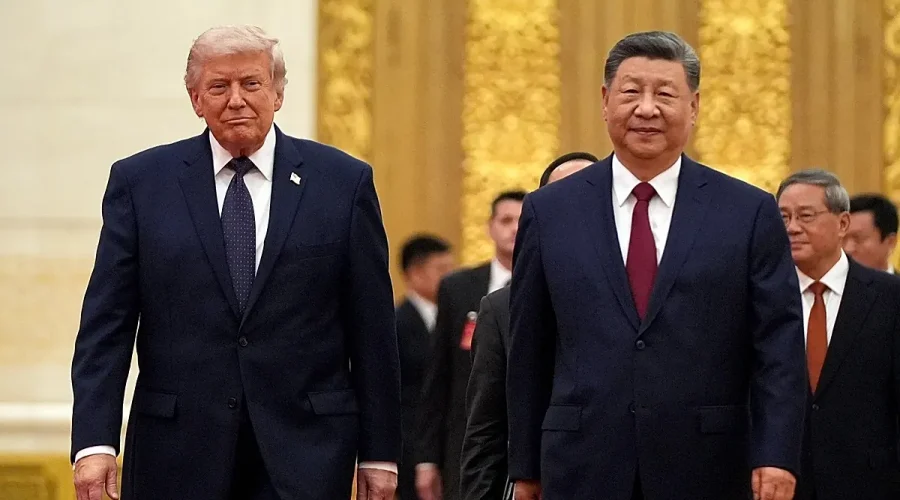
The timing of Beijing’s response is particularly notable given the apparent thaw in relations observed during President Xi’s meetings with Donald Trump in Beijing earlier this year. Despite those positive signals, underlying friction has continued to build as both nations implement increasingly aggressive trade policies against each other.
Retaliatory Measures Against American Policies
China’s Commerce Ministry characterized the new restrictions as a direct response to what it described as unfair American actions. The ministry highlighted two primary catalysts: the Federal Communications Commission’s prohibition on Chinese drone imports and the Department of Homeland Security’s decision to place forty-three Chinese corporations on the Uyghur Forced Labor Prevention Act entity list. This designation effectively blocks American importers from purchasing goods produced using forced labor in the Xinjiang region.
“The measures seriously violate the important consensus reached by the two heads of state and severely damage China’s legitimate rights and interests,” the ministry declared in an official statement. “China has no choice but to take necessary countermeasures in response.”
Beijing emphasized that it exercised restraint in formulating its response while simultaneously warning Washington to reverse course. The Chinese government cautioned that additional sanctions could follow if the United States continues implementing what it termed “erroneous practices” in international trade.
Drone and Technology Export Controls
A central component of China’s strategy involves implementing case-by-case evaluation procedures for unmanned aerial vehicles, their critical components, and associated technologies. These items appear on a comprehensive list of dual-use export-controlled products—goods capable of serving both civilian applications and military purposes. The dual-use classification makes these items particularly sensitive to international trade restrictions.
The drone sector has become a focal point of US-China technological competition. The FCC initially prohibited new Chinese drone imports in December, though subsequent revisions permitted certain models to enter the American market. More recently, the same regulatory body announced restrictions on foreign-made humanoid robots and power inverters, citing national security concerns—a move analysts view as primarily targeting Chinese manufacturers.
Impact on American Businesses
Six American entities now face comprehensive restrictions on conducting trade or other commercial activities with Chinese organizations. Among those affected are Applied DNA Sciences, a biotechnology company, and Human Rights in China, a non-governmental organization. Compliance Testing LLC received separate treatment, with Beijing banning the firm from domestic operations and accusing it of collaborating with the FCC to undermine “China’s sovereignty and security.”
Additionally, China announced investigations into potential national security implications of imported printing software and office equipment, though specific companies were not identified in the announcement.
Changes to Certification Requirements
The State Administration for Market Regulation introduced modifications to the CCC certification process, which ensures electronic products meet fundamental safety standards. Under the revised framework, American companies performing follow-up factory inspections on behalf of Chinese entities can no longer issue CCC certifications independently. Instead, US manufacturers of certified electronics must either engage auditors located outside the United States or utilize other non-American designated bodies.
These certification changes could create additional administrative burdens for American technology firms seeking to maintain market access in China’s vast consumer electronics sector.
Broader Implications for Bilateral Relations
The escalation comes at a critical juncture for US-China relations. While both governments have expressed interest in stabilizing their economic relationship, the implementation of reciprocal restrictions suggests that fundamental disagreements persist. The drone and technology restrictions particularly highlight the growing competition in emerging sectors that will define the next decade of global economic leadership.
Analysts note that Beijing’s measured approach—combining targeted sanctions with diplomatic warnings—reflects a strategy designed to pressure Washington without triggering a full-scale trade war. The outcome of Xi’s upcoming Washington visit may determine whether these tensions can be managed or if further escalation lies ahead.
Related Reading
Frequently Asked Questions
What is China slaps export controls on US firms?
China slaps export controls on US firms is the main topic of this guide. The article explains the context, practical details, and next steps readers should understand.
Why does China slaps export controls on US firms matter?
China slaps export controls on US firms matters because readers are looking for a useful answer, not just a short summary. Good content should match search intent and help them decide what to do next.