New Legislation Targets Russians Overseas in Expanding Crackdown
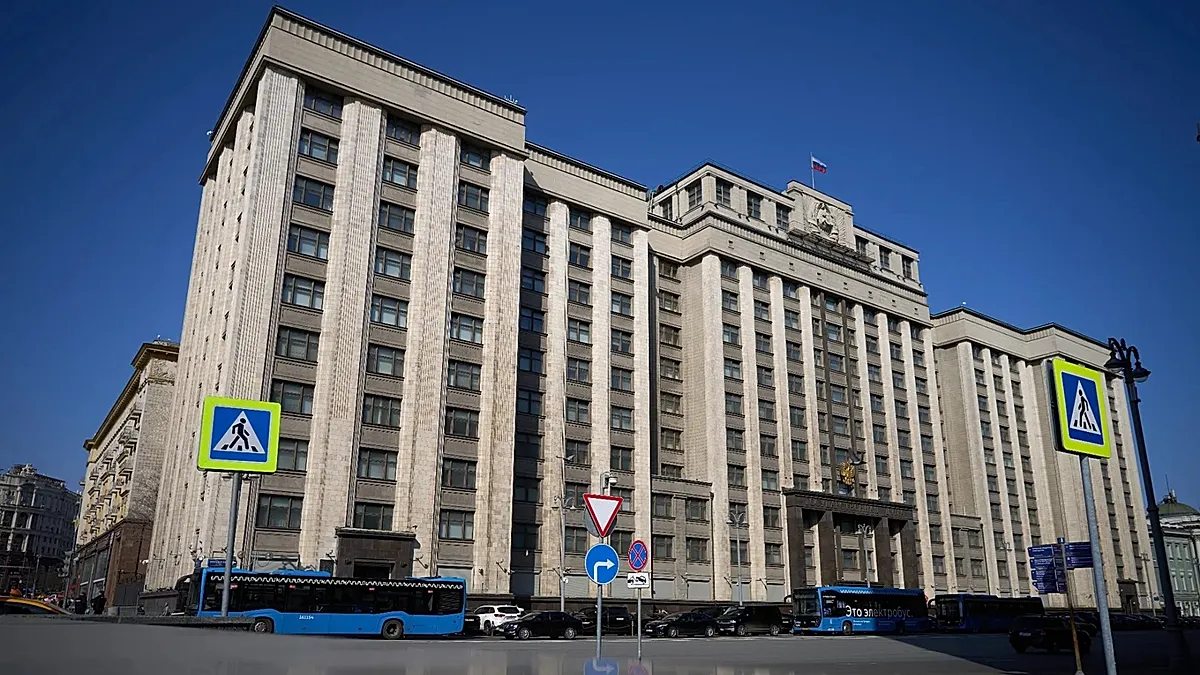
Usagevpn.com – On Wednesday, Russia’s legislative body enacted comprehensive measures that effectively remove fundamental rights from citizens residing outside the country who encounter political prosecution domestically. According to legal experts, these provisions constitute an actual cancellation of citizenship status for those affected. The State Duma approved the proposed legislation during both its second and third reading sessions on the same day.
Vyacheslav Volodin, the speaker of the State Duma, was transparent regarding the intended targets of this new framework. He stated clearly before the voting session that the legislation addresses individuals who damage national interests.
“We are talking about those who harm our country,” he explained. “About extremists, traitors to our homeland. Those who for years have tried to do everything to destroy our state. Who justify Nazism and insult our soldiers and officers, while hiding from punishment in other states.”
Scope of Restrictions for Expatriates
The legislation establishes extensive limitations for Russians living overseas who avoid criminal proceedings within Russia. Financial accounts will be frozen immediately, and affected individuals lose the ability to sell their property or vehicles. Professional licenses and accreditations face suspension, while access to banking applications becomes unavailable. Additionally, consular and state services—including international passport issuance and document certification for wills and powers of attorney—will be denied to those covered by the law.
Beyond those evading prosecution, the legislation extends to Russians who have already received administrative sanctions for various violations. These include breaches of the foreign agents statute, public calls for sanctions against Russia, demands to alter Russian territorial boundaries, actions deemed to discredit military forces, and participation in organizations classified as undesirable by Russian authorities.
The law becomes operative immediately upon official publication, with no transitional grace period provided for compliance or adjustment.
Historical Context of Legal Expansion
This Wednesday’s enactment represents the most recent development in Russia’s ongoing expansion of legal mechanisms designed to suppress opposition. This process commenced prior to the comprehensive military operation in Ukraine but gained substantial momentum following February 2022. During the initial week of the full-scale invasion, lawmakers enacted two critical statutes within days of one another.
The first measure criminalized dissemination of what government officials characterize as “knowingly false information” concerning military operations, establishing maximum penalties of fifteen years imprisonment. The second statute created criminal liability for “discrediting” the armed forces, with first-time violators facing sentences of up to five years.
Concurrently, Russia’s communications regulatory body issued directives requiring media organizations to eliminate specific terminology from their coverage. The words “war,” “invasion,” and “assault” were prohibited, a mandate that resulted in either the shutdown or voluntary suspension of the majority of independent Russian news outlets.
Broader Impact on Dissent
The foreign agents legislation, initially enacted in 2012, underwent multiple revisions beginning in 2022. These amendments enabled authorities to classify individual persons—not merely organizations—as foreign agents, imposing comprehensive restrictions on public participation, financial activities, and international travel.
By mid-2025, Russian officials had blocked more than twenty-five thousand websites, though this number represents only a portion of all content removed since February 2022. Estimates regarding Russian emigration during the first twelve months following the invasion vary considerably, ranging from five hundred thousand to over one million individuals.
Legal professionals from the First Department, an open network of Russian attorneys and human rights advocates, characterized the cumulative impact as “de facto deprivation of citizenship.”
“A person who left for political reasons and has been recognised as ‘evading’ acquires the status of an internally ‘cancelled citizen’,” the organization noted in their analysis. “Everything connected with the Russian Federation — property, accounts, business, consular services — can be used against them, while they themselves are practically deprived of any opportunity to use this in their own interests.”
The independent human rights organization OVD-Info identified particularly vulnerable groups, including foreign agents on official registers, defendants in politically motivated cases, activists, journalists, legal practitioners, and participants in entities labeled “extremist,” “undesirable,” or “terrorist” by the Kremlin.
According to OVD-Info records spanning from the 2022 invasion through September 2025, at least 692 individuals faced criminal charges under the false information and discreditation statutes alone. By late 2025, the total number of people prosecuted for opposing the war reached 1,299, with 373 still serving sentences in detention facilities.