World Bank Estimates Venezuela Earthquake Costs Near $20 Billion
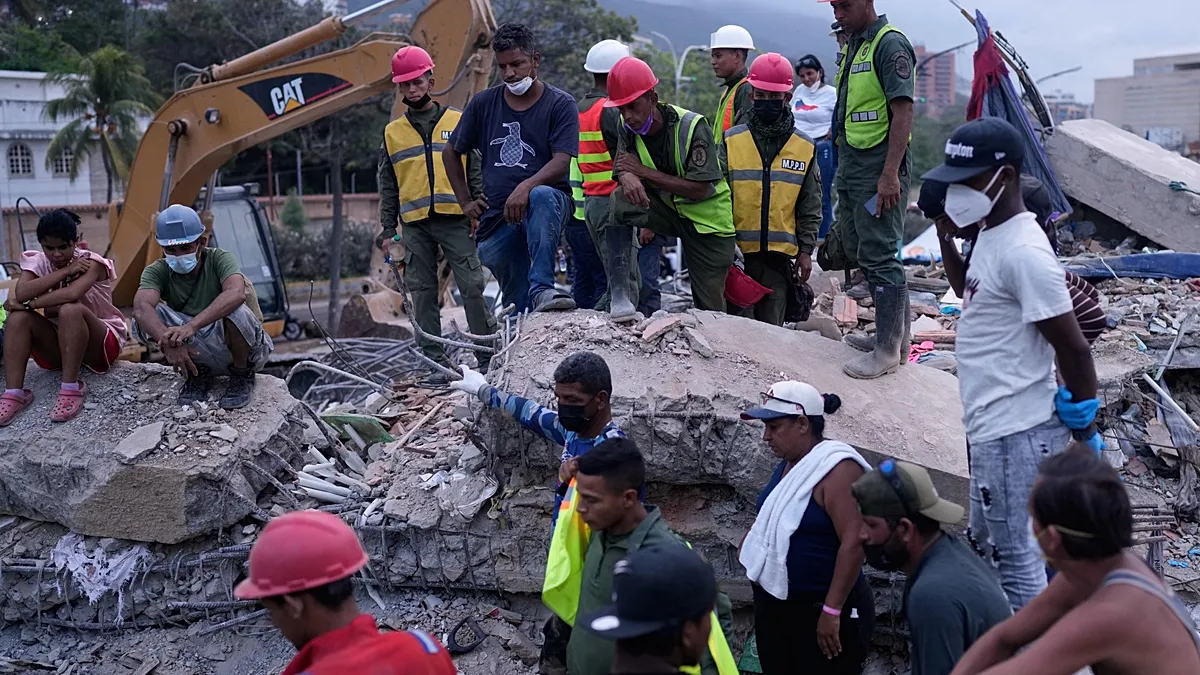
Usagevpn.com – A comprehensive evaluation conducted by the World Bank Group reveals that the seismic events which struck Venezuela on June 24 caused approximately $19.6 billion in direct physical destruction. This substantial figure, equivalent to €17.2 billion, highlights the urgent necessity for the nation to channel resources into swift and durable reconstruction efforts to facilitate economic recovery. The conclusions emerged from a Global Rapid Damage Estimation study, known as GRADE, which was released on Thursday by the international financial institution.
The primary objective of this evaluation is to deliver preliminary insights to Venezuelan authorities and international development partners regarding the magnitude of rebuilding required. Furthermore, the assessment aims to identify which reconstruction and recovery initiatives demand the most immediate focus following this widespread catastrophe. Susana Cordeiro Guerra, who serves as the World Bank Vice President for Latin America and the Caribbean, emphasized the importance of data-driven recovery in an official statement.
“The earthquakes have disrupted lives, damaged critical infrastructure, and created new challenges for Venezuela’s recovery,” Guerra noted. “Recovering effectively begins with reliable evidence. This assessment gives the Government of Venezuela and its partners an early objective foundation for recovery planning, and the World Bank Group is committed to supporting that effort every step of the way.”
Damage Distribution and Affected Regions
According to the GRADE evaluation, residential structures sustained the largest share of destruction, representing 47 percent of all physical damage. Infrastructure components accounted for 27 percent of the total losses, while non-residential buildings contributed the remaining 26 percent. Geographically, La Guaira state and the Distrito Capital experienced the most severe consequences, collectively absorbing roughly half of the overall impact across the nation.
Beyond immediate physical destruction, the World Bank Group performed supplementary analysis examining potential macroeconomic and socio-economic consequences of the tremors. The institution also explored what comprehensive recovery might involve for the country. Their findings indicate that the speed of reconstruction will be crucial in determining how successfully both the Venezuelan economy and society emerge from this crisis.
Considering existing levels of public and private investment, the majority of funds allocated for rebuilding would likely need to be redirected from other less essential investment initiatives. Under current conditions, experts project that reconstruction could span more than a decade, generating significant adverse effects on economic activity. Conversely, if rapid reconstruction receives priority and higher levels of both public and private investment are directed toward this goal, the economic and social repercussions of the earthquakes could be substantially reduced.
Methodology and Financial Support
The GRADE methodology provides an independent and notably swift approach to evaluating direct physical damage following major disasters. The system incorporates satellite imagery, exposure data, remote sensing technologies, and engineering models, supplemented by more granular sector assessments when necessary. For the Venezuela earthquakes specifically, GRADE integrated earthquake damage modeling, catastrophe risk modeling, validation and calibration processes, and an evaluation of capital stock values across various sectors and assets.
Additionally, the assessment utilized a combination of historical records and scientific information, including ground motion measurements, engineering evaluations of structural vulnerability, data on the built environment and population, alongside reported damage information from government sources, community organizations, development partners, media outlets, and social media platforms.
The Venezuelan GRADE assessment benefited from financial contributions provided by the Government of Japan through the Program for Mainstreaming Disaster Risk Management in Developing Countries and the Global Facility for Disaster Reduction and Recovery (GFDRR).
Household Vulnerability Considerations
The evaluation also underscored that household vulnerability warrants special attention during rebuilding phases. This encompasses social dimensions such as age, income levels, housing quality, as well as economic and environmental health factors that help identify specific demographic groups’ susceptibility to disasters. In Venezuela, seven heavily impacted states—Miranda, La Guaira, Distrito Capital, Carabobo, Yaracuy, Aragua, and Falcón—contained approximately 11.5 million residents, representing around 40 percent of the national population.
These same seven states also housed nearly half of Venezuela’s exposed building and infrastructure inventory, valued at roughly $657 billion (€576.8 billion). Among the social vulnerabilities identified within these populations were female-headed households, single-parent families, and households containing elderly, disabled, or chronically ill individuals. Consequently, the GRADE assessment concluded that restoring and maintaining essential services like water supply and electricity could prove especially advantageous for these communities throughout the reconstruction period.