Brussels Braces for Renewed American Trade Barriers Following Policy Transition
Preparing for Forced Labour Duties Within Established Limits
Usagevpn.com – The European Commission has signaled readiness to accommodate forthcoming American tariff measures targeting forced labour practices, provided these levies remain within the boundaries established by the Turnberry accord. According to statements from Brussels, the European Union anticipates accepting these new commercial restrictions that Washington plans to introduce in the immediate future. The critical threshold for acceptance sits at fifteen percent, which represents the maximum level permitted under the bilateral trade framework negotiated between the two economic powers.
Washington’s position on this matter became clearer during early June when the White House announced intentions to implement additional duties affecting international trading partners. American officials contended that inadequate measures to prevent commerce involving goods manufactured through coercive labour practices were creating significant harm to United States commercial interests. This rationale forms the foundation for the anticipated tariff increases that European businesses will likely face.
The timing of these developments proves particularly consequential. The existing American tariff framework concludes its validity period this Friday, creating a potential window for policy disruption. Jamieson Greer, serving as the United States Trade Representative, communicated on Tuesday that the implementation of forced labour-related duties stands imminent. European policymakers are tracking these developments with considerable attention, recognizing that the stability of transatlantic trade relations hangs in the balance.
The Turnberry Agreement: A Framework for Commercial Stability
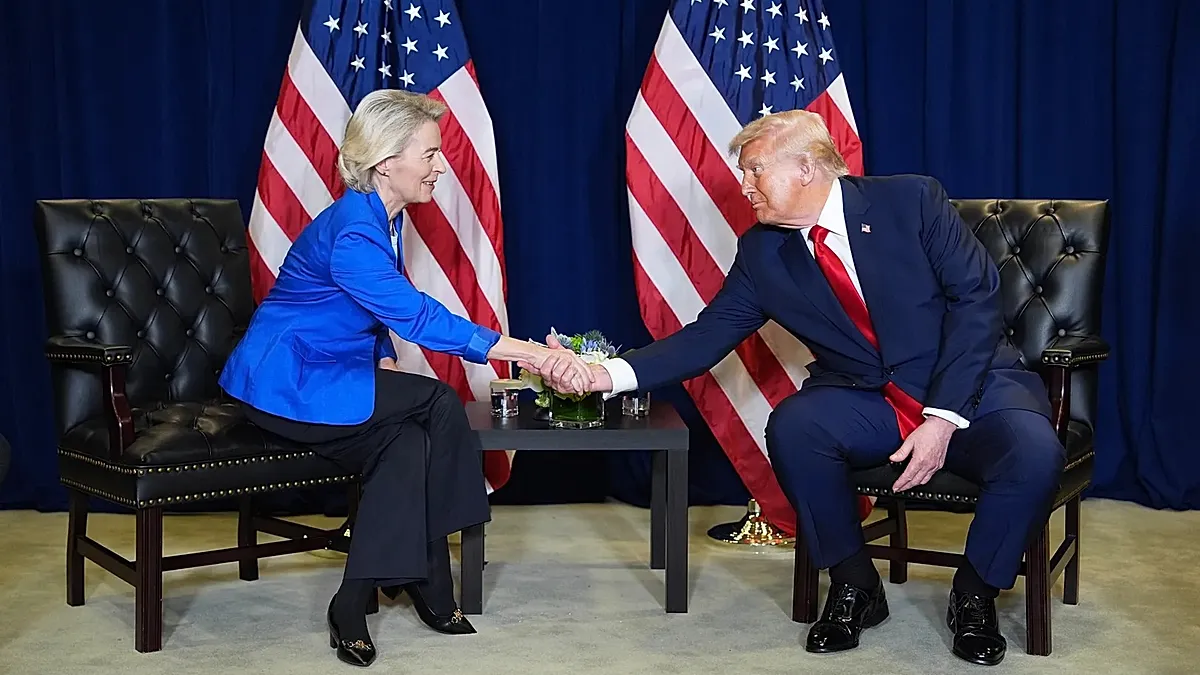
At the heart of European calculations lies the trade agreement concluded in July 2025 at Turnberry, Scotland. This landmark arrangement, negotiated between American President Donald Trump and European Commission President Ursula von der Leyen, established clear parameters for commercial relations. Most significantly, the accord limits American duties on European merchandise to fifteen percent, providing a ceiling that both parties agreed would ensure predictable trade conditions.
Of course we do not agree with the findings on forced labour, and we’ve made that very clear to our United States counterparts. But the main objective is to make sure that the agreement is respected and that our companies can benefit from the stability and predictability that was set out there.
This perspective reveals the pragmatic approach Brussels has adopted. Despite disagreements regarding the factual basis for American concerns about forced labour, European officials prioritize maintaining the integrity of the Turnberry framework. The stability it provides to European corporations operating in American markets carries substantial economic importance.
Legal Timetables and Congressional Considerations
Complicating the situation is the legal foundation supporting current American tariff policies. The existing authority permits these measures to remain operational for only one hundred and fifty days, extending through July twenty-fourth. Beyond this deadline, congressional approval becomes necessary for continuation—a scenario analysts view as improbable given the approaching midterm elections in the United States.
The Trump administration originally implemented ten percent duties on global trading partners last February, following a Supreme Court decision that invalidated the two thousand twenty-five tariff regime. When combined with pre-existing Most-Favoured-Nation obligations, these combined measures place European exporters at approximately the fifteen percent threshold established by the Turnberry agreement. Any additional forced labour duties could potentially push European goods beyond this agreed-upon ceiling.
To address this challenge, the United States Trade Department initiated proceedings under Section 301 of the Trade Act of nineteen seventy-four. This investigation examines forced labour practices throughout global supply chains and is scheduled for completion within the coming days. The findings will likely inform the scope and magnitude of any new American tariff measures.
We expect to see some action soon. I can’t really specify a timeline right now – I have a responsibility to brief Congress and other stakeholders before I really reveal that kind of thing. But we do expect action soon on that front.
European Defensiveness Meets Pragmatic Acceptance
European officials have consistently maintained that American tariffs targeting forced labour lack proper justification. Olof Gill, serving as the Commission’s deputy chief spokesperson, articulated this position in early June when defending European regulations. The European Union maintains that its internal rules already establish stringent prohibitions against products manufactured using coercive labour practices.
Nevertheless, the Commission’s current stance suggests a recognition that preserving the Turnberry agreement takes precedence over contesting the legitimacy of American concerns. This pragmatic calculation reflects the broader reality that European commercial interests depend heavily on maintaining stable transatlantic trade relationships, even when disagreements exist regarding policy foundations.
As the deadline approaches and American officials prepare to announce their next moves, European businesses and policymakers alike await developments with considerable anticipation. The coming days will determine whether the Turnberry framework can withstand renewed American pressure or whether additional commercial adjustments become necessary for both sides of the Atlantic.