France Pioneers European Social Media Restrictions for Younger Children
A Historic Legislative Milestone
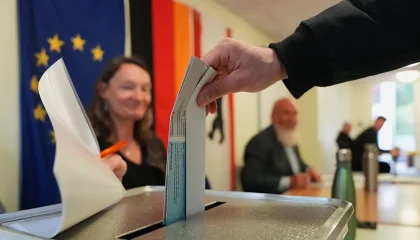
Usagevpn.com – French lawmakers are preparing to cast their decisive votes on Tuesday regarding a landmark legislative compromise that would position France as the inaugural European Union member state to prohibit social media access for children beneath the age of fifteen. This pioneering legislation represents a significant shift in how European nations approach digital safety for their youngest citizens, establishing a potential model for other countries considering similar measures.
The final compromise text, which has undergone extensive deliberation, was quietly approved behind closed doors by members of both the National Assembly and Senate during a joint committee session held on Monday. The political landscape surrounding this legislation reveals interesting dynamics, with only the far-left France Unbowed party registering opposition to the proposed measures, while socialist representatives chose to abstain from voting rather than fully endorse or reject the compromise.
Navigating European Union Legal Framework
According to Laure Miller, a French Member of Parliament serving as the bill’s rapporteur, French policymakers harbor ambitions to implement considerably more stringent regulations on digital platforms operating within the country. However, she acknowledges that existing European Union legislation constrains their flexibility in this endeavor. Miller emphasizes that current EU regulations provide limited scope for national intervention, noting that the legislative possibilities remain quite narrow.
“Really, under European Union law as it stands today, all we’re allowed to do—there’s just this tiny door that opened last summer with the guidelines—is to set a minimum age in national law,” Miller explains, highlighting the constrained nature of national legislative options within the broader European framework.
Debate Over Approach: Blanket Ban or Targeted Restrictions
The socialist perspective, articulated by MP Arthur Delaporte, reflects a nuanced understanding of the policy options available. Rather than implementing an all-encompassing prohibition, Delaporte advocates for a more measured approach that aligns with European Commission recommendations. He questions whether France should pursue a comprehensive ban affecting all social media platforms for minors, or instead follow the Commission’s guidance to eliminate only the most problematic features.
“Do we decide to impose a blunt, blanket ban on all social media for minors, or do we instead decide – as the European Commission is actually advocating – to ban only the harmful features of social media? We’re more aligned with the latter position,” Delaporte states, revealing the party’s preference for a targeted strategy.
Broader European Context and Future Developments
France’s initiative does not occur in isolation. Several other European nations are actively developing their own approaches to social media regulation for younger populations. Greece, Slovenia, and Sweden are all planning to implement restrictions on social media access for minors within their borders. Spain is considering legislation that would prohibit social media use for children under sixteen years of age, while Austria is exploring similar measures for those under fourteen.
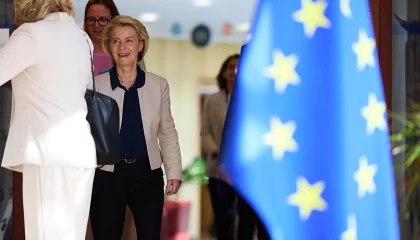
At the European level, Ursula von der Leyen, President of the European Commission, has championed a tiered system that recognizes developmental differences across age groups. Her proposal envisions time-limited social media access for children under thirteen, contingent upon supervision by parents, caregivers, or educational professionals. For teenagers aged thirteen and above, von der Leyen proposes gradual access contingent upon platforms demonstrating age-appropriate safety features.
Additionally, the European Commission is advocating for the elimination of screen time for toddlers, recognizing the critical importance of early childhood development. Von der Leyen has committed to presenting a comprehensive legislative proposal on these matters following the summer recess, potentially setting the stage for coordinated European action on digital platform regulation for young users.