Burnham Steps Into Leadership Role Amid Promises of Political Renewal
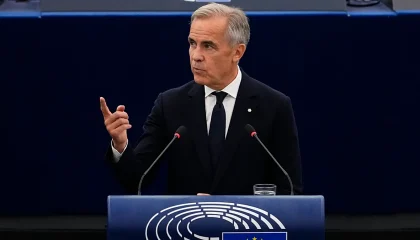
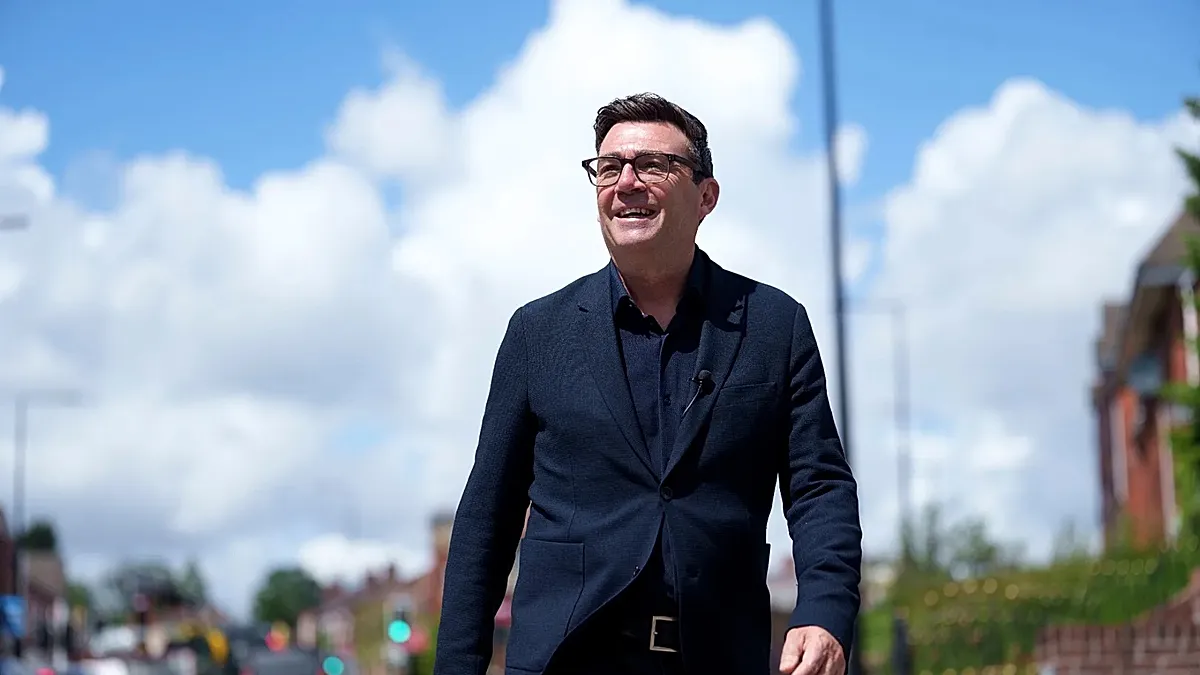
Andy Burnham makes first speech as new – Andy Burnham has officially been chosen as the Labour Party’s new leader, positioning him to assume the role of the United Kingdom’s seventh prime minister within ten years. The announcement came during a special press conference held on Friday, where Home Secretary Shabana Mahmood revealed Burnham as the party’s fresh head. Following his introduction to the public, Burnham delivered remarks describing the occasion as both deeply emotional and a source of pride for himself and his family. He also took time to honor the outgoing British Prime Minister, Keir Starmer, acknowledging his predecessor’s contributions.
During his address, Burnham committed to implementing extensive transformations across British politics. He offered pointed criticism toward his contemporaries in government, arguing they had neglected the interests of working-class citizens throughout the nation.
“This generation of politicians, myself included, have failed to challenge a political culture and an economic model that simply does not work well enough for ordinary people,” he declared. “We pledge to them, today, to be better.”
Burnham’s ascent to the top position became straightforward after his final potential challenger withdrew from contention the previous week. He secured 379 nominations from Labour Members of Parliament, falling just short of the maximum 403 available. Despite this smooth transition, certain analysts and government officials have expressed reservations about the uncontested nature of his campaign. Opposition leader Kemi Badenoch has publicly charged that Labour is “running scared” when it comes to facing scrutiny.
Five Pillars for a New Era
The leadership change follows Keir Starmer’s announcement last month that he would step down from the premiership. This decision came as mounting pressure accumulated following Labour’s disappointing performance in local elections held in May. In his Friday address, Burnham presented five fundamental principles intended to guide his leadership and strengthen the party.
His initial priority involves fostering greater cohesion within Labour, with the aim of constructing “one Labour team.”
“We won’t beat Britain’s new right if we are consumed by infighting and pulling in different directions,” he explained. “That is, and always has been, an indulgence that falls heaviest on the people who need Labour most.”
Secondly, Burnham pledged to establish what he termed a “new politics,” moving away from political point scoring toward practical problem-solving. He emphasized the need to address the most pressing challenges confronting the nation. His third objective centers on steering the party in a “distinctively Labour” direction, resisting the temptation to adopt positions from other parties or wear “too many Tory clothes.” He suggested that Britain made several “wrong turns in the 1980s,” noting that political power became centralized while economic power shifted into private hands, concentrating wealth among fewer individuals and locations.
Burnham also promised to serve as a representative for all regions of the United Kingdom.
“This is the moment to speak for all parts of the country and unite people in a common cause,” he stated, affirming his commitment to Scotland, Wales, Northern Ireland, and all corners of England. While acknowledging that northern England had “given me so much,” he vowed to reciprocate that support for every region.
His fifth commitment involves redistributing authority away from London toward other parts of the UK. He advocated for greater local control over essential services to make them more affordable and effective. Additionally, he described himself as a “pro-business leader” eager to champion reindustrialization and enhance the education system.
A Political Journey From Merseyside to Westminster
Burnham’s roots lie in Merseyside, where he was born, and he grew up in the Cheshire village of Culcheth. He has credited the acclaimed 1982 television series “Boys From The Blackstuff” with sparking his initial interest in politics. The program depicted five unemployed men in Liverpool navigating life under Margaret Thatcher’s leadership. After completing his studies in English at the University of Cambridge, Burnham began his career in journalism, contributing to various trade publications.
His transition into politics occurred in his early twenties when he secured a position as a researcher for Tessa Jowell, the late Member of Parliament for Dulwich. Burnham was elected MP for Leigh in 2001, a seat he retained until 2017. During this period, he held several senior ministerial roles, including secretary of state for health and chief secretary to the Treasury. He contested the Labour leadership twice unsuccessfully, losing to Ed Miliband in 2010 and to Jeremy Corbyn in 2015.
In 2017, Burnham assumed the position of mayor of Greater Manchester, where he oversaw substantial growth and development. His steadfast defense of the region during the Covid-19 pandemic lockdown earned him widespread recognition. Known affectionately as the “king of the North,” Burnham returned to Westminster in June after securing a commanding majority in his constituency election, setting the stage for his new responsibilities at the national level.