Cost Cuts Mark New Chapter for Hungary’s August Celebrations
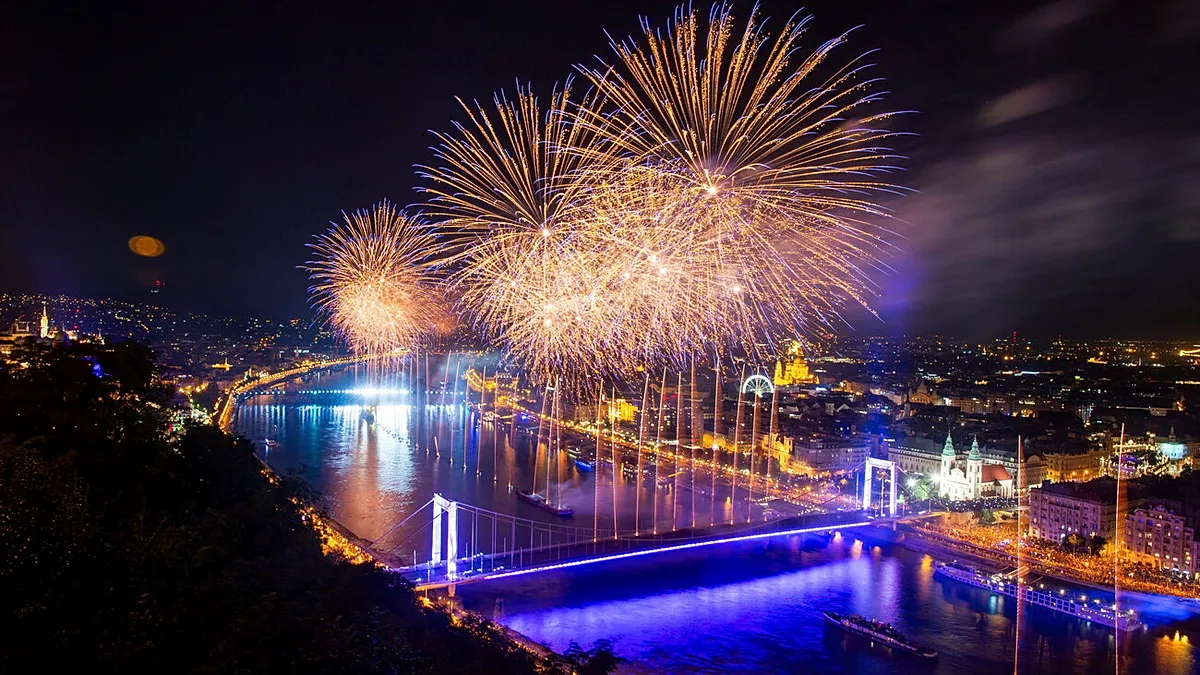
Hungary s national fireworks costs shrink – Hungary’s annual 20 August festivities are undergoing a significant transformation this year, with the government announcing that the much-debated fireworks display will cost approximately one-quarter of what it did in previous years. Despite the substantial savings, the controversy surrounding the event extends well beyond mere financial considerations. The ongoing debate encompasses public spending priorities, environmental impact, national heritage, and the broader question of state representation.
A Political and Financial Turning Point
What makes this year’s situation particularly noteworthy is that while the government has affirmed that the pyrotechnic spectacle over the Danube will proceed as planned, the entire organizational structure has been completely overhauled. The original agreements have been dissolved, the primary contractor has withdrawn, and officials are now promising that the celebration can be delivered at a fraction of the former expense.
The dispute gained momentum following the initiation of criminal proceedings against the Lounge group, a conglomerate closely associated with the Fidesz party. As bank accounts were frozen and enforcement measures commenced, the National Event Organising Agency moved swiftly to terminate the framework contracts that had been previously established. This decision came just weeks before the holiday, forcing organizers to essentially rebuild the entire event series from the ground up.
From Routine to Crisis
In recent years, it had become almost customary for companies connected to Gyula Balásy’s business empire to manage the 20 August celebrations. Lounge Event handled not only the pyrotechnics but also coordinated the complete program, ranging from stage construction and cultural performances to marketing initiatives, security arrangements, and logistical operations. The company had become deeply embedded in nearly every major state occasion.
Under the current year’s arrangements, Lounge Event had secured two distinct agreements with the government. The first, valued at approximately 5 billion forints (equivalent to €13.8 million), specifically addressed the fireworks component. The second agreement, worth roughly 12.5 billion forints (€34.7 million), encompassed the full St Stephen’s Day program. Combined, these contracts represented a total commission of 17.5 billion forints (€48.6 million). Notably, the state had already disbursed half of this amount as an advance payment before the contracts were terminated.
Justifying the Decision
According to the Interior Ministry, the termination was driven by practical concerns rather than purely political motives. The Lounge Group’s financial instability raised serious questions about its capacity to fulfill its obligations. With bank accounts frozen, payments to subcontractors faced potential disruption, which could have jeopardized the entire event given its considerable scale.
In response, the government initiated an extraordinary public procurement process to identify a replacement contractor. The most significant political reaction emerged not from the contract terminations themselves, but from the new administration’s assertion that the same celebration could be delivered at a considerably lower cost.
New Numbers, New Direction
The Interior Ministry characterized the previous arrangement as “unreasonably expensive,” prompting organizers to work with a substantially reduced technical specification in the new tender. The expedited public procurement is currently undergoing evaluation, and since the company selected by the National Event Organising Agency through a negotiated procedure without prior notice was the sole bidder, the Budapest-based Hardrock Szolgáltató is highly likely to receive the contract.
Present projections indicate that the complete event series could be executed for under 4 billion forints (€11.1 million). Even accounting for a simpler program with certain elements reduced or eliminated, the savings remain considerable. Government officials emphasize that cost reductions will not compromise safety standards, core program components, or the fireworks display itself.
Péter Magyar previously noted that both the fireworks and drone demonstration had been commissioned and funded by the preceding administration, explaining the decision to maintain these elements. Simultaneously, he suggested that the overall celebrations would adopt a more restrained approach compared to previous years.
The sharpest criticism has come from Budapest’s mayor, Gergely Karácsony, who has expressed strong concerns about the handling of the situation.
While supporters continue to defend the event as one of Europe’s most impressive pyrotechnic presentations—a beloved tourist attraction and cherished national tradition—critics maintain that the multi-million euro expenditure could serve other priorities more effectively. Environmental advocates also point to the considerable ecological burden imposed by the fireworks each year.