EDF Halts Nuclear Operations Amidst Rising Temperatures
France shuts down nuclear reactors as heatwave – France’s national energy provider, EDF, announced on Sunday that it has temporarily taken three nuclear reactors offline. This decision comes as a persistent heatwave continues to affect the nation. The utility company also cautioned that seven additional reactors might need to modify their power generation levels as conditions evolve.
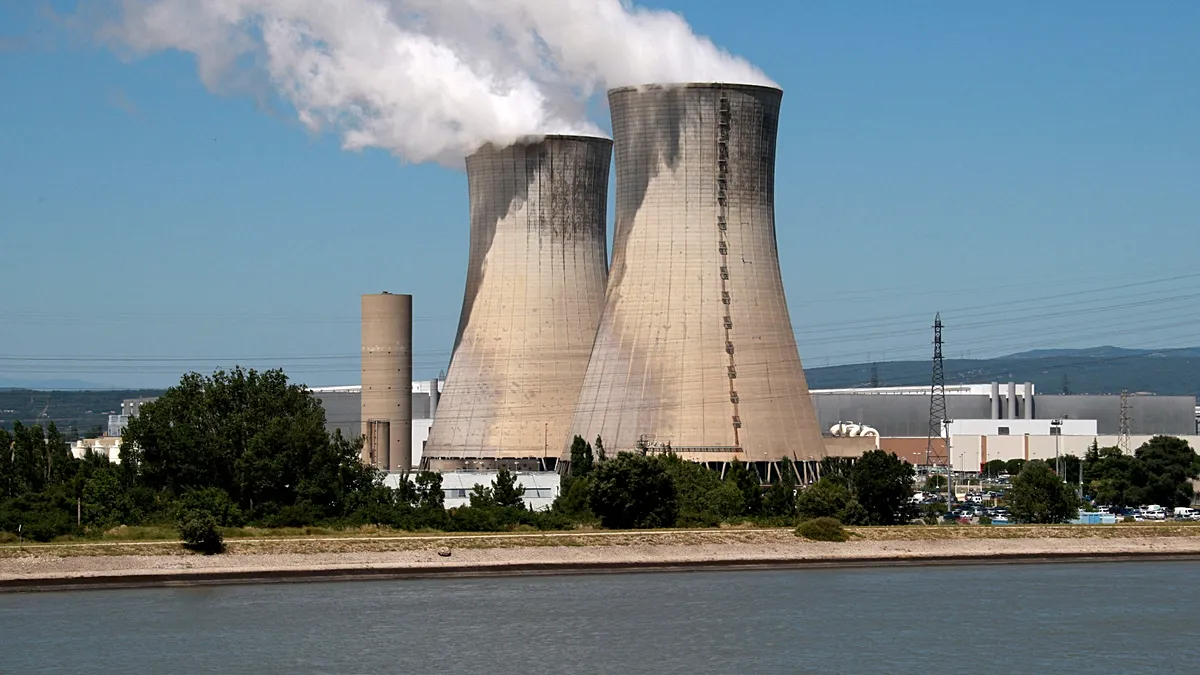
According to EDF officials, these operational adjustments stem from environmental regulations designed to prevent the release of overly warm water into river systems. Nuclear facilities rely on river water for cooling their reactors, and once the water absorbs heat, it is returned to the waterways. The current limits aim to safeguard aquatic ecosystems that are already experiencing elevated temperatures due to the ongoing heatwave.
“There is no nuclear safety risk. Reactors are capable of operating under high-temperature conditions. These limits are intended to protect aquatic flora and fauna,” said a spokesperson for EDF.
The three reactors currently suspended from service include Unit 2 at the Golfech facility, which produces 1,300 megawatts; Unit 3 at Bugey with a capacity of 900 megawatts; and Unit 2 at Chooz generating 1,450 megawatts. Together, these offline units represent 3.65 gigawatts of capacity, accounting for approximately six percent of France’s total installed nuclear fleet of roughly 61 gigawatts.
When questioned about the potential impact on electricity supply, EDF explained that nuclear reactors can optimize their output while staying within regulatory boundaries. Weather projections indicate that Bugey Unit 3 will remain offline through July 19, Golfech Unit 2 until July 22, and Chooz Unit 2 until July 25. These timelines may shift depending on how weather forecasts develop.
The spokesperson for EDF noted that seven additional reactors could face requirements to adjust their power levels throughout the day. In response to concerns about grid stability, France’s economy ministry granted an exemption to temperature restrictions for the Rhône River near the Bugey plant on Saturday. This temporary measure remains valid until July 20.
Sunday marked the third heatwave to impact France since May, with more than one-third of the country placed under the national weather service’s most severe heat alert. These reactor shutdowns represent the second instance in recent weeks where EDF has halted nuclear operations due to extreme temperatures, following a record-breaking heatwave that struck France in June.
EDF communicated to Euronews that the effects of droughts and heatwaves on nuclear power generation remain relatively modest. “Since 2000, production losses resulting from high river water temperatures and low river flows have represented, on average, 0.3% of the French nuclear fleet’s annual electricity generation,” the company stated.
Long-Term Climate Adaptation Strategy
Looking toward the future, EDF has developed an adaptation plan designed to address the consequences of climate change across its nuclear, hydropower, and island energy operations in France. The company revealed in early 2026 that this comprehensive initiative carries an estimated cost of €8.7 billion over the next fifteen years.
The strategy encompasses various measures to enhance the resilience of nuclear power generation during periods of extreme heat. One possibility under consideration involves cooling water discharged from the blowdown process of existing cooling towers before it enters the environment. According to the EDF spokesperson, a similar system is already functioning at the Civaux Nuclear Power Plant.
For its hydropower division, EDF is prioritizing improved flood management capabilities, maintaining electricity production during periods of reduced river flows, and facilitating multiple uses of water resources. Meanwhile, across its island energy networks, the company is reinforcing high-, medium-, and low-voltage electricity infrastructure while enhancing preparedness for exceptional wind events that could potentially disrupt power delivery systems.