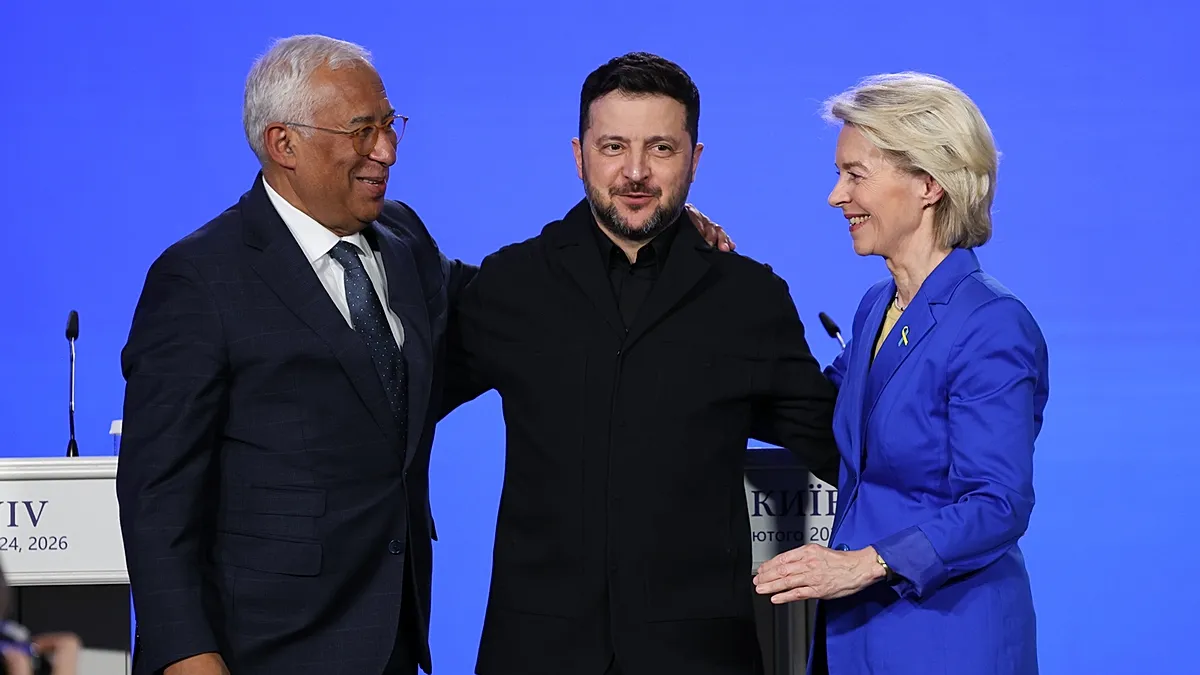
Ukraine and Moldova Advance Toward European Union Membership With New Negotiation Phase
A Historic Step Forward in Eastern European Integration
EU agrees to open new phase – The twenty-seven member states of the European Union have reached a unanimous consensus to initiate a fresh cluster of accession negotiations involving both Ukraine and Moldova. This development represents yet another significant milestone along the lengthy and challenging journey toward full membership for these two Eastern European nations. During a diplomatic gathering held on Friday afternoon, ambassadors from all member countries formally endorsed their shared position to remove obstacles blocking cluster six, a negotiation segment that addresses external relations and foreign policy alignment.
The confirmation of this decision came from Ireland, which currently serves as the rotating president of the EU Council. According to official announcements, the formal ceremonial proceedings will be conducted separately on July 14 in Brussels. This Friday’s agreement builds substantially upon the positive momentum created by Hungary’s recent governmental transition, which concluded a two-year period of obstruction that had stalled Ukraine’s accession process.
Breaking Through Hungarian Resistance
Hungary’s new prime minister, Péter Magyar, successfully lifted the contentious veto in early June, thereby clearing the path for the opening of cluster one, commonly referred to as the fundamentals. This breakthrough was widely celebrated across European capitals as a crucial turning point. Cluster six was subsequently viewed as the most straightforward follow-up negotiation due to its comparatively limited scope and narrower range of issues requiring resolution.
Despite this progress, four clusters remain pending before full negotiations can commence. These include cluster two, which focuses on the internal market; cluster three, addressing competitiveness and inclusive growth; cluster four, covering the green agenda and sustainable connectivity; and cluster five, dealing with resources, agriculture, and cohesion. The European Commission has determined that both Ukraine and Moldova are technically prepared to open all of these remaining clusters, indicating that political considerations now dictate the pace of advancement.
Diplomatic Perspectives on Timing
Kyiv has publicly advocated for accelerating all remaining steps before the summer recess, a position that aligns with the European Commission and enjoys support from a majority of member states. As one diplomat remarked, “It’s important that we keep the momentum up.” However, Péter Magyar has voiced considerable reservations regarding such an accelerated timeline, contending that rapid advancement would effectively constitute a “fast-tracked accession” and potentially diminish the significance of membership discussions with the Western Balkans, whose candidates have awaited their turn for considerably longer periods.
“It’s important that we keep the momentum up,” a diplomat said.
Looking Ahead to September
It has now become virtually certain that the July deadline will not be achieved, and the remaining clusters will instead be addressed individually beginning in September. Once any particular cluster becomes unblocked, the candidate country proceeds to negotiate its thematic chapters on a one-by-one basis. This sequential approach allows for more focused discussions and ensures that each area receives adequate attention before moving forward to subsequent negotiations.
The expanded timeline provides additional opportunity for technical preparations and political consultations among all parties involved. It also allows member states to carefully consider the implications of accelerated accession for their own domestic policies and for the broader European integration project. The careful, methodical approach that many European leaders favor ensures that both Ukraine and Moldova will enter the EU with comprehensive preparations across all policy domains, rather than rushing through critical negotiations.
As the accession process continues to unfold, the relationship between Eastern European candidates and existing member states will undoubtedly evolve, shaping not only the future of these nations but also the character of the European Union itself. The decisions made in the coming months will have lasting consequences for European security, economic cooperation, and democratic development across the continent.