One Arrested in La Bisbal d’Empordà Wildfire Incident
One arrested over Costa Brava wildfire – Authorities have detained a man suspected of igniting the La Bisbal d’Empordà wildfire in Girona, which was reportedly triggered by an angle grinder operation along a roadside. The blaze, now out of control, has been fueled by the persistent tramontana wind, leading to widespread destruction in the region. Over 1,280 hectares of forest have been consumed by the flames, prompting the evacuation or indoor confinement of approximately 12,000 residents across multiple municipalities in the province. This emergency has prompted the Catalan government to request assistance from the Military Emergency Unit (UME) to bolster firefighting efforts.
Regional Government Issues Urgent Advisories
Salvador Illa, the president of Catalonia’s regional government, has expressed concern over the fire’s magnitude and emphasized the importance of strict adherence to official guidelines. He urged the public to remain indoors in affected areas and to support firefighting operations by minimizing movement. The Generalitat has also advised residents in the Barcelona metropolitan area to avoid traveling to regions such as Baix Empordà, Gironès, and Pla de l’Estany to ease the burden on emergency responders.
Fire’s Expansion and Secondary Outbreaks
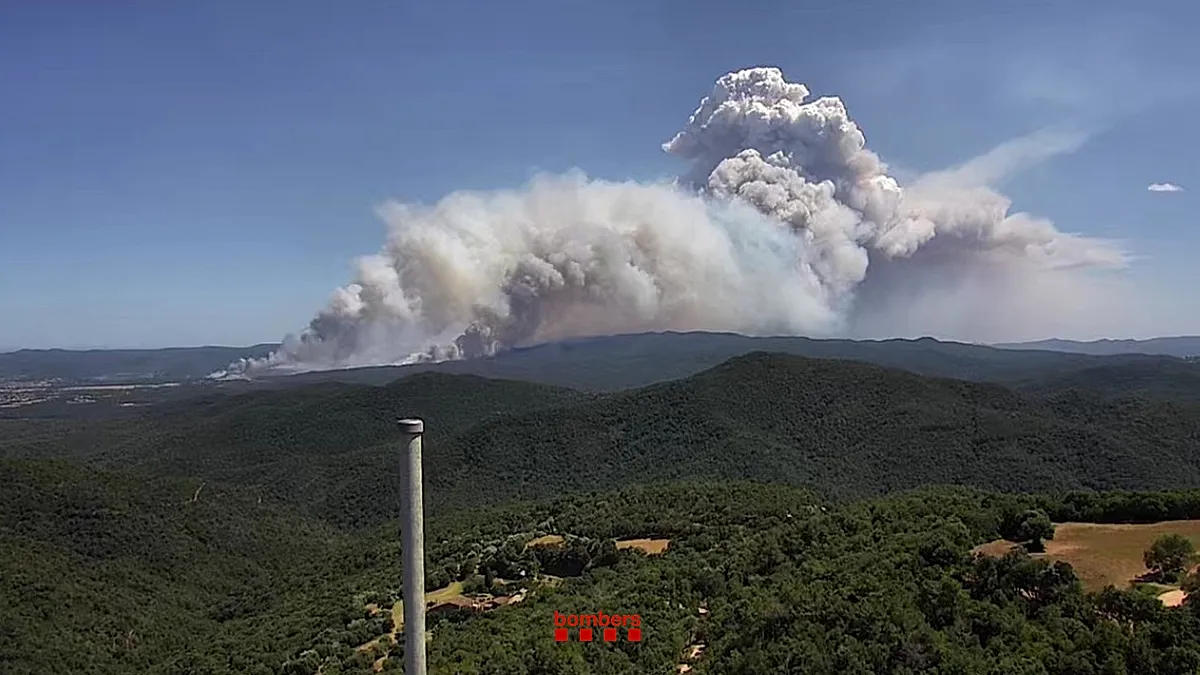
The La Bisbal fire, which entered the Gavarres massif, continues to spread rapidly, generating a massive column of smoke that has blanketed the surrounding areas. This has led to the precautionary confinement of several municipalities in Empordà, with local populations advised to stay within their homes. In addition to the La Bisbal blaze, a separate fire in Vilavenut has forced residents of the villages of Vilavenut and Palol de la Farga to remain indoors. The latter fire, which broke out around midday, is advancing through farmland and is being tackled by ground crews and aerial resources.
Firefighting Operations and Road Closures
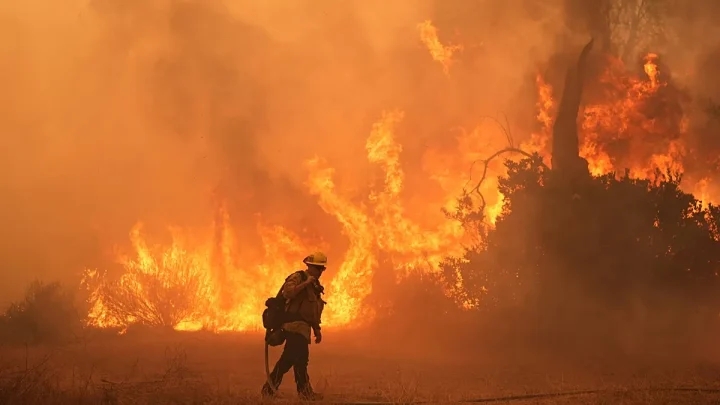
More than fifty firefighting units, including eleven aircraft, have been deployed to combat the La Bisbal wildfire. Crews are focusing on the fire’s right flank, anticipating a potential shift in wind direction that could drive flames toward the coast. The fire has already sparked secondary outbreaks in the Gavarres area, compounding the challenge for emergency teams. To aid containment, several key roads have been closed, including the C-66 near Palafrugell and routes in Cornellà del Terri, Vilademuls, Calonge, Banyoles, and Llagostera.
Mobile Alerts and Evacuation Measures
Approximately 40,000 people have received mobile alerts via the Es-Alert system due to the fire’s reach and the need for rapid communication. At a holiday camp in the affected zone, 150 children have been safely relocated, with officials confirming they are unharmed. The province of Girona has seen its fair share of disruption, with both fires causing significant strain on local infrastructure and resources.
Community Response and Media Attention
On social media platforms, users have shared distressing footage and images of the fire engulfing the Gavarres mountains and Baix Empordà, showcasing the scale of the crisis. These posts have reflected widespread solidarity with firefighters and local communities. Meanwhile, the head of Catalonia’s fire service, David Borrell, has issued a dire warning about the fire’s potential to encroach on coastal areas. He highlighted the critical role of monitoring the pyrocumulus cloud, a hallmark of the fire’s behavior, which is described as a sixth-generation blaze due to its speed, intensity, and erratic patterns.
Technical Factors and Environmental Impact
The initial cause of the La Bisbal d’Empordà fire is believed to stem from mechanical work on a road, according to Rural Agents. This aligns with the arrest of the man suspected of using an angle grinder to ignite the flames. The tramontana wind, which has been a dominant factor in the fire’s spread, may soon shift to an onshore sea breeze, altering the fire’s trajectory and intensity. Such changes could lead to new challenges in managing the blaze, requiring rapid adjustments in response strategies.
Broader Implications for the Region
The wildfires have not only disrupted daily life but also strained emergency services and local economies. With over 12,000 people confined to their homes and thousands of others receiving alerts, the region faces a dual challenge of safety and coordination. Officials stress that the combination of high winds and dry conditions has made the situation particularly volatile. The UME’s involvement underscores the severity of the crisis, as military support is often reserved for large-scale, uncontrollable fires.
Public Awareness and Preparedness
Residents in affected areas have been advised to stay informed through official channels, as the situation remains dynamic. The rapid spread of the fire has necessitated immediate action, including the deployment of aerial resources and the implementation of road closures to prevent further escalation. Despite the chaos, efforts to protect communities have been ongoing, with firefighters working tirelessly to contain the flames and minimize damage.
As the fires continue to evolve, the focus remains on securing the safety of the population and preventing the blaze from reaching populated coastal zones. The incident serves as a stark reminder of the unpredictable nature of wildfires and the importance of swift, coordinated responses. With more than fifty firefighting units and specialized aircraft deployed, the hope is that the flames will be brought under control before they cause irreversible harm to the region’s ecosystems and infrastructure.
Quote from Regional President
“The scale of this wildfire demands our full attention. Every moment counts as we work to protect lives and property,” said Salvador Illa, the president of Catalonia’s regional government.
Quote from Fire Service Head
“We must closely monitor the pyrocumulus cloud, as it indicates the fire’s potential to grow and shift directions rapidly. The tramontana wind has been a key driver, but we are prepared for any changes in weather conditions,” warned David Borrell, head of the Catalan fire service.
With the situation evolving rapidly, the combination of human error, natural elements, and technical challenges has created a complex firefighting scenario. The region’s efforts to manage the crisis reflect both the urgency of the moment and the resilience of its emergency services. As the smoke continues to rise and the flames advance, the focus remains on containing the disaster and ensuring the safety of all affected communities.