Second World War Gun Recovered from River in Germany
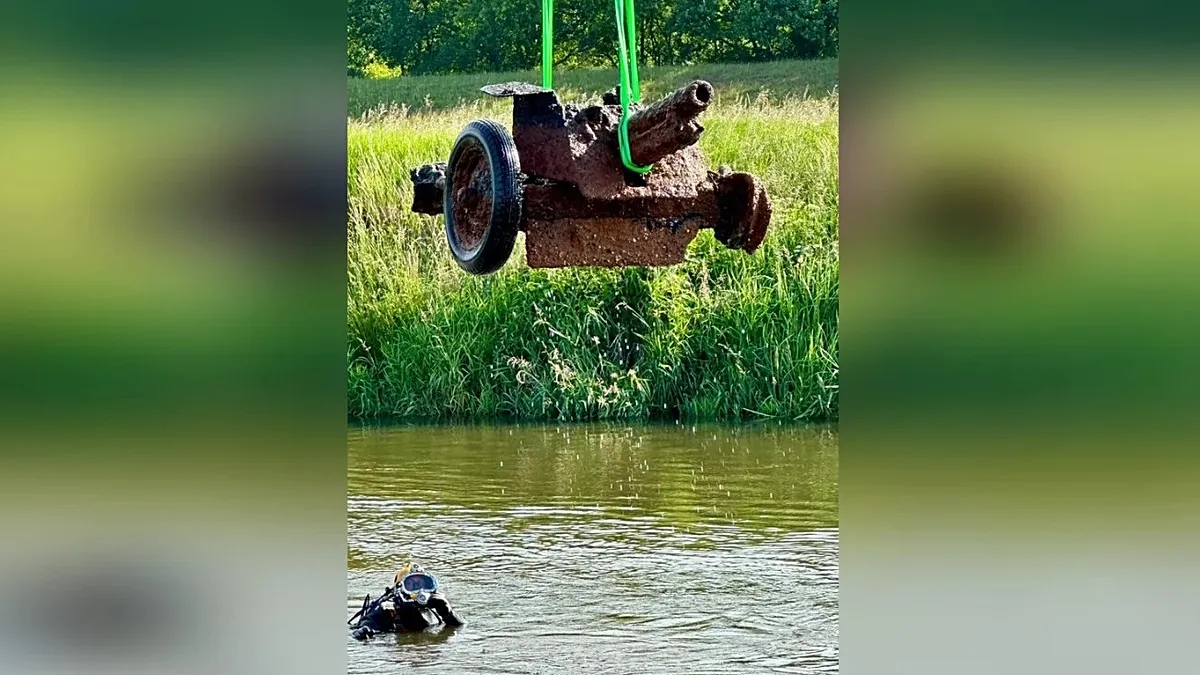
Second World War gun recovered – In a recent archaeological discovery, the German Explosive Ordnance Disposal Service (KMBD) retrieved a Soviet Second World War-era infantry gun from the Neisse River near Forst in Lower Lusatia. The weapon, identified as the 76 mm model M1943, was unearthed during a routine infrastructure project along the waterway, close to the Polish border and approximately 20 kilometers from Cottbus. While the device showed signs of heavy corrosion, it remained remarkably intact, according to Enrico Schnick, a KMBD ordnance expert who shared details with broadcaster RBB.
Preservation in the Riverbed
Schnick noted that the gun’s condition was unusually well-preserved, a result of its entombment in the river’s sediment. “The mud and sand of the Neisse acted as a natural preservative, shielding it from the elements,” he explained. This method of preservation is rare in the region, as most wartime relics have been exposed to weathering over decades. The KMBD, which specializes in removing hazardous ordnance, is now assessing the gun’s structural integrity before deciding its fate.
“I cannot recall a similar find in our region,” Schnick added. “The combination of time and environment has created a unique opportunity to study this piece of military history.”
Historical Context of Forst
Forst, a town in Lower Lusatia, endured significant destruction during the final days of World War II. In April 1945, intense battles between the German Wehrmacht and the advancing Red Army left the area in ruins. The town’s historical significance as a strategic location during the war has led to the continued discovery of military artifacts. Today, Forst is home to around 17,000 residents, a stark contrast to its wartime population. The Spree-Neisse district, where the town is situated, remains a focal point for historical investigations.
The Role of Media in Documentation
The recovery operation has been documented by local media, with Niederlausitz Aktuell releasing video footage of the process. These visuals provide insight into the meticulous work of ordnance specialists who navigate the challenges of handling vintage weapons. Schnick emphasized that such finds are not only valuable for historical analysis but also critical for public safety, as remnants of the war still pose risks in modern landscapes.
Production and Use of the M1943 Model
The M1943 76 mm infantry gun was a staple of the Soviet Union’s artillery forces during the war. According to the Berliner Morgenpost, over 5,000 units of this model were manufactured in the Soviet Union, primarily for use in the Eastern Front. Its compact design made it ideal for trench warfare and urban combat, and it was widely deployed by the Red Army in the final months of the conflict. The gun’s presence in the Neisse River suggests it may have been abandoned after a battle or lost during the retreat of German forces.
Uncommon Discoveries Across Europe
While the recovery of World War II weapons is not new to Europe, the location and condition of this particular find highlight the ongoing challenges of uncovering relics from the past. In 2025, for instance, bomb defusal operations halted rail services in Paris, underscoring the persistent threat of unexploded ordnance. Similarly, the year prior saw over 20,000 residents in Cologne evacuate their homes after a wartime bomb was discovered. These incidents reflect the enduring legacy of the war and the importance of proactive measures to identify and neutralize hidden dangers.
The KMBD’s dismantling facility in Kummersdorf will process the recovered gun, likely preparing it for disposal. Schnick mentioned that the weapon’s current state suggests it will not be displayed in a museum, but its historical value could still contribute to educational initiatives. “The gun serves as a tangible reminder of the conflict that shaped this region,” he said. “Even if it’s no longer on public display, it’s a key part of our country’s wartime history.”
Legacy of the Neisse River
The Neisse River, which flows through the Spree-Neisse district, has long been a repository for lost wartime equipment. Its winding path and varied terrain create ideal conditions for preserving relics buried over decades. The discovery in Forst adds to a growing list of such finds, with each artifact offering a glimpse into the lives of soldiers and the strategies employed during the war. Researchers and historians continue to study these items, hoping to piece together narratives of the conflict that remain obscured by time.
Modern-Day Implications of Historical Finds
These discoveries also raise questions about the long-term impact of wartime technology on contemporary life. While the M1943 gun is now being dismantled, its presence in the riverbed serves as a cautionary tale for regions still grappling with the remnants of the war. The KMBD’s work in Forst exemplifies the delicate balance between historical preservation and practical safety, as teams must assess each find for potential hazards before it can be studied or displayed.
Forst’s story is emblematic of the broader historical narrative of Lusatia, a region that changed hands multiple times during the war. Its current population, though smaller than its pre-war numbers, continues to live with the echoes of conflict. The gun’s recovery not only honors the past but also highlights the ongoing efforts to safeguard the future from the remnants of a bygone era. As Schnick’s team works to dismantle the weapon, the discovery underscores the importance of vigilance in preserving both history and safety.
The Neisse River’s role as a battleground and a graveyard for wartime equipment is a testament to its historical significance. Each artifact uncovered along its banks tells a story of valor, strategy, and survival. The M1943 gun, with its sturdy frame and well-preserved finish, is a prime example of how the past can resurface in unexpected ways. As the KMBD prepares to dispose of the weapon, its journey from battlefield to museum or landfill highlights the complex legacy of the Second World War in modern Europe.
Continued Research and Public Awareness
Experts in the field stress that such findings are not just academic but also essential for public awareness. “These weapons remind us that the war’s effects are still felt today,” Schnick remarked. “Every time we recover one, we uncover a piece of the puzzle that connects the past to the present.” The continued documentation of these events by media ensures that the public remains informed about the historical and practical importance of ordnance recovery. In Forst, the gun’s story is a symbol of resilience and the enduring presence of history in everyday life. As the KMBD moves forward with its plans, the discovery stands as a unique contribution to the region’s wartime legacy.