EU Urges Diversification Amid Rising Trade Tensions with China
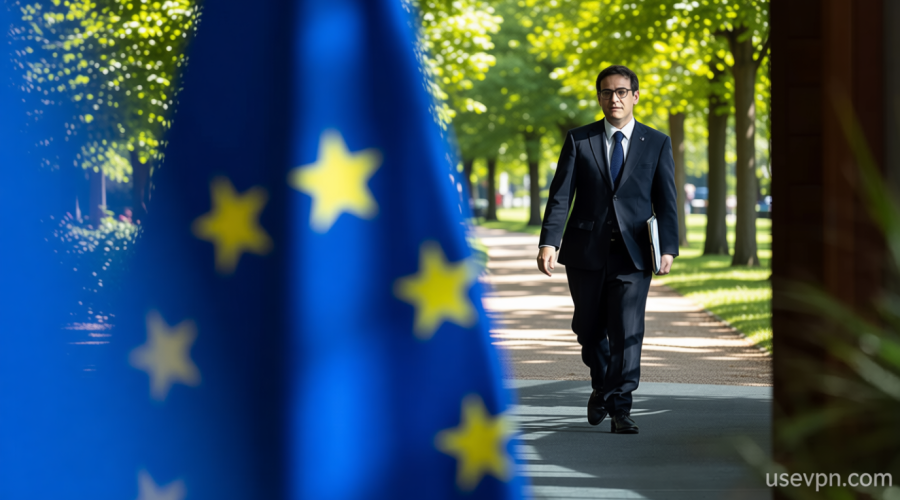
Do not get 100 of your – As trade conflicts between the EU and China intensify, Stéphane Séjourné, the bloc’s Industry Commissioner, has advised European businesses to reduce their dependency on a single supplier. This recommendation comes amid escalating concerns over China’s control over critical resources vital to the EU’s industrial sectors. The call for supplier diversification follows recent actions by Beijing, which have targeted key supply chains, prompting Brussels to reinforce its regulatory stance against the Asian power.
Strategic Imports Under Threat
China’s restrictions on rare earths and semiconductor chips have sent ripples through EU industries, particularly in green energy, defense, and automotive sectors. These materials are essential for everything from electric vehicles to renewable energy systems, making their availability a strategic concern. Séjourné emphasized the importance of not relying entirely on one nation, stating, “Do not make 100% of your supplies in one country,” during a meeting with the 27 EU trade ministers in Brussels. His warning highlights the growing risk of supply chain disruptions due to geopolitical instability.
“The global geopolitical situation shows that your ability to provide yourself abroad must also depend on other types of countries and also on European production.”
The EU has already taken steps to guide companies toward diversification, but Séjourné hinted that more aggressive measures may be necessary if progress stalls. “Perhaps we have to move to the next step,” he said, signaling the Commission’s readiness to impose binding rules. This approach reflects a broader strategy to mitigate vulnerabilities, especially after China’s retaliatory actions last year disrupted chip supplies, creating shortages for EU manufacturers.
Chips and Rare Earths: A Crisis of Dependence
The recent chip shortage, triggered by China’s export bans, exposed the EU’s reliance on Asian suppliers for strategic goods. A notable incident involved the Dutch government and Nexperia, a Chinese-owned chipmaker based in the Netherlands. When Beijing imposed restrictions on semiconductor exports, it disrupted production for EU industries, leading to a crisis that underscored the need for alternative sources. Séjourné’s remarks echo the sentiment that China’s supply dominance could be weaponized against the EU, a concern that has grown since the bloc introduced proposals to limit China’s access to the single market.
The European Commission is now considering mandatory diversification for car producers, a measure that could require automakers to source chips from multiple countries. This initiative aims to reduce the risk of future shortages by spreading supply chains across regions. The idea is to ensure that even if one supplier faces geopolitical pressure, others can step in to maintain production. Such efforts are part of a larger push to make the EU more self-reliant in critical industries.
Legislative Measures and Trade Retaliation
Brussels and Beijing have been locked in a standoff since the EU proposed stricter regulations on China’s market access. The “Industrial Accelerator Act,” for instance, seeks to give preference to EU companies in public contracts while imposing conditions on Chinese investments. Additionally, a proposed Cybersecurity Act could bar Chinese telecom firms from operating within the EU, further straining relations. These measures have drawn direct threats from China, which warned of retaliatory actions if the EU proceeds with them.
Recent media reports about potential tariffs on cheap Chinese imports have reignited tensions. Beijing’s repeated assertions that the EU is “weaponising” its supply chains against China have been met with firm responses from Brussels. Séjourné’s message aligns with this stance, reinforcing the idea that diversification is not just a precaution but a strategic imperative. The Commission’s focus on multiple suppliers is also driven by the need to strengthen European production, a goal central to the bloc’s economic resilience.
Broader Implications for EU Strategy
The upcoming orientation debate on May 29th in Brussels will serve as a critical platform for EU commissioners to finalize the bloc’s approach to China. This discussion is expected to shape the next phase of measures targeting the Asian giant, including potential legislative changes to further restrict its influence. The debate will also address the EU’s expanding trade deficit with China, which has grown month by month, raising alarms about economic imbalances.
While the EU’s current guidance has been welcomed by some businesses, others remain cautious. Diversifying suppliers involves not only finding alternative sources but also investing in domestic production to replace imported goods. This transition could take time, requiring significant financial and logistical adjustments. Nonetheless, Séjourné’s warning underscores the urgency of action, as the risk of supply chain shocks continues to mount.
Global Geopolitical Shifts and Industry Resilience
The geopolitical climate has shifted dramatically in recent years, with China leveraging its economic power to influence global markets. By restricting exports of rare earths and chips, Beijing has demonstrated its ability to disrupt supply chains, a tactic that has forced the EU to rethink its trade policies. Séjourné’s remarks highlight a growing awareness that the EU must not only adapt to these challenges but also lead in developing solutions that enhance resilience.
Brussels is also exploring ways to support European manufacturing through targeted investments and incentives. This includes fostering partnerships with other countries to secure access to critical materials. The Commission’s internal discussions on forcing car producers to source chips from multiple suppliers are part of this effort, aiming to create a more balanced and secure supply network. By prioritizing diversification, the EU hopes to reduce its exposure to China’s trade policies and strengthen its industrial base.
As the debate on May 29th unfolds, the EU will need to balance its push for self-sufficiency with the need for global cooperation. While diversification is key, it also requires careful negotiation to avoid further straining relationships with China. The outcome of this discussion will determine the next steps in the bloc’s strategy, potentially setting a precedent for other countries facing similar supply chain challenges.
Conclusion: A Path to Resilience
Séjourné’s call for supplier diversification is a clear signal that the EU is prepared to take decisive action in the face of escalating trade tensions. The recent chip shortages and China’s strategic maneuvers have exposed the vulnerabilities in the EU’s current supply system, prompting a reevaluation of priorities. By spreading dependencies across multiple nations and boosting European production, the bloc aims to safeguard its industries against future disruptions. The upcoming orientation debate will be pivotal in shaping these efforts, ensuring that the EU remains a competitive and resilient economic force in a rapidly changing global landscape.