Venezuelan Security Guard’s Eight-Day Survival Ends with Miraculous Rescue
Venezuelan security guard pulled alive – Eight days after a pair of powerful earthquakes shook Venezuela, a dramatic rescue operation brought a 43-year-old security guard to safety from the ruins of a collapsed basement. Hernán Alberto Gil Flores, a night-shift worker at the Galerías Playa Grande shopping centre in La Guaira, was trapped under debris for over 100 hours before international rescue teams successfully extracted him. The operation, which became a beacon of hope amid the devastation, highlighted the resilience of both the survivor and the rescuers who braved extreme conditions to save him.
The Quake That Changed Everything
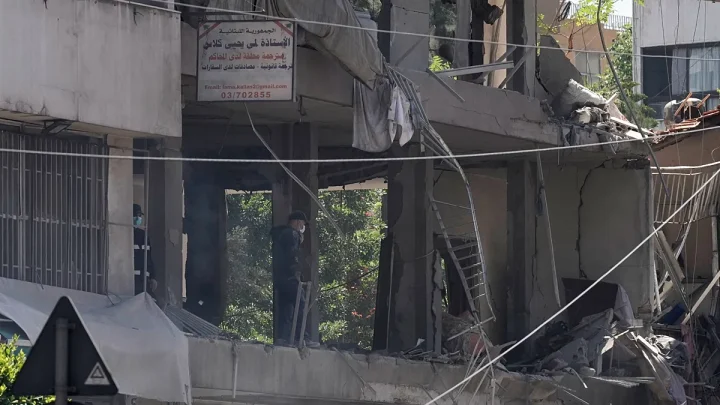
The twin earthquakes, which struck on 24 June 2026, left a trail of destruction across northern Venezuela. Measuring magnitudes of 7.2 and 7.5, the tremors caused widespread damage, collapsing thousands of buildings and claiming over 2,200 lives. La Guaira, a coastal town, emerged as the hardest-hit region, with infrastructure crippled and communities left in turmoil. For Gil Flores, the disaster began in the early hours of that fateful day, when the ground beneath him shook violently, sending the structure of the shopping centre into disarray.
While the surrounding concrete crumbled, Gil Flores’ small security cabin remained intact, offering a sliver of protection. This unexpected pocket of air became his lifeline, shielding him from the worst of the collapse. Though he was buried under tons of rubble, the cabin’s sturdy frame kept him alive, allowing him to survive the initial chaos. Rescue efforts began almost immediately, but the unstable structure, combined with relentless aftershocks and torrential rain, made progress slow and perilous.
A Race Against Time
Rescuers, including a team of Chilean firefighters, worked tirelessly to locate and free Gil Flores. Their efforts reached a critical turning point when they established contact with him on the weekend following the disaster. This breakthrough sparked a coordinated international effort, with teams from the United States, Portugal, Mexico, Costa Rica, El Salvador, and Venezuela joining forces. The operation’s success was not just a testament to human ingenuity but also to the unity of nations in times of crisis.
Keeping Gil Flores alive became a challenge of its own. The rescue teams managed to supply him with food, water, and even nutrients through a narrow shaft, extending his survival well beyond the typical 48- to 72-hour window for finding survivors. This prolonged survival was crucial, as it allowed rescuers to carefully remove the concrete without causing further harm. The effort culminated in a triumphant moment when Gil Flores was pulled from the wreckage, dust-covered and weak, but alive.
“When we found him, he asked us not to tell his wife that he was alive, just in case he wouldn’t make it,” said Minyar Collado, a rescuer from the Costa Rican Red Cross. “But we were never going to leave him here.”
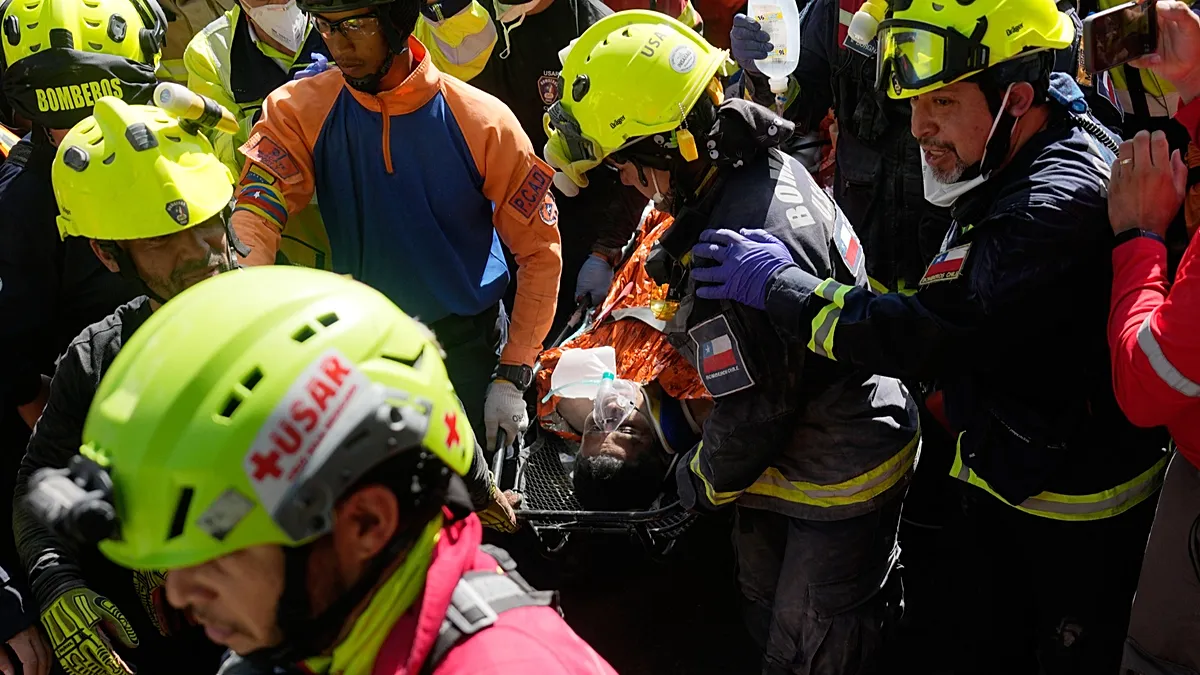
The emotional weight of the rescue was evident as teams carried Gil Flores, draped in an orange tarp and wearing an oxygen mask, through a sea of cheering onlookers. Flags from around the world fluttered above the crowd, symbolizing the global solidarity that accompanied the operation. One Chilean rescuer, visibly moved, raised his fists in joy as Gil Flores was lifted onto a stretcher. Others in red Costa Rican Red Cross uniforms embraced and laughed, their relief palpable in the midst of the chaos.
Gil Flores’ wife, Gusbimar González, described the ordeal as a period of deep despair. For days, she feared the worst, unable to reach her husband or confirm his condition. “When I learned he was alive, I saw a ray of light in the darkness,” she told the Associated Press. The couple, who have two children aged eight and 10, now face the long road to recovery, their lives forever altered by the events of early June.
Technical Triumphs and Human Touch
The rescue was made possible by a combination of advanced technology and personal dedication. A telescopic camera was used to maintain constant communication with Gil Flores, allowing rescuers to monitor his condition and provide reassurance. In a video released hours before his extraction, Gil Flores was seen drawing, seemingly to pass the time. A veteran Chilean firefighter, María Paz Campos, encouraged him to look at the camera and don protective goggles. “I need you to keep the goggles on, for the small particles that are falling, to avoid them getting into your eye,” she told the survivor, her calm voice a source of comfort in the dire circumstances.
Throughout the rescue, Campos played a pivotal role, guiding Gil Flores through the final, grueling hours. Her ability to remain composed under pressure helped stabilize the survivor’s emotions, ensuring he stayed hopeful. The operation, which spanned multiple days, required precise coordination between teams working in shifts, navigating the unstable basement and the challenges posed by the weather.
A Symbol of Hope Amidst Tragedy
Acting Venezuelan President Delcy Rodríguez took to social media to celebrate the rescue, emphasizing its significance in the face of ongoing criticism of her government’s crisis response. “We celebrate the greatness of humanity, when it is united for a single purpose: to save another,” she wrote in a post on X. “Thank you to our rescuers and to the support of the international rescuers.” Her words underscored the broader context of the disaster, which has strained Venezuela’s already fragile systems.
While the earthquakes caused immense destruction, the rescue of Gil Flores served as a reminder of the power of collective effort. The incident has sparked discussions about the importance of international cooperation in disaster relief, particularly in regions where local resources may be stretched thin. For many, the operation was more than just a technical achievement—it was a symbol of perseverance and the unyielding spirit of those who refused to give up.
As the dust settled and the initial euphoria of the rescue gave way to reflection, the community in La Guaira began to come together. Local and international teams shared their experiences, highlighting the challenges they faced and the lessons learned. The survival of Gil Flores, who had been isolated for nearly a week, is now a story of hope, resilience, and the critical role of timely intervention in saving lives. His journey from the rubble to the ambulance marked the end of an eight-day ordeal and the beginning of a new chapter for him and his family.
Despite the triumph, the disaster’s impact on Venezuela remains profound. Thousands of homes and businesses were reduced to rubble, and the economic strain of the crisis continues to affect the nation. However, the rescue of Gil Flores has inspired many, reinforcing the belief that even in the darkest times, human determination can lead to miracles. His survival is a testament to the power of teamwork, the strength of the human spirit, and the importance of global solidarity in the face of natural disasters.
For the rescue teams, the operation was a blend of technical expertise and personal sacrifice. Each hour spent in the basement was a battle against time, with the workers risking their own safety to ensure Gil Flores’. The dedication of the firefighters, medical personnel, and volunteers from various countries has not gone unnoticed, with their efforts being praised as a display of humanity’s finest qualities. As Gil Flores was wheeled into the ambulance, the crowd’s cheers echoed the shared sense of relief and gratitude that defined the event.
The rescue of Hernán Alberto Gil Flores is now remembered as a defining moment in Venezuela’s recent history. It brought together nations, showcased the adaptability of rescue teams, and reminded the world of the importance of preparedness in disaster scenarios. While the earthquakes have left a lasting mark on the region, the survival of one individual has become a beacon of hope, symbolizing the resilience that can emerge even from the most dire circumstances.