Iran Confirms Qatar Visit for Talks but Rules Out US Negotiations
Iran says delegation to visit Qatar – Iran has confirmed that a group of experts will travel to Qatar this week to address the implementation of a recent Memorandum of Understanding (MoU) signed with the United States. However, the Iranian foreign ministry emphasized that this visit does not mark the beginning of formal negotiations with Washington. According to a spokesperson, the focus of the trip is to discuss technical matters related to the agreement, not to engage in direct talks about a final deal.
The announcement came amid conflicting reports about the possibility of renewed dialogue between the two nations. Earlier in the week, several U.S. media outlets had cited sources suggesting that the U.S. and Iran planned to resume talks in Doha on Tuesday. These reports, however, were quickly refuted by Iran. Deputy Foreign Minister Kazem Gharibabadi stated that the “technical discussions” in Qatar had not yet been confirmed, calling the claims “not accurate” and attributing them to “some media outlets.”
“We have not yet entered the stage of negotiating a final agreement,” said the foreign ministry spokesperson. “Over the coming days, we will not have any negotiation meetings with the U.S. side at any level.”
President Donald Trump responded swiftly to the conflicting reports, asserting on his social media platform Truth Social that “Iran has requested a meeting” and that the talks would take place “tomorrow (Tuesday) in Doha.” White House spokeswoman Karoline Leavitt later echoed this, stating that U.S. envoy Steve Witkoff and senior adviser Jared Kushner would travel to Qatar for “high-level meetings” this week. This exchange highlights the ongoing uncertainty surrounding the relationship between the two countries, despite recent agreements to pause hostilities.
Tensions and the 60-Day Framework
The current framework, signed on June 17, granted both Iran and the United States 60 days to work toward a comprehensive agreement. This deal aimed to address key issues such as Iran’s nuclear program, sanctions relief, and the long-term status of the Strait of Hormuz. However, the agreement has been under significant pressure due to a series of military actions that have strained the delicate balance between the two nations.
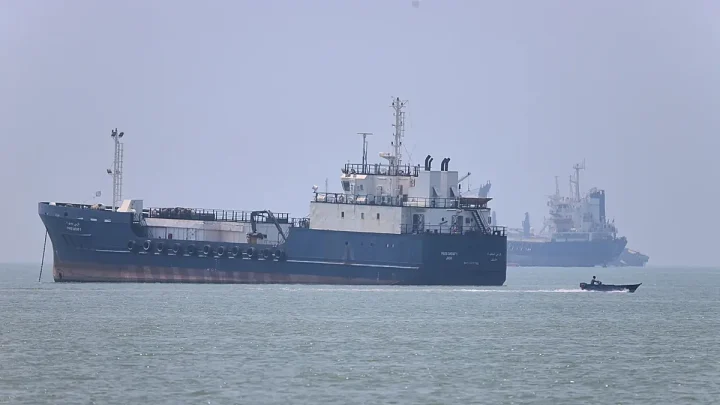
The tension escalated after an Iranian drone attack on a Panama-flagged oil tanker, the M/T Kiku, near the Strait of Hormuz. The strike, which occurred earlier this month, led to U.S. Central Command launching retaliatory strikes on 10 Iranian military targets. Iran then responded with its own attacks on U.S. bases in Kuwait and Bahrain, prompting concerns about the potential for a broader conflict. Despite these hostilities, both sides have since agreed to a temporary stand-down, allowing for the resumption of normal maritime traffic through the critical waterway.
While the immediate hostilities have eased, the situation remains volatile. The U.S. and Iran are now navigating the challenges of implementing the MoU, with the Qatar visit serving as a step toward stabilizing the agreement. The Iranian delegation’s focus on technical implementation suggests a desire to avoid direct negotiations, which could reopen contentious issues such as the nuclear deal and sanctions.
De-Mining Complication and Regional Implications
A new complication has emerged with the de-mining operations in the Strait of Hormuz. Following a meeting between French President Emmanuel Macron and Sultan Haitham bin Tariq of Oman, both nations announced plans for joint operations to clear the area of unexploded ordnance. However, Gharibabadi challenged this move, stating that “only Iran is authorized” to conduct such activities under the agreement. He criticized France’s involvement, calling it “provocations” that risk complicating the already fragile situation.
“The situation is sensitive and complex. We strongly advise France not to complicate it further with its provocations,” Gharibabadi wrote on X.
This disagreement has raised questions about the coordination between Iran and its international allies. The de-mining issue is crucial for ensuring the safety of maritime traffic, which has been severely disrupted by the recent attacks. According to maritime data firm Kpler, only 29 vessels crossed the strait on Saturday, a sharp decline from the usual volume. By Sunday, the number had dropped even further to 12, with no ships utilizing the southern Omani corridor. AXSMarine’s analysis also noted that 44 vessels had ceased publicly transmitting their positions, indicating heightened caution among ship operators.
The reduced traffic underscores the impact of the conflict on global trade. The Strait of Hormuz, a vital artery for oil shipments, has become a focal point of regional tensions. While the stand-down agreement has allowed some ships to navigate the area, the uncertainty surrounding de-mining operations and the potential for future clashes continues to affect shipping routes. Analysts warn that the situation could deteriorate if either side fails to uphold their commitments.
Broader Context and Future Outlook
The Iran-Qatar visit is part of a broader effort to stabilize the nuclear deal and prevent a full-scale confrontation. The MoU, signed after months of negotiations, was intended to create a framework for renewed talks, but the recent attacks have tested its resilience. The U.S. and Iran are now racing against time to implement the agreement before the 60-day window expires, with the hope of achieving a lasting resolution.
Despite the setbacks, both nations have shown willingness to de-escalate. The temporary stand-down has allowed for the resumption of commercial activities, but the underlying issues remain unresolved. Iran’s insistence on maintaining control over de-mining operations highlights its strategic priorities, while the U.S. continues to push for dialogue to secure its interests. The outcome of the Qatar visit could determine the next phase of the negotiations, which are critical for the future of Iran’s nuclear program and regional stability.
As the situation evolves, the role of international allies such as France and Oman becomes increasingly important. Their involvement in de-mining operations could either support or hinder the U.S.-Iran agreement, depending on how their actions are perceived. The complexity of the issue also underscores the need for continued diplomatic engagement, even as both sides prepare for potential future confrontations.
The fragile state of the agreement serves as a reminder of the challenges in maintaining peace in the Middle East. With the Strait of Hormuz remaining a strategic chokepoint, any miscalculation or escalation could have far-reaching consequences. The upcoming discussions in Doha are expected to address these concerns, but the path to a final agreement remains uncertain. As the 60-day window approaches, the stakes for both Iran and the United States have never been higher.